Amanda Mcintire
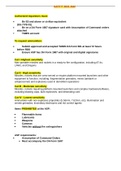
Section 1.2: Sampling from a Population
Example 1: Number of Cell Phone Calls per Day
Princeton Survey Research reports on a survey of 1,917 cell phone users in the US, conducted in May
2010, asking “On an average day, about how many phone calls do you make and receive on your cell
phone?”
a). What is the sample in this study?
1,917 cell phone users in the US
b). What is the population?
All cell phone users in the US
c). Is the variable in this study quantitative or categorical?
Quantitative – number of Phone calls
Example 2: Driving with a Pet on your Lap
Over 30,000 people participated in an online poll on cnn.com conducted in April 2012 asking “Have you
ever driven with a pet on your lap?” We see that 34% of the participants answered yes and 66%
answered now.
a). What is the sample?
30,000 people participating in Online poll
b). Can we conclude that 34% of all drivers have driven with a pet on their lap?
No
c). Explain why it is not appropriate to generalize these results to all drivers, or even to all
drivers who visit cnn.com. What is the problem with this method of data collection?
The problem is that not everyone could have a pet and not everyone could be drivers and it is a
voluntary response
d). How might we select a sample of people that would give us results that we can generalize to
a broader population? You could create a computer generator and go up to random people
e). Is the variable in this study quantitative or categorical?
Categorial
Section 1.2: Sampling from a Population
Example 1: Number of Cell Phone Calls per Day
Princeton Survey Research reports on a survey of 1,917 cell phone users in the US, conducted in May
2010, asking “On an average day, about how many phone calls do you make and receive on your cell
phone?”
a). What is the sample in this study?
1,917 cell phone users in the US
b). What is the population?
All cell phone users in the US
c). Is the variable in this study quantitative or categorical?
Quantitative – number of Phone calls
Example 2: Driving with a Pet on your Lap
Over 30,000 people participated in an online poll on cnn.com conducted in April 2012 asking “Have you
ever driven with a pet on your lap?” We see that 34% of the participants answered yes and 66%
answered now.
a). What is the sample?
30,000 people participating in Online poll
b). Can we conclude that 34% of all drivers have driven with a pet on their lap?
No
c). Explain why it is not appropriate to generalize these results to all drivers, or even to all
drivers who visit cnn.com. What is the problem with this method of data collection?
The problem is that not everyone could have a pet and not everyone could be drivers and it is a
voluntary response
d). How might we select a sample of people that would give us results that we can generalize to
a broader population? You could create a computer generator and go up to random people
e). Is the variable in this study quantitative or categorical?
Categorial