CompTIA CASP+ Security Operations Test 3 with 100% Correct answers
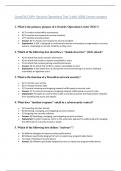
1. What is the primary purpose of a Security Operations Center (SOC)?
• A) To conduct vulnerability assessments
• B) To monitor and respond to security incidents
• C) To develop security policies
• Answer: B) To monitor and respond to security incidents
• Explanation: A SOC is designed to continuously monitor and analyze an organization’s security
posture, responding to security incidents as they occur.
2. Which of the following best describes a "denial-of-service" (DoS) attack?
• A) An attack that steals sensitive information
• B) An attack that renders a system unavailable to users
• C) An attack that involves gaining unauthorized access
• Answer: B) An attack that renders a system unavailable to users
• Explanation: A DoS attack aims to disrupt the normal functioning of a service, making it
unavailable to legitimate users.
3. What is the function of a firewall in network security?
• A) To monitor user activity
• B) To encrypt sensitive data
• C) To control incoming and outgoing network traffic based on security rules
• Answer: C) To control incoming and outgoing network traffic based on security rules
• Explanation: Firewalls are used to filter traffic and enforce policies that help protect networks
from unauthorized access and attacks.
4. What does "incident response" entail in a cybersecurity context?
• A) Preventing all cyber threats
• B) Identifying, managing, and mitigating security incidents
• C) Designing new security software
• Answer: B) Identifying, managing, and mitigating security incidents
• Explanation: Incident response refers to the systematic approach to addressing and managing
the aftermath of a security breach or attack.
5. Which of the following best defines "malware"?
• A) Software designed to improve system performance
• B) Software specifically designed to harm or exploit any programmable device
• C) A type of hardware security device
• Answer: B) Software specifically designed to harm or exploit any programmable device
, • Explanation: Malware includes a range of harmful software designed to infiltrate, damage, or
disable computers and networks.
6. What is the main goal of threat hunting?
• A) To improve system performance
• B) To identify and mitigate potential threats proactively
• C) To reduce incident response times
• Answer: B) To identify and mitigate potential threats proactively
• Explanation: Threat hunting involves actively searching for signs of threats in a network before
they can cause harm, rather than waiting for alerts.
7. Which of the following is a primary function of an Intrusion Prevention
System (IPS)?
• A) To monitor network traffic for suspicious activity
• B) To block and prevent identified threats
• C) To provide user training on security best practices
• Answer: B) To block and prevent identified threats
• Explanation: An IPS actively monitors and takes action against malicious traffic by blocking it to
protect the network.
8. Which of the following is a key principle of security monitoring?
• A) Logging should only be enabled on critical systems
• B) Monitoring should be continuous and automated
• C) Monitoring should only occur during business hours
• Answer: B) Monitoring should be continuous and automated
• Explanation: Continuous and automated monitoring allows for timely detection of anomalies
and potential threats, improving overall security.
9. What is a common characteristic of a successful phishing attack?
• A) It involves exploiting software vulnerabilities
• B) It uses legitimate-looking communications to deceive targets
• C) It requires physical access to a device
• Answer: B) It uses legitimate-looking communications to deceive targets
• Explanation: Phishing attacks often mimic trusted entities to trick individuals into divulging
sensitive information, making them appear legitimate.
10. What is the purpose of a vulnerability management program?
• A) To ensure compliance with regulations
• B) To identify, assess, and remediate vulnerabilities
• C) To provide training for security personnel
• Answer: B) To identify, assess, and remediate vulnerabilities
1. What is the primary purpose of a Security Operations Center (SOC)?
• A) To conduct vulnerability assessments
• B) To monitor and respond to security incidents
• C) To develop security policies
• Answer: B) To monitor and respond to security incidents
• Explanation: A SOC is designed to continuously monitor and analyze an organization’s security
posture, responding to security incidents as they occur.
2. Which of the following best describes a "denial-of-service" (DoS) attack?
• A) An attack that steals sensitive information
• B) An attack that renders a system unavailable to users
• C) An attack that involves gaining unauthorized access
• Answer: B) An attack that renders a system unavailable to users
• Explanation: A DoS attack aims to disrupt the normal functioning of a service, making it
unavailable to legitimate users.
3. What is the function of a firewall in network security?
• A) To monitor user activity
• B) To encrypt sensitive data
• C) To control incoming and outgoing network traffic based on security rules
• Answer: C) To control incoming and outgoing network traffic based on security rules
• Explanation: Firewalls are used to filter traffic and enforce policies that help protect networks
from unauthorized access and attacks.
4. What does "incident response" entail in a cybersecurity context?
• A) Preventing all cyber threats
• B) Identifying, managing, and mitigating security incidents
• C) Designing new security software
• Answer: B) Identifying, managing, and mitigating security incidents
• Explanation: Incident response refers to the systematic approach to addressing and managing
the aftermath of a security breach or attack.
5. Which of the following best defines "malware"?
• A) Software designed to improve system performance
• B) Software specifically designed to harm or exploit any programmable device
• C) A type of hardware security device
• Answer: B) Software specifically designed to harm or exploit any programmable device
, • Explanation: Malware includes a range of harmful software designed to infiltrate, damage, or
disable computers and networks.
6. What is the main goal of threat hunting?
• A) To improve system performance
• B) To identify and mitigate potential threats proactively
• C) To reduce incident response times
• Answer: B) To identify and mitigate potential threats proactively
• Explanation: Threat hunting involves actively searching for signs of threats in a network before
they can cause harm, rather than waiting for alerts.
7. Which of the following is a primary function of an Intrusion Prevention
System (IPS)?
• A) To monitor network traffic for suspicious activity
• B) To block and prevent identified threats
• C) To provide user training on security best practices
• Answer: B) To block and prevent identified threats
• Explanation: An IPS actively monitors and takes action against malicious traffic by blocking it to
protect the network.
8. Which of the following is a key principle of security monitoring?
• A) Logging should only be enabled on critical systems
• B) Monitoring should be continuous and automated
• C) Monitoring should only occur during business hours
• Answer: B) Monitoring should be continuous and automated
• Explanation: Continuous and automated monitoring allows for timely detection of anomalies
and potential threats, improving overall security.
9. What is a common characteristic of a successful phishing attack?
• A) It involves exploiting software vulnerabilities
• B) It uses legitimate-looking communications to deceive targets
• C) It requires physical access to a device
• Answer: B) It uses legitimate-looking communications to deceive targets
• Explanation: Phishing attacks often mimic trusted entities to trick individuals into divulging
sensitive information, making them appear legitimate.
10. What is the purpose of a vulnerability management program?
• A) To ensure compliance with regulations
• B) To identify, assess, and remediate vulnerabilities
• C) To provide training for security personnel
• Answer: B) To identify, assess, and remediate vulnerabilities