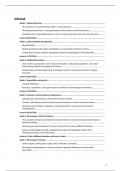
Inhoud
Week 1, Cultural Diversity....................................................................................................................
The importance of understanding children’s lived experience..................................................................
The developmental niche; a conceptualization at the interface of child and culture................................
Bronfenbrenner’s bioecological theory revision; moving culture from the macro into the micro............
Lecture 06/02/2024..............................................................................................................................
Week 2, cultural identity development.................................................................................................
Beyond identity..........................................................................................................................................
Identity development throughout the lifetime: an examination of Erikson’s Theory..............................
Turkish-Dutch Mosque students negotioting identities and belonging in the Netherlands....................
Lecture 13/02/2024............................................................................................................................
Week 3, Multicultural society.............................................................................................................
Does selective acculturation work? Cultural orientations, educational aspirations, and school
effort among children of immigrants in Norway.....................................................................................
Acculturation and school adjustment of immigrant youth in six European countries: Findings
from PISA.................................................................................................................................................
Lecture 20/02/2024............................................................................................................................
Week 4, inequalities and poverty........................................................................................................
Unequal childhoods.................................................................................................................................
Resources, experiences, and support needs of families in disadvantaged communities........................
Lecture 27/02/2024............................................................................................................................
Week 5, inclusion, and intercultural competences..............................................................................
Individual and systemic bias in child welfare decision making................................................................
Teachers’ self-efficacy and intercultural classroom practices in diverse classroom context...................
Opening towards children’s languages: enhancing teachers’ tolerant practices towards
multilingualism........................................................................................................................................
Lecture 06/03/2024............................................................................................................................
Week 6, Microsystem: ECEC and school..............................................................................................
The association between perceived discrimination climate in school and student performance in
math and reading....................................................................................................................................
Using a group-centered approach to observe interactions in early childhood education.......................
Inclusion and language learning: pedagogical principles for integrating students from
marginalized groups in the mainstream..................................................................................................
Lecture 6, Early childhood education and care & school......................................................................
Week 7, Microsystem: Parents...........................................................................................................
Family support of third grade reading skills, motivation, and habits......................................................
Parenting and globalization in western countries: explaining differences in parent-child
interactions..............................................................................................................................................
1
, Individualism and the western mind reconsidered: American and dutch parents ethnotheories of
the child...................................................................................................................................................
Lecture 7, microsystem: parents.........................................................................................................
Week 8, Microsystem: Peers...............................................................................................................
Development of ethnic, racial and national prejudice in childhood and adolescence: a
multinational meta-analysis of age difference........................................................................................
Classroom predictors of national belonging: The role of interethnic contact and teachers and
classmate’s diversity norms.....................................................................................................................
COVID-19 narratives that polarize...........................................................................................................
Lecture 8, peers, segregation & contacttheory....................................................................................
WEEK 1, CULTURAL DIVERSITY
,THE IMPORTANCE OF UNDERSTANDING CHILDREN’S LIVED EXPERIENCE
Barbara Rogoff, Audun Dahl, Maureen Callanan
This article describes the course correction of developmental research to focus more on the
cultural paradigms of children’s lived experience and children’s participation in the setting of
their lives. This is important to understand the development of a child in its context.
Development occurs within a child specific environment through their one everyday
experience ( cultural experiences). Because of this, it is important to know in what culture
a child lives and how this effect their lives.
A key question that emerges how they manage their navigation across settings
Bruner is a researcher that did research to what a middle-class child’s live looks like.
Researchers need information about the everyday life of a child to understand and interpret
findings.
Sociocultural theoretical perspective = this focuses more on children’s development in
terms of their participation in the everyday practices and settings of their lives.
The auteurs argue for broadening the fields portfolio of research by
1. Examining (rather than assuming) generality of findings across situations and populations
2. Interpreting findings based on knowledge of children’s lives rather than researchers’
intuitions.
3. Studying child development in the ecologies in which it occurs
The question emerging from this how do children learn to navigate across the
practices common to the distinct settings of their lives?
To make the course correction, there should be more attention to a theoretical perspective
which posits that learning and development occur in the process of people’s participation in
the activities and events of their cultural communities.
Culture = here is viewed as the ways of life of generations of people in communities (their
ways of thinking and orienting) that are shared in a community.
Participation = includes keen observation of others as well as contributing to decisions and
endeavors with ideas as well as action
This is important for research to integrate contextual and cultural aspects of life in the
understanding of child development.
In participation theories individual and context or culture are considered mutually
constituting aspects of the process of life. We can view child development as a process of
growth in ways of participating in the endeavors of their communities, in a process of
transformation of participation. Events are not external to individuals.
Children’s lived experience = cultural nature of human development.
In the research about the importance of context in developmental psychology, there was a
growth in interest in two directions.
3
, 1. Understanding children’s development in context of their lives
2. Dividing into more specific domain (often not tight to the context of children’s lives)
The ignorance of children’s everyday life often leads to overgeneralization from one cultural
group to humans in general. A scientific setting can show results that would not be seen in
the everyday life, but we must not lose track of the phenomena that we are trying to
understand how do children develop and learn across their lives?
Researchers make claims about the ecological commitments which are assumptions,
hypotheses, and implications without them being tested.
Individuals cannot be understood outside of their community. They should unpack the
groups into variables (gender, race, etc.). This can be done by viewing specific
participations/events from different groups, but it should not be inherent in the real,
functional activity. Language and little knowledge about a specific cultural group ensures
that the individuals in this group, perform less than they would be with a researcher with
knowledge about their language and culture which results into poorer performances.
Children must learn to adapt their ways to the distinct settings that they traverse. How do
they learn to do that?
They learn to distinguish or apply the approaches that they have learned in one setting
when they become involved in another setting (interne werkmodellen) Children navigate
between settings. From a sociocultural perspective, this can be reconceptualized to
navigating different cultural settings as they determine which familiar practices to use in
what circumstances, or how they need to adapt them.
Oftewel;
1. Er moet een verandering komen in het onderzoek naar de ontwikkeling van kinderen
waarbij de omgeving en cultuur van het kind wordt meegenomen in het onderzoek. Dit
voorkomt een overhaaste generalisatie van bepaalde culturele groepen omdat groepen
in een vreemde setting of onder onbekende omstandigheden vaak minder presteren dat
ze zouden doen in een bekende omgeving. Volgens het sociocultureel perspectief,
navigeren kinderen tussen verschillende culturele settings door te bepalen welke
vaardigheden ze nodig hebben/aan moeten passen aan de omgeving. Dit perspectief
komt voort uit het idee dat kinderen leren door deel te nemen aan verschillende
evenementen binnen hun cultuur en hier dingen van leren/opslaan (interne
werkmodellen).
THE DEVELOPMENTAL NICHE; A CONCEPTUALIZATION AT THE INTERFACE OF
CHILD AND CULTURE
Week 1, Cultural Diversity....................................................................................................................
The importance of understanding children’s lived experience..................................................................
The developmental niche; a conceptualization at the interface of child and culture................................
Bronfenbrenner’s bioecological theory revision; moving culture from the macro into the micro............
Lecture 06/02/2024..............................................................................................................................
Week 2, cultural identity development.................................................................................................
Beyond identity..........................................................................................................................................
Identity development throughout the lifetime: an examination of Erikson’s Theory..............................
Turkish-Dutch Mosque students negotioting identities and belonging in the Netherlands....................
Lecture 13/02/2024............................................................................................................................
Week 3, Multicultural society.............................................................................................................
Does selective acculturation work? Cultural orientations, educational aspirations, and school
effort among children of immigrants in Norway.....................................................................................
Acculturation and school adjustment of immigrant youth in six European countries: Findings
from PISA.................................................................................................................................................
Lecture 20/02/2024............................................................................................................................
Week 4, inequalities and poverty........................................................................................................
Unequal childhoods.................................................................................................................................
Resources, experiences, and support needs of families in disadvantaged communities........................
Lecture 27/02/2024............................................................................................................................
Week 5, inclusion, and intercultural competences..............................................................................
Individual and systemic bias in child welfare decision making................................................................
Teachers’ self-efficacy and intercultural classroom practices in diverse classroom context...................
Opening towards children’s languages: enhancing teachers’ tolerant practices towards
multilingualism........................................................................................................................................
Lecture 06/03/2024............................................................................................................................
Week 6, Microsystem: ECEC and school..............................................................................................
The association between perceived discrimination climate in school and student performance in
math and reading....................................................................................................................................
Using a group-centered approach to observe interactions in early childhood education.......................
Inclusion and language learning: pedagogical principles for integrating students from
marginalized groups in the mainstream..................................................................................................
Lecture 6, Early childhood education and care & school......................................................................
Week 7, Microsystem: Parents...........................................................................................................
Family support of third grade reading skills, motivation, and habits......................................................
Parenting and globalization in western countries: explaining differences in parent-child
interactions..............................................................................................................................................
1
, Individualism and the western mind reconsidered: American and dutch parents ethnotheories of
the child...................................................................................................................................................
Lecture 7, microsystem: parents.........................................................................................................
Week 8, Microsystem: Peers...............................................................................................................
Development of ethnic, racial and national prejudice in childhood and adolescence: a
multinational meta-analysis of age difference........................................................................................
Classroom predictors of national belonging: The role of interethnic contact and teachers and
classmate’s diversity norms.....................................................................................................................
COVID-19 narratives that polarize...........................................................................................................
Lecture 8, peers, segregation & contacttheory....................................................................................
WEEK 1, CULTURAL DIVERSITY
,THE IMPORTANCE OF UNDERSTANDING CHILDREN’S LIVED EXPERIENCE
Barbara Rogoff, Audun Dahl, Maureen Callanan
This article describes the course correction of developmental research to focus more on the
cultural paradigms of children’s lived experience and children’s participation in the setting of
their lives. This is important to understand the development of a child in its context.
Development occurs within a child specific environment through their one everyday
experience ( cultural experiences). Because of this, it is important to know in what culture
a child lives and how this effect their lives.
A key question that emerges how they manage their navigation across settings
Bruner is a researcher that did research to what a middle-class child’s live looks like.
Researchers need information about the everyday life of a child to understand and interpret
findings.
Sociocultural theoretical perspective = this focuses more on children’s development in
terms of their participation in the everyday practices and settings of their lives.
The auteurs argue for broadening the fields portfolio of research by
1. Examining (rather than assuming) generality of findings across situations and populations
2. Interpreting findings based on knowledge of children’s lives rather than researchers’
intuitions.
3. Studying child development in the ecologies in which it occurs
The question emerging from this how do children learn to navigate across the
practices common to the distinct settings of their lives?
To make the course correction, there should be more attention to a theoretical perspective
which posits that learning and development occur in the process of people’s participation in
the activities and events of their cultural communities.
Culture = here is viewed as the ways of life of generations of people in communities (their
ways of thinking and orienting) that are shared in a community.
Participation = includes keen observation of others as well as contributing to decisions and
endeavors with ideas as well as action
This is important for research to integrate contextual and cultural aspects of life in the
understanding of child development.
In participation theories individual and context or culture are considered mutually
constituting aspects of the process of life. We can view child development as a process of
growth in ways of participating in the endeavors of their communities, in a process of
transformation of participation. Events are not external to individuals.
Children’s lived experience = cultural nature of human development.
In the research about the importance of context in developmental psychology, there was a
growth in interest in two directions.
3
, 1. Understanding children’s development in context of their lives
2. Dividing into more specific domain (often not tight to the context of children’s lives)
The ignorance of children’s everyday life often leads to overgeneralization from one cultural
group to humans in general. A scientific setting can show results that would not be seen in
the everyday life, but we must not lose track of the phenomena that we are trying to
understand how do children develop and learn across their lives?
Researchers make claims about the ecological commitments which are assumptions,
hypotheses, and implications without them being tested.
Individuals cannot be understood outside of their community. They should unpack the
groups into variables (gender, race, etc.). This can be done by viewing specific
participations/events from different groups, but it should not be inherent in the real,
functional activity. Language and little knowledge about a specific cultural group ensures
that the individuals in this group, perform less than they would be with a researcher with
knowledge about their language and culture which results into poorer performances.
Children must learn to adapt their ways to the distinct settings that they traverse. How do
they learn to do that?
They learn to distinguish or apply the approaches that they have learned in one setting
when they become involved in another setting (interne werkmodellen) Children navigate
between settings. From a sociocultural perspective, this can be reconceptualized to
navigating different cultural settings as they determine which familiar practices to use in
what circumstances, or how they need to adapt them.
Oftewel;
1. Er moet een verandering komen in het onderzoek naar de ontwikkeling van kinderen
waarbij de omgeving en cultuur van het kind wordt meegenomen in het onderzoek. Dit
voorkomt een overhaaste generalisatie van bepaalde culturele groepen omdat groepen
in een vreemde setting of onder onbekende omstandigheden vaak minder presteren dat
ze zouden doen in een bekende omgeving. Volgens het sociocultureel perspectief,
navigeren kinderen tussen verschillende culturele settings door te bepalen welke
vaardigheden ze nodig hebben/aan moeten passen aan de omgeving. Dit perspectief
komt voort uit het idee dat kinderen leren door deel te nemen aan verschillende
evenementen binnen hun cultuur en hier dingen van leren/opslaan (interne
werkmodellen).
THE DEVELOPMENTAL NICHE; A CONCEPTUALIZATION AT THE INTERFACE OF
CHILD AND CULTURE