Samenvatting o.b.v. leerdoelen
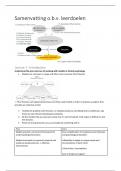
Lecture 1 - Introduction
Understand the pros and cons of working with models in clinical psychology
• Models are narrower in scope and often more concrete than theories
-> Thus theories can explain phenomena, but they need models in order to produce a pattern that
provides an empirical anchor
• Toothbrush problem with theories: so nobody would use somebody else's toothbrush, aka
there are new theories developed constantly
• All the models that are used are verbal, but it's not formalized. That makes it difficult to test
the theories.
• Power of strong theories; you can actually do something with it
Pros Cons
Models provide a structured framework for Over-simplification of complex human behavior
understanding phenomena and psychological disorders
Models are based on empirical research and Inflexibility to adapt to unique needs and
evidence-based practices -> effective circumstances of each client
interventions
Cultural bias / assumptions
Lack of empirical support
, They provide a common language and
conceptual framework for clinicians to Complexity may hinder effective application in
communicate real-world settings and lead to confusion or
frustration
Some models have predictive power
Training and supervision
Explain what transdiagnostic processes are and identify them in the course material.
Transdiagnostic processes = similar processes between disorders, underlying to a group of mental
disorders
Processes are:
• Genetics; specific genes for a specific disorder for example
• Brain, neurotransmitters; same neurotransmitters involved in certain disorders
• Cognitive emotional learning; cognitive models, biases
o Biases between anxiety and depression might overlap
• Thinking; worrying overlaps for both disorders (rumination)
• Youth and upbringing; early life trauma affect both depression and anxiety
• Interpersonal processes: such as the social deficits that overlap between anxiety and
depression
• Worry and rumination in depression and anxiety: they look like each other but worry is
central to GAD and rumination to MDD
Describe the prevalence and course of the disorders as discussed in the lecture.
48%, about half, of people in the Netherlands suffer from an anxiety or mood disorder at some point
of their lives and ¼ met criteria for any disorder in 12 months before the interview.
Thus: mood and anxiety disorders are more prevalent than substance use disorders and ADHD.
Where ADHD is the less prevalent disorder and the most prevalent is anxiety disorders.
Why do mood and anxiety occur so often together? -> High comorbidity & overlap in symptoms
(restlessness, fatigue, sleep), response to the same treatment
Psychotic disorders:
, Risk factors:
For 12-month disorder Reasons for increase in 18-35
Younger age Individualisation
Gender: greater risk in females Social media
Living alone Increased pressure to succeed
Being unemployed Housing (problems)
Low education More recognition/acceptance of mental
Lower income disorder/less stigma
Higher degree of urbanization
Reflect on the difference between normal emotional experiences and emotional disorders
Normal emotional experiences are not distressing or cause impairment in everyday life?
Describe the basics of the network perspective of mental disorders
In the network model, symptoms cause each other. -> So treating one symptom can resolve other
symptoms as well
As opposed to the medical model, where symptoms are all caused by the underlying condition
In mental disorders, symptoms are not independent of each other and that's why the network
model is introduced.
• Example = sleep problems can lead to more worrying
This network of symptoms can then be labeled as an disorder
Comorbidity looks like this in the network model:
Lecture 1 - Introduction
Understand the pros and cons of working with models in clinical psychology
• Models are narrower in scope and often more concrete than theories
-> Thus theories can explain phenomena, but they need models in order to produce a pattern that
provides an empirical anchor
• Toothbrush problem with theories: so nobody would use somebody else's toothbrush, aka
there are new theories developed constantly
• All the models that are used are verbal, but it's not formalized. That makes it difficult to test
the theories.
• Power of strong theories; you can actually do something with it
Pros Cons
Models provide a structured framework for Over-simplification of complex human behavior
understanding phenomena and psychological disorders
Models are based on empirical research and Inflexibility to adapt to unique needs and
evidence-based practices -> effective circumstances of each client
interventions
Cultural bias / assumptions
Lack of empirical support
, They provide a common language and
conceptual framework for clinicians to Complexity may hinder effective application in
communicate real-world settings and lead to confusion or
frustration
Some models have predictive power
Training and supervision
Explain what transdiagnostic processes are and identify them in the course material.
Transdiagnostic processes = similar processes between disorders, underlying to a group of mental
disorders
Processes are:
• Genetics; specific genes for a specific disorder for example
• Brain, neurotransmitters; same neurotransmitters involved in certain disorders
• Cognitive emotional learning; cognitive models, biases
o Biases between anxiety and depression might overlap
• Thinking; worrying overlaps for both disorders (rumination)
• Youth and upbringing; early life trauma affect both depression and anxiety
• Interpersonal processes: such as the social deficits that overlap between anxiety and
depression
• Worry and rumination in depression and anxiety: they look like each other but worry is
central to GAD and rumination to MDD
Describe the prevalence and course of the disorders as discussed in the lecture.
48%, about half, of people in the Netherlands suffer from an anxiety or mood disorder at some point
of their lives and ¼ met criteria for any disorder in 12 months before the interview.
Thus: mood and anxiety disorders are more prevalent than substance use disorders and ADHD.
Where ADHD is the less prevalent disorder and the most prevalent is anxiety disorders.
Why do mood and anxiety occur so often together? -> High comorbidity & overlap in symptoms
(restlessness, fatigue, sleep), response to the same treatment
Psychotic disorders:
, Risk factors:
For 12-month disorder Reasons for increase in 18-35
Younger age Individualisation
Gender: greater risk in females Social media
Living alone Increased pressure to succeed
Being unemployed Housing (problems)
Low education More recognition/acceptance of mental
Lower income disorder/less stigma
Higher degree of urbanization
Reflect on the difference between normal emotional experiences and emotional disorders
Normal emotional experiences are not distressing or cause impairment in everyday life?
Describe the basics of the network perspective of mental disorders
In the network model, symptoms cause each other. -> So treating one symptom can resolve other
symptoms as well
As opposed to the medical model, where symptoms are all caused by the underlying condition
In mental disorders, symptoms are not independent of each other and that's why the network
model is introduced.
• Example = sleep problems can lead to more worrying
This network of symptoms can then be labeled as an disorder
Comorbidity looks like this in the network model: