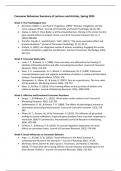
Consumer Behaviour Summary of Lectures and Articles, Spring 2024
Week 1: The Psychological Core
• Bornstein, Robert F., and Paul R. D'agostino. (1992) "Stimulus recognition and the
mere exposure effect." Journal of Personality and Social Psychology, 63 (4), 545.
• Atalay, A. Selin, H. Onur Bodur, and Dina Rasolofoarison. Shining in the center Central
gaze cascade effect on product choice. Journal of Consumer Research 39, no. 4
(2012) 848-866
• Dimofte, Claudiu V., and Richard F. Yalch. (2011), "The mere association effect and
brand evaluations." Journal of Consumer Psychology, 21 (1), 24-37.
• Krishna, A. (2012). An integrative review of sensory marketing: Engaging the senses
to affect perception, judgment and behavior. Journal of Consumer Psychology, 22(3),
332-351.
Week 2: Consumer Rationality
• Levin, I. P., & Gaeth, G. J. (1988). How consumers are affected by the framing of
attribute information before and after consuming the product. Journal of Consumer
Research, 15(3), 374-378
• Hsee, C. K., Loewenstein, G. F., Blount, S., & Bazerman, M. H. (1999). Preference
reversals between joint and separate evaluations of options: a review and theoretical
analysis. Psychological bulletin, 125(5), 576
• Shampanier, K., Mazar, N., & Ariely, D. (2007). Zero as a special price: The true value
of free products. Marketing science, 26(6), 742-757.
• Khan, U., & Dhar, R. (2010). Price-framing effects on the purchase of hedonic and
utilitarian bundles. Journal of Marketing Research, 47(6), 1090-1099.
Week 3: Affective and Emotional Consumer Reactions
• Berger, J., & Milkman, K. L. (2012). What makes online content viral? Journal of
Marketing Research, 49(2), 192-205.
• Sanbonmatsu, D. M., & Kardes, F. R. (1988). The effects of physiological arousal on
information processing and persuasion. Journal of Consumer research, 15(3), 379-
385.
• Pham, M. T., Geuens, M., & De Pelsmacker, P. (2013). The influence of ad-evoked
feelings on brand evaluations: Empirical generalizations from consumer responses to
more than 1000 TV commercials. International Journal of Research in Marketing,
30(4), 383-394.
• Di Muro, F., & Murray, K. B. (2012). An arousal regulation explanation of mood
effects on consumer choice. Journal of Consumer Research, 39(3), 574-584.
Week 4: Social Influences on Consumer Behavior
• Argo, J. J., & Dahl, D. W. (2020), “Social Influence in the Retail Context: A
Contemporary Review of the Literature.“ Journal of Retailing, 96(1), 25-39.
• McFerran, Brent, Darren W. Dahl, Gavan J. Fitzsimons, and Andrea C. Morales.
(2010), "I’ll have what she’s having: Effects of social influence and body type on the
food choices of others." Journal of Consumer Research, 36(6), 915-929.
, • Barasch, Alixandra, and Jonah Berger (2014), "Broadcasting and narrowcasting: How
audience size affects what people share." Journal of Marketing Research , 51(3), 286-
299.
• Berger, Jonah. (2014), "Word of mouth and interpersonal communication: A review
and directions for future research." Journal of Consumer Psychology 24,(4) 586-607.
Week 5: Consumer Culture and Identity
• Puntoni, Stefano, Steven Sweldens, and Nader T. Tavassoli (2011), "Gender identity
salience and perceived vulnerability to breast cancer." Journal of Marketing
Research, 48 (3), 413-424.
• Han, Young Jee, Joseph C. Nunes, and Xavier Drèze (2010), "Signaling status with
luxury goods: The role of brand prominence." Journal of Marketing, 74(4), 15-30.
• Argo, Jennifer J., and Darren W. Dahl (2018), "Standards of beauty: The impact of
mannequins in the retail context." Journal of Consumer Research, 44(50), 974-990.
• Reed II, Americus, Mark R. Forehand, Stefano Puntoni, and Luk Warlop
(2012),"Identity-based consumer behavior." International Journal of Research in
Marketing, 29 (4), 310-321.
Week 6: Consumers and Marketing for a “Better World”
• Kivetz, R., Urminsky, O., & Zheng, Y. (2006). The goal-gradient hypothesis
resurrected: Purchase acceleration, illusionary goal progress, and customer
retention. Journal of Marketing Research, 43(1), 39-58.
• Goldstein, N. J., Cialdini, R. B., & Griskevicius, V. (2008). A room with a viewpoint:
Using social norms to motivate environmental conservation in hotels. Journal of
Consumer Research, 35(3), 472-482.
• Okada, E. M. (2005). Justification effects on consumer choice of hedonic and
utilitarian goods. Journal of Marketing Research, 42(1), 43-53.
• Khan, U., & Dhar, R. (2006). Licensing effect in consumer choice. Journal of marketing
research, 43(2), 259-266.
,Consumer Behavior – Lecture notes: The Psychological Core (Week 1)
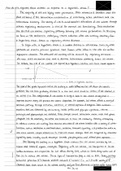
Consumer behavior reflects the totality of consumers’ decisions with respect to the
acquisition, consumption, and disposition of goods, services, activities, experiences, people,
and ideas by (human) decision-making units (over time).
Perception
Perception is the awareness or understanding of sensory information. Awareness is the
interpretation of reality. A sensation occurs when we are exposed to a stimulus; a
perception occurs when we are aware of a stimulus.
The elements of consumer perception are:
• Exposure (the idea that the stimulus enters the senses of the consumer)
• Attention (in order to perceive something, you need attention which needs to be
devoted to the stimulus)
• Comprehension (of the stimulus)
But how do people process what they are exposed to?
• Sensing: immediate response (the information of the stimulus is processed by the
brain)
• Organizing: assembling sensory evidence into something recognizable
There are three different ways in which
information can be organized:
, 1. Assimilation (when the sensory
information shares the same
characteristics of information that
you already have/know → it fits to
a category, e.g., black coffee)
2. Accommodation (when the sensory information shares some but not all
characteristics → need an adjustment for fit, e.g., iced coffee)
3. Contrast (when the sensory information does not share any characteristics → it
cannot fit to a category, therefore it is either not integrated in the knowledge or
it creates new knowledge in your brain, e.g., red wine)
• Reacting: physical and/or mental response to the stimulus
Theories about perception:
“Is awareness of the stimulus necessary to influence consumers?”
Researchers were doubting whether we need to study stimuli and awareness. However, the
traditional dissociation paradigm suggests that consumers are influenced by stimuli even
when they are not aware of them.
When do we detect the stimuli?
There are different types of thresholds of awareness:
• Objective threshold (any stimuli below this threshold is not detected by the senses)
→ so you don’t have a perception
• Subjective threshold (any stimuli above this threshold enters conscious awareness)
→ supraliminal stage or stimuli
o The subjective threshold is a function of attention and motivation.
• In between (so below the subjective threshold and above the objective threshold)
you have a perception, so the stimuli are detected by the senses, but it does not
enter conscious awareness → subliminal stage or stimuli.
Article 1: ‘Stimulus recognition and the mere exposure effect’ by Bornstein & D’Agonstino
(1992)
Why do we need to study stimuli and something we are not aware of? Because it leads to the
problem: how can we measure something that consumers are not aware of?
Week 1: The Psychological Core
• Bornstein, Robert F., and Paul R. D'agostino. (1992) "Stimulus recognition and the
mere exposure effect." Journal of Personality and Social Psychology, 63 (4), 545.
• Atalay, A. Selin, H. Onur Bodur, and Dina Rasolofoarison. Shining in the center Central
gaze cascade effect on product choice. Journal of Consumer Research 39, no. 4
(2012) 848-866
• Dimofte, Claudiu V., and Richard F. Yalch. (2011), "The mere association effect and
brand evaluations." Journal of Consumer Psychology, 21 (1), 24-37.
• Krishna, A. (2012). An integrative review of sensory marketing: Engaging the senses
to affect perception, judgment and behavior. Journal of Consumer Psychology, 22(3),
332-351.
Week 2: Consumer Rationality
• Levin, I. P., & Gaeth, G. J. (1988). How consumers are affected by the framing of
attribute information before and after consuming the product. Journal of Consumer
Research, 15(3), 374-378
• Hsee, C. K., Loewenstein, G. F., Blount, S., & Bazerman, M. H. (1999). Preference
reversals between joint and separate evaluations of options: a review and theoretical
analysis. Psychological bulletin, 125(5), 576
• Shampanier, K., Mazar, N., & Ariely, D. (2007). Zero as a special price: The true value
of free products. Marketing science, 26(6), 742-757.
• Khan, U., & Dhar, R. (2010). Price-framing effects on the purchase of hedonic and
utilitarian bundles. Journal of Marketing Research, 47(6), 1090-1099.
Week 3: Affective and Emotional Consumer Reactions
• Berger, J., & Milkman, K. L. (2012). What makes online content viral? Journal of
Marketing Research, 49(2), 192-205.
• Sanbonmatsu, D. M., & Kardes, F. R. (1988). The effects of physiological arousal on
information processing and persuasion. Journal of Consumer research, 15(3), 379-
385.
• Pham, M. T., Geuens, M., & De Pelsmacker, P. (2013). The influence of ad-evoked
feelings on brand evaluations: Empirical generalizations from consumer responses to
more than 1000 TV commercials. International Journal of Research in Marketing,
30(4), 383-394.
• Di Muro, F., & Murray, K. B. (2012). An arousal regulation explanation of mood
effects on consumer choice. Journal of Consumer Research, 39(3), 574-584.
Week 4: Social Influences on Consumer Behavior
• Argo, J. J., & Dahl, D. W. (2020), “Social Influence in the Retail Context: A
Contemporary Review of the Literature.“ Journal of Retailing, 96(1), 25-39.
• McFerran, Brent, Darren W. Dahl, Gavan J. Fitzsimons, and Andrea C. Morales.
(2010), "I’ll have what she’s having: Effects of social influence and body type on the
food choices of others." Journal of Consumer Research, 36(6), 915-929.
, • Barasch, Alixandra, and Jonah Berger (2014), "Broadcasting and narrowcasting: How
audience size affects what people share." Journal of Marketing Research , 51(3), 286-
299.
• Berger, Jonah. (2014), "Word of mouth and interpersonal communication: A review
and directions for future research." Journal of Consumer Psychology 24,(4) 586-607.
Week 5: Consumer Culture and Identity
• Puntoni, Stefano, Steven Sweldens, and Nader T. Tavassoli (2011), "Gender identity
salience and perceived vulnerability to breast cancer." Journal of Marketing
Research, 48 (3), 413-424.
• Han, Young Jee, Joseph C. Nunes, and Xavier Drèze (2010), "Signaling status with
luxury goods: The role of brand prominence." Journal of Marketing, 74(4), 15-30.
• Argo, Jennifer J., and Darren W. Dahl (2018), "Standards of beauty: The impact of
mannequins in the retail context." Journal of Consumer Research, 44(50), 974-990.
• Reed II, Americus, Mark R. Forehand, Stefano Puntoni, and Luk Warlop
(2012),"Identity-based consumer behavior." International Journal of Research in
Marketing, 29 (4), 310-321.
Week 6: Consumers and Marketing for a “Better World”
• Kivetz, R., Urminsky, O., & Zheng, Y. (2006). The goal-gradient hypothesis
resurrected: Purchase acceleration, illusionary goal progress, and customer
retention. Journal of Marketing Research, 43(1), 39-58.
• Goldstein, N. J., Cialdini, R. B., & Griskevicius, V. (2008). A room with a viewpoint:
Using social norms to motivate environmental conservation in hotels. Journal of
Consumer Research, 35(3), 472-482.
• Okada, E. M. (2005). Justification effects on consumer choice of hedonic and
utilitarian goods. Journal of Marketing Research, 42(1), 43-53.
• Khan, U., & Dhar, R. (2006). Licensing effect in consumer choice. Journal of marketing
research, 43(2), 259-266.
,Consumer Behavior – Lecture notes: The Psychological Core (Week 1)
Consumer behavior reflects the totality of consumers’ decisions with respect to the
acquisition, consumption, and disposition of goods, services, activities, experiences, people,
and ideas by (human) decision-making units (over time).
Perception
Perception is the awareness or understanding of sensory information. Awareness is the
interpretation of reality. A sensation occurs when we are exposed to a stimulus; a
perception occurs when we are aware of a stimulus.
The elements of consumer perception are:
• Exposure (the idea that the stimulus enters the senses of the consumer)
• Attention (in order to perceive something, you need attention which needs to be
devoted to the stimulus)
• Comprehension (of the stimulus)
But how do people process what they are exposed to?
• Sensing: immediate response (the information of the stimulus is processed by the
brain)
• Organizing: assembling sensory evidence into something recognizable
There are three different ways in which
information can be organized:
, 1. Assimilation (when the sensory
information shares the same
characteristics of information that
you already have/know → it fits to
a category, e.g., black coffee)
2. Accommodation (when the sensory information shares some but not all
characteristics → need an adjustment for fit, e.g., iced coffee)
3. Contrast (when the sensory information does not share any characteristics → it
cannot fit to a category, therefore it is either not integrated in the knowledge or
it creates new knowledge in your brain, e.g., red wine)
• Reacting: physical and/or mental response to the stimulus
Theories about perception:
“Is awareness of the stimulus necessary to influence consumers?”
Researchers were doubting whether we need to study stimuli and awareness. However, the
traditional dissociation paradigm suggests that consumers are influenced by stimuli even
when they are not aware of them.
When do we detect the stimuli?
There are different types of thresholds of awareness:
• Objective threshold (any stimuli below this threshold is not detected by the senses)
→ so you don’t have a perception
• Subjective threshold (any stimuli above this threshold enters conscious awareness)
→ supraliminal stage or stimuli
o The subjective threshold is a function of attention and motivation.
• In between (so below the subjective threshold and above the objective threshold)
you have a perception, so the stimuli are detected by the senses, but it does not
enter conscious awareness → subliminal stage or stimuli.
Article 1: ‘Stimulus recognition and the mere exposure effect’ by Bornstein & D’Agonstino
(1992)
Why do we need to study stimuli and something we are not aware of? Because it leads to the
problem: how can we measure something that consumers are not aware of?