GPSTC EXAM 7 QUESTIONS AND
ANSWERS
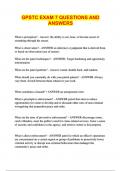
What is perception? - Answer: the ability to see, hear, or become aware of
something through the senses.
What is observation? - ANSWER an inference or judgment that is derived from
or based on observation (use of senses)
What are the patrol techniques? - ANSWER: Target hardening and opportunity
minimization
What are the patrol patterns? - Answer: round, double-back, and random.
What should you constantly do with your patrol pattern? - ANSWER Always
vary them. Switch between them whenever you work.
What constitutes a hazard? • ANSWER an unexpected event
What is preemptive enforcement? - ANSWER patrol that aims to reduce
opportunities for crime to develop and to dissuade other sorts of non-criminal
wrongdoing that jeopardize peace and order.
What are the aims of preventive enforcement? - ANSWER discourage crime,
catch offenders, meet the public's need for crime-related services, foster a sense
of security and confidence in the agency, and retrieve stolen or lost property
What is direct enforcement? - ANSWER patrol in which an officer's operations
are concentrated on a certain region or group of problems to proactively lower
criminal activity or disrupt non-criminal behaviours that endanger the
community's peace and order.
, What are the three basic responsibilities of police patrol? - Respond to the
protection of life and property, the prevention of crime, and the maintenance of
peace and order.
What are the different types of patrols? - ANSWER: Foot, motorized, and
specialized patrol
Should you be familiar with the physical and topographical features of the area
you are responsible for patrolling? - The answer is yes.
What are the different sorts of problem area patrols? - ANSWER guided,
preventative and apprehension
What is In Re Winship? - Answer proof beyond a reasonable doubt.
What are the three juvenile jurisdictions? - ANSWER Juvenile, concurrent, and
superior exclusive original
What did the juvenile exclusive original include? - ANSWER concerns any
youngster.delinquent, alleged child in need of assistance, dependent, in need of
treatment/commitment as a mentally ill/developmentally impaired youngster,
placed under court supervision, and accused of committing a juvenile traffic
offense
Concerning a child who has stayed in foster care after reaching the age of 18.
involving any proceedings: judicial consent to marriage, employment, or
enlisting in the armed forces, permanent guardianship, interstate compact,
termination of parental rights, emancipation, and abortion.
ANSWERS
What is perception? - Answer: the ability to see, hear, or become aware of
something through the senses.
What is observation? - ANSWER an inference or judgment that is derived from
or based on observation (use of senses)
What are the patrol techniques? - ANSWER: Target hardening and opportunity
minimization
What are the patrol patterns? - Answer: round, double-back, and random.
What should you constantly do with your patrol pattern? - ANSWER Always
vary them. Switch between them whenever you work.
What constitutes a hazard? • ANSWER an unexpected event
What is preemptive enforcement? - ANSWER patrol that aims to reduce
opportunities for crime to develop and to dissuade other sorts of non-criminal
wrongdoing that jeopardize peace and order.
What are the aims of preventive enforcement? - ANSWER discourage crime,
catch offenders, meet the public's need for crime-related services, foster a sense
of security and confidence in the agency, and retrieve stolen or lost property
What is direct enforcement? - ANSWER patrol in which an officer's operations
are concentrated on a certain region or group of problems to proactively lower
criminal activity or disrupt non-criminal behaviours that endanger the
community's peace and order.
, What are the three basic responsibilities of police patrol? - Respond to the
protection of life and property, the prevention of crime, and the maintenance of
peace and order.
What are the different types of patrols? - ANSWER: Foot, motorized, and
specialized patrol
Should you be familiar with the physical and topographical features of the area
you are responsible for patrolling? - The answer is yes.
What are the different sorts of problem area patrols? - ANSWER guided,
preventative and apprehension
What is In Re Winship? - Answer proof beyond a reasonable doubt.
What are the three juvenile jurisdictions? - ANSWER Juvenile, concurrent, and
superior exclusive original
What did the juvenile exclusive original include? - ANSWER concerns any
youngster.delinquent, alleged child in need of assistance, dependent, in need of
treatment/commitment as a mentally ill/developmentally impaired youngster,
placed under court supervision, and accused of committing a juvenile traffic
offense
Concerning a child who has stayed in foster care after reaching the age of 18.
involving any proceedings: judicial consent to marriage, employment, or
enlisting in the armed forces, permanent guardianship, interstate compact,
termination of parental rights, emancipation, and abortion.