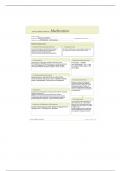
ACTIVE LEARNING TEMPLATE: Medication
STUDENT NAME _____________________________________
glyburide (DiaBeta)
MEDICATION __________________________________________________________________________ REVIEW MODULE CHAPTER ___________
Antidiabetics ; sulfonylureas
CATEGORY CLASS ______________________________________________________________________
PURPOSE OF MEDICATION
Expected Pharmacological Action Therapeutic Use
Lowers blood sugar by stimulating the release of PO Control of blood sugar in type 2 diabetes mellitus when
insulin from the pancreas and increasing the diet therapy fails. Requires some pancreatic function.
sensitivity to insulin at receptor sites.
May also decrease hepatic glucose production.
Complications Medication Administration
CNS: dizziness, drowsiness, headache, weakness, Derm: PO (Adults): DiaBeta
ERYTHEMA MULTIFORME, photosensitivity, exfoliative dermatitis, (non-micronized)– 2.5– 5 mg
rash, Endo: hypoglycemia, GI: constipation, cramps, diarrhea,
drug-induced hepatitis, dyspepsia, appetite, nausea, vomiting
once daily initially (range 1.25–
20 mg/day).
Contraindications/Precautions
Hypersensitivity, Hypersensitivity to sulfonamides
(cross-sensitivity may occur), Type 1 diabetes, Diabetic
coma or ketoacidosis, Concurrent use of bosentan Nursing Interventions
Observe for signs and symptoms of
hypoglycemic reactions (sweating,
hunger, weakness, dizziness, tremor,
tachycardia, anxiety). Patients on
concurrent beta-blocker therapy may
have very subtle signs and symptoms
Interactions of hypoglycemia.
Increased risk of elevated liver enzymes when used with bosentan
(avoid concurrent use).
Ingestion of alcohol may result in disulfiram-like reaction.
Effectiveness may be decreased by concurrent use of diuratics,
corticosteroids, phonothiazines, oral contraceptives, estrogens,
thyroid preparations, phenytoin, nicotinic acid and isoniazid.
Client Education
Instruct patient to take medication at
same time each day. Take missed
Evaluation of Medication Effectiveness doses as soon as remembered unless
almost time for next dose. Do not take
Control of blood glucose levels without the appearance of if unable to eat.
hypoglycemic or hyperglycemic episodes. Explain to patient that this medication
controls hyperglycemia but does not
cure diabetes. Therapy is long term.
ACTIVE LEARNING TEMPLATES THERAPEUTIC PROCEDURE A7
STUDENT NAME _____________________________________
glyburide (DiaBeta)
MEDICATION __________________________________________________________________________ REVIEW MODULE CHAPTER ___________
Antidiabetics ; sulfonylureas
CATEGORY CLASS ______________________________________________________________________
PURPOSE OF MEDICATION
Expected Pharmacological Action Therapeutic Use
Lowers blood sugar by stimulating the release of PO Control of blood sugar in type 2 diabetes mellitus when
insulin from the pancreas and increasing the diet therapy fails. Requires some pancreatic function.
sensitivity to insulin at receptor sites.
May also decrease hepatic glucose production.
Complications Medication Administration
CNS: dizziness, drowsiness, headache, weakness, Derm: PO (Adults): DiaBeta
ERYTHEMA MULTIFORME, photosensitivity, exfoliative dermatitis, (non-micronized)– 2.5– 5 mg
rash, Endo: hypoglycemia, GI: constipation, cramps, diarrhea,
drug-induced hepatitis, dyspepsia, appetite, nausea, vomiting
once daily initially (range 1.25–
20 mg/day).
Contraindications/Precautions
Hypersensitivity, Hypersensitivity to sulfonamides
(cross-sensitivity may occur), Type 1 diabetes, Diabetic
coma or ketoacidosis, Concurrent use of bosentan Nursing Interventions
Observe for signs and symptoms of
hypoglycemic reactions (sweating,
hunger, weakness, dizziness, tremor,
tachycardia, anxiety). Patients on
concurrent beta-blocker therapy may
have very subtle signs and symptoms
Interactions of hypoglycemia.
Increased risk of elevated liver enzymes when used with bosentan
(avoid concurrent use).
Ingestion of alcohol may result in disulfiram-like reaction.
Effectiveness may be decreased by concurrent use of diuratics,
corticosteroids, phonothiazines, oral contraceptives, estrogens,
thyroid preparations, phenytoin, nicotinic acid and isoniazid.
Client Education
Instruct patient to take medication at
same time each day. Take missed
Evaluation of Medication Effectiveness doses as soon as remembered unless
almost time for next dose. Do not take
Control of blood glucose levels without the appearance of if unable to eat.
hypoglycemic or hyperglycemic episodes. Explain to patient that this medication
controls hyperglycemia but does not
cure diabetes. Therapy is long term.
ACTIVE LEARNING TEMPLATES THERAPEUTIC PROCEDURE A7