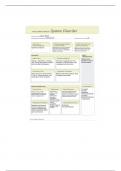
ACTIVE LEARNING TEMPLATE: System Disorder
Jessica Willard
STUDENT NAME _____________________________________
Hypertension
DISORDER/DISEASE PROCESS __________________________________________________________ 30
REVIEW MODULE CHAPTER ___________
Alterations in Pathophysiology Related Health Promotion and
Health (Diagnosis) to Client Problem Disease Prevention
high blood pressure Hypertension is a chronic increase of Maintain a routine of daily exercises,
blood pressure that damages the decrease the intake of alcohol, use of
organs and results in susceptibility to sodium with restrictions and weight
disease and mortality. reduction for obese patients.
ASSESSMENT SAFETY
CONSIDERATIONS
Risk Factors Expected Findings Monitor blood
Obesity, sedentarism, smoking, Dizziness, headache are most pressure to avoid
race, having high intake of sodium common, but blurried eyes, and MI and strokes.
and low intake of potassium. nosebleeds can also occur
Laboratory Tests Diagnostic Procedures
Blood cell count, blood chem for Measure the blood pressure using
K, Na, Cr, fasting glucose, total a sphygmomanometer.
Cholesterol, ECG, urinalysis.
PATIENT-CENTERED CARE Complications
Nursing Care Medications Client Education Increased
Teach about lifestyle changes
vascular
Monitor and record BP, Angiotensin II
blockers, ACE such as increasing fruit and resistance,
auscultate heart tones and
breath sounds, monitor skin inhibitors, vegetable consumption, practicing VasoconstrictionM
exercise, smoke cessation and yocardial
color and capillary refill Direct-acting
reducing saturated fat intake.
parenteral ischemiaVentricula
vasodilators, r hypertrophy
Adrenergic neuron
blockers, Calcium
Therapeutic Procedures channel Interprofessional Care
antagonists,
Relaxation techniques, Potassium sparing Nutritional
comfort measures and diuretics, Loop servicesPhysician
diuretics
distractions.Maintaining
activity restrictions and a
calm environment
ACTIVE LEARNING TEMPLATES
Jessica Willard
STUDENT NAME _____________________________________
Hypertension
DISORDER/DISEASE PROCESS __________________________________________________________ 30
REVIEW MODULE CHAPTER ___________
Alterations in Pathophysiology Related Health Promotion and
Health (Diagnosis) to Client Problem Disease Prevention
high blood pressure Hypertension is a chronic increase of Maintain a routine of daily exercises,
blood pressure that damages the decrease the intake of alcohol, use of
organs and results in susceptibility to sodium with restrictions and weight
disease and mortality. reduction for obese patients.
ASSESSMENT SAFETY
CONSIDERATIONS
Risk Factors Expected Findings Monitor blood
Obesity, sedentarism, smoking, Dizziness, headache are most pressure to avoid
race, having high intake of sodium common, but blurried eyes, and MI and strokes.
and low intake of potassium. nosebleeds can also occur
Laboratory Tests Diagnostic Procedures
Blood cell count, blood chem for Measure the blood pressure using
K, Na, Cr, fasting glucose, total a sphygmomanometer.
Cholesterol, ECG, urinalysis.
PATIENT-CENTERED CARE Complications
Nursing Care Medications Client Education Increased
Teach about lifestyle changes
vascular
Monitor and record BP, Angiotensin II
blockers, ACE such as increasing fruit and resistance,
auscultate heart tones and
breath sounds, monitor skin inhibitors, vegetable consumption, practicing VasoconstrictionM
exercise, smoke cessation and yocardial
color and capillary refill Direct-acting
reducing saturated fat intake.
parenteral ischemiaVentricula
vasodilators, r hypertrophy
Adrenergic neuron
blockers, Calcium
Therapeutic Procedures channel Interprofessional Care
antagonists,
Relaxation techniques, Potassium sparing Nutritional
comfort measures and diuretics, Loop servicesPhysician
diuretics
distractions.Maintaining
activity restrictions and a
calm environment
ACTIVE LEARNING TEMPLATES