LRA 2002
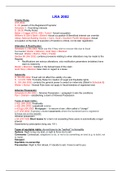
Priority Rules
LRA 2002:
S. 23: powers of the Registered Proprietor
Schedule 3 - Overriding interests
S. 28-29: Priority Rules
Baker v Craggs (2010), AIB v Turner– Actual occupation
Williams & Glyn's Bank v Boland: Actual occupation & Beneficial interest can override
Abbey National Building Society v Cann, Scott v Southern Pacific Mortgages: Actual
occupation at the date of execution of transfer is critical, not its later registration
Alteration & Rectification
Schedule 4, LRA 2002: Must use this if they wish to recover title due to fraud
Succeeded: Baxter v Mannion, Gold Harp v Macleod.
Refused: Walker v Burton, Patel v Freddy
Section 65 LRA 2002: contains provisions relating to when alterations may be made to the
Register
Rectifications are serious alterations, only rectification parameters (mistakes) have
claim to indemnity
Baxter v Mannion: mistake in the factual basis of the claim
Gold Harp v Macleod: false claim in regard to a lease
Indemnity
S. 58 LRA 2002: Fraud will not affect the validity of a sale
S. 1-2 LPA 1989: Formality Rules for creation of Legal and Equitable rights
S. 103 LRA 2002: contains the general power to award an indemnity (Detail in Schedule 8)
Walter v Burton - Nomad Rule does not apply in fraud/mistakes of registered land
Adverse Possession
Schedule 6 LRA 2002 – Adverse Possession – paragraph 5 sets the conditions.
Pye v Graham – establishing a claim of Adverse Possession
Types of legal rights:
s 4(2) LRA 2002: Freeholds
s 4(2) LRA 2002: Leasehold estates
s 4(1)(g) LRA 2002: Mortgages -- to secure a loan, often called a "charge"
s 27 LRA 2002: Expressly created easements where the burdened land is registered
& those not on the register:
Adverse possession
s 54 LPA 1925 Short leases for a term not exceeding three years is automatically a legal
interest
Easements by prescription (long use, 10+)
Types of equitable rights: do not have to be "perfect" in formality
Options: Right to buy my land, or right to force me to sell
Covenants: Contractual, obligations to do, or not to do something on land (e.g. to build, not
to trade)
Estoppel:
Equitable co-ownership
Pre-emotion: Right to first refusal, if I decide to sell, I have to sell to you
, → Equitable rights cannot bind a person if they are bona fide purchaser of a legal estate for
value without notice (an innocent party who purchases property without notice of any other
party's claim to the title of that property)
Leases
Section that states that leases under 7-years are not to be registered:
S. 54 (2) LPA 1925: leases of 3 years or under do not have to be in a deed to be valid. They
can be agreed verbally or in writing
S. 27 LRA – Legal Leases under 7 years do not have to be registered
S. 33 LRA – Rights that cannot be protected by a notice
Paragraph 1 Schedule 3 LRA – leases (7 years max) qualify as overriding interests under
this
Street v Mountford - Exclusive possession - for a term - at a rent.
Legal Lease Formalities
1. By deed (Law of Property Act 1925, s. 52(1)
2. 7+ years must also be registered (Land Registration Act 2002 sections 3, 4)
3. 3 Years or less: may be created orally and remain as a legal estate - Law of Property Act
1925, s. 54(2)
a. Transfer must be effected by deed Crago v. Julian
Creation of a deed
Section 1 Law of Property (Misc Provisions) Act 1989
1. clear on its face that it is a deed (S 1[2])
2. signed by the grantor (S1[3])
3. witnessed (S1[3])
4. delivered
Equitable Lease formalities
Walsh v. Lonsdale: A contract in writing (not deed) for a lease (S 2, Law of Property Act
1989) takes effect as an equitable lease:
1. In writing (NOT oral)
2. Containing all the terms
3. Signed by both parties
ESSENTIAL CHARACTERISTICS OF A LEASE
1. Exclusive Possession
2. For a term certain
3. At a rent (?)
(1) Exclusive Possession: Exceptional Circumstances where exclusive possession will
NOT amount to a lease (Street v Mountford):
1. Mortgagee in possession: because they are exercising their rights under the
mortgage
2. Acts of family generosity or charity – Grey v Taylor
3. Based on friendship where no legal relations were intended Marcroft
Wagons v Smith.
4. Service occupiers where the exclusive possession is related to the contract
of employment (Facchini v Bryson)- school caretaker, security guards, Military
personnel.
, 5. Tenant as a Lodger: where the tenant provides services (other than
maintenance) such as cleaning, food, laundry etc… Those services destroy
the exclusive possession (Street v Mountford) e.g. hotels, room in a house.
6. Multiple Occupants: 4 people sign one lease, one rent. OR all 4 would
licenses and no one would have a lease. – Four unities AG Securities v
Vaughan and Anton. v Villiers
7. Occupiers of a property that will be demolished soon. Very vulnerable to
squatters. Land Owner can allow people to occupy it to take care of it. they
will act as “guardians”. it is not a lease.
1. Camelot Properties v Khoo [2018] –not a lease because of the substance of
the agreement.
b. Westminster CC v Clarke– It may be permissible to give somebody a license
where that helps somebody perform a statutory property obligation.
1. Local authority has an obligation to house homeless people. Give a homeless
man a two bedroom flat, two weeks later a family of 4 members needs a
house, they can relocate the man.
All of the above points are subject to the Doctrine of Pretences– Antionades v Villiers– you
cannot structure the lease agreement with the sole purpose of not granting a lease.
(2) For a term:
It has to be for a certain period. It has to specify a number. It cannot say “until you pass the
GDL’.
1. S.419 LPA– leases for life and leases for marriage are converted into 90 years
leases.
2. Implied Periodic Tenancies (Prudential): if not period is specified, but you regularly
paid rent, the law will imply a period. *look out for those in exam*
3. An open ending period: lease for a thousand years but can be terminated if
Arsenal wins the champions league. It has to be an objective external event
1. Berrisford v Mexfield: supreme court decision: where an intended lease is
given to a person (non-commercial), for an uncertain period, that is to be
interpreted as a lease for their life – s419 turns it into a 90 year lease or death
whatever is closer.
Southward Housing Cooperative v Walker – this approach could only
apply when the parties originally intended a lease for life.
Hardy v Haselden - Berrisford does not overstep formality rules. If no
written agreement then no lease.
(3) At a rent
1. S. 205 xxvii LPA 1925 - you do not need the obligation to pay – it is not essential for
a lease. Lord Templeman in Street v M. was referring to leases under the rents act.
1. Javid v Aqil– the absence of a rental obligation is an indication that the parties
did not intend to enter into binding legal relations.
b. S.419 LPA– leases for life and leases for marriage are converted into 90 years
leases.
Implied Periodic Tenancies: if not period is specified, but you regularly paid rent, the law
will imply a period (case?)
An open ending period: lease for a thousand years but can be terminated if Arsenal wins
the champions league. It has to be an objective external event (case?)
Perpetually renewable leases (Law of Property Act 1925 145, Schedule 15)
Tenancies at will (Javad v. Aqil (1991): The dividing lines between an expressly created
tenancy at will, a legal periodic tenancy and a licence may be difficult to determine)
Priority Rules
LRA 2002:
S. 23: powers of the Registered Proprietor
Schedule 3 - Overriding interests
S. 28-29: Priority Rules
Baker v Craggs (2010), AIB v Turner– Actual occupation
Williams & Glyn's Bank v Boland: Actual occupation & Beneficial interest can override
Abbey National Building Society v Cann, Scott v Southern Pacific Mortgages: Actual
occupation at the date of execution of transfer is critical, not its later registration
Alteration & Rectification
Schedule 4, LRA 2002: Must use this if they wish to recover title due to fraud
Succeeded: Baxter v Mannion, Gold Harp v Macleod.
Refused: Walker v Burton, Patel v Freddy
Section 65 LRA 2002: contains provisions relating to when alterations may be made to the
Register
Rectifications are serious alterations, only rectification parameters (mistakes) have
claim to indemnity
Baxter v Mannion: mistake in the factual basis of the claim
Gold Harp v Macleod: false claim in regard to a lease
Indemnity
S. 58 LRA 2002: Fraud will not affect the validity of a sale
S. 1-2 LPA 1989: Formality Rules for creation of Legal and Equitable rights
S. 103 LRA 2002: contains the general power to award an indemnity (Detail in Schedule 8)
Walter v Burton - Nomad Rule does not apply in fraud/mistakes of registered land
Adverse Possession
Schedule 6 LRA 2002 – Adverse Possession – paragraph 5 sets the conditions.
Pye v Graham – establishing a claim of Adverse Possession
Types of legal rights:
s 4(2) LRA 2002: Freeholds
s 4(2) LRA 2002: Leasehold estates
s 4(1)(g) LRA 2002: Mortgages -- to secure a loan, often called a "charge"
s 27 LRA 2002: Expressly created easements where the burdened land is registered
& those not on the register:
Adverse possession
s 54 LPA 1925 Short leases for a term not exceeding three years is automatically a legal
interest
Easements by prescription (long use, 10+)
Types of equitable rights: do not have to be "perfect" in formality
Options: Right to buy my land, or right to force me to sell
Covenants: Contractual, obligations to do, or not to do something on land (e.g. to build, not
to trade)
Estoppel:
Equitable co-ownership
Pre-emotion: Right to first refusal, if I decide to sell, I have to sell to you
, → Equitable rights cannot bind a person if they are bona fide purchaser of a legal estate for
value without notice (an innocent party who purchases property without notice of any other
party's claim to the title of that property)
Leases
Section that states that leases under 7-years are not to be registered:
S. 54 (2) LPA 1925: leases of 3 years or under do not have to be in a deed to be valid. They
can be agreed verbally or in writing
S. 27 LRA – Legal Leases under 7 years do not have to be registered
S. 33 LRA – Rights that cannot be protected by a notice
Paragraph 1 Schedule 3 LRA – leases (7 years max) qualify as overriding interests under
this
Street v Mountford - Exclusive possession - for a term - at a rent.
Legal Lease Formalities
1. By deed (Law of Property Act 1925, s. 52(1)
2. 7+ years must also be registered (Land Registration Act 2002 sections 3, 4)
3. 3 Years or less: may be created orally and remain as a legal estate - Law of Property Act
1925, s. 54(2)
a. Transfer must be effected by deed Crago v. Julian
Creation of a deed
Section 1 Law of Property (Misc Provisions) Act 1989
1. clear on its face that it is a deed (S 1[2])
2. signed by the grantor (S1[3])
3. witnessed (S1[3])
4. delivered
Equitable Lease formalities
Walsh v. Lonsdale: A contract in writing (not deed) for a lease (S 2, Law of Property Act
1989) takes effect as an equitable lease:
1. In writing (NOT oral)
2. Containing all the terms
3. Signed by both parties
ESSENTIAL CHARACTERISTICS OF A LEASE
1. Exclusive Possession
2. For a term certain
3. At a rent (?)
(1) Exclusive Possession: Exceptional Circumstances where exclusive possession will
NOT amount to a lease (Street v Mountford):
1. Mortgagee in possession: because they are exercising their rights under the
mortgage
2. Acts of family generosity or charity – Grey v Taylor
3. Based on friendship where no legal relations were intended Marcroft
Wagons v Smith.
4. Service occupiers where the exclusive possession is related to the contract
of employment (Facchini v Bryson)- school caretaker, security guards, Military
personnel.
, 5. Tenant as a Lodger: where the tenant provides services (other than
maintenance) such as cleaning, food, laundry etc… Those services destroy
the exclusive possession (Street v Mountford) e.g. hotels, room in a house.
6. Multiple Occupants: 4 people sign one lease, one rent. OR all 4 would
licenses and no one would have a lease. – Four unities AG Securities v
Vaughan and Anton. v Villiers
7. Occupiers of a property that will be demolished soon. Very vulnerable to
squatters. Land Owner can allow people to occupy it to take care of it. they
will act as “guardians”. it is not a lease.
1. Camelot Properties v Khoo [2018] –not a lease because of the substance of
the agreement.
b. Westminster CC v Clarke– It may be permissible to give somebody a license
where that helps somebody perform a statutory property obligation.
1. Local authority has an obligation to house homeless people. Give a homeless
man a two bedroom flat, two weeks later a family of 4 members needs a
house, they can relocate the man.
All of the above points are subject to the Doctrine of Pretences– Antionades v Villiers– you
cannot structure the lease agreement with the sole purpose of not granting a lease.
(2) For a term:
It has to be for a certain period. It has to specify a number. It cannot say “until you pass the
GDL’.
1. S.419 LPA– leases for life and leases for marriage are converted into 90 years
leases.
2. Implied Periodic Tenancies (Prudential): if not period is specified, but you regularly
paid rent, the law will imply a period. *look out for those in exam*
3. An open ending period: lease for a thousand years but can be terminated if
Arsenal wins the champions league. It has to be an objective external event
1. Berrisford v Mexfield: supreme court decision: where an intended lease is
given to a person (non-commercial), for an uncertain period, that is to be
interpreted as a lease for their life – s419 turns it into a 90 year lease or death
whatever is closer.
Southward Housing Cooperative v Walker – this approach could only
apply when the parties originally intended a lease for life.
Hardy v Haselden - Berrisford does not overstep formality rules. If no
written agreement then no lease.
(3) At a rent
1. S. 205 xxvii LPA 1925 - you do not need the obligation to pay – it is not essential for
a lease. Lord Templeman in Street v M. was referring to leases under the rents act.
1. Javid v Aqil– the absence of a rental obligation is an indication that the parties
did not intend to enter into binding legal relations.
b. S.419 LPA– leases for life and leases for marriage are converted into 90 years
leases.
Implied Periodic Tenancies: if not period is specified, but you regularly paid rent, the law
will imply a period (case?)
An open ending period: lease for a thousand years but can be terminated if Arsenal wins
the champions league. It has to be an objective external event (case?)
Perpetually renewable leases (Law of Property Act 1925 145, Schedule 15)
Tenancies at will (Javad v. Aqil (1991): The dividing lines between an expressly created
tenancy at will, a legal periodic tenancy and a licence may be difficult to determine)