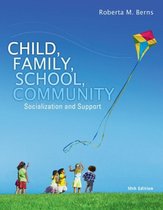
,Test Bank For Child, Family, School, Community: Socialization and Support
Chapter_1_Ecology_of_the_Child
Multiple Choice
1. Forces affecting how children are socialized include which of the following?
a. Demographics
b. Economics
c. Politics
d. All of these
ANSWER: d
LEARNING OBJECTIVES: CFSC.BERN.16.1-2 - Define socialization and explain how it relates to child development.
KEYWORDS: Blooms: Understand
NOTES: NAEYC: 1
NASEW: 2
NAEYC: 2
NAEYC: 4
2. The process by which individuals acquire the knowledge, skills, and character traits that enable them to participate as
effective members of groups and society is called
a. socialization.
b. maturation.
c. temperament.
d. revolution.
ANSWER: a
LEARNING OBJECTIVES: CFSC.BERN.16.1-2 - Define socialization and explain how it relates to child development.
KEYWORDS: Blooms: Remember
NOTES: NAEYC: 1
NASW: 2
NAEYC: 4
NASW: 8
3. According to Handel, Cahill, and Elkin (2007), socialization occurs
a. by means of communication.
b. through interactions with significant others.
c. in emotionally significant contexts.
d. all of these.
ANSWER: d
LEARNING OBJECTIVES: CFSC.BERN.16.1-2 - Define socialization and explain how it relates to child development.
KEYWORDS: Blooms: Remember
NOTES: NAEYC: 2
NASW: 4
NASW: 5
4. The process by which externally controlled behavior shifts to internally controlled, or self-controlled, behavior is
1
,Test Bank For Child, Family, School, Community: Socialization and Support
Chapter_1_Ecology_of_the_Child
a. internalization.
b. socialization.
c. reciprocal connection.
d. cultural change.
ANSWER: a
LEARNING OBJECTIVES: CFSC.BERN.16.1-4 - List the reciprocal factors (biological and socialization) related to
developmental outcomes.
KEYWORDS: Blooms: Remember
NOTES: NAEYC: 1
NASW: 4
NAEYC: 4
NASW: 5
5. “Socialization as a reciprocal process” refers to which of the following ideas?
a. When individuals interact, a response in one individual usually elicits a response in the other.
b. Both mothers and fathers are important in the lives of children.
c. Children are socialized by many people; many people are important in their lives.
d. Human interactions change over time.
ANSWER: a
LEARNING OBJECTIVES: CFSC.BERN.16.1-2 - Define socialization and explain how it relates to child development.
KEYWORDS: Blooms: Understand
NOTES: NAEYC: 1
NASW: 1
NAEYC: 2
NAEYC: 4
6. The process of socialization begins
a. at birth.
b. before birth.
c. at school-age.
d. after birth.
ANSWER: b
LEARNING OBJECTIVES: CFSC.BERN.16.1-2 - Define socialization and explain how it relates to child development.
KEYWORDS: Blooms: Remember
NOTES: NAEYC: 1
NASW: 1
7. The total composite of hereditary instructions coded in the genes at the moment of conception is one’s
a. identity.
b. genotype.
c. exosystem.
d. chronosystem.
2
, Test Bank For Child, Family, School, Community: Socialization and Support
Chapter_1_Ecology_of_the_Child
ANSWER: b
LEARNING OBJECTIVES: CFSC.BERN.16.1-3 - Name two characteristics of the brain that make socialization unique in
homes.
KEYWORDS: Blooms: Remember
NOTES: NAEYC: 4
NASW: 1
8. Genetic prewiring that motivates a person to seek out compatible environments is called
a. active.
b. passive.
c. language-rich.
d. responsive.
ANSWER: a
LEARNING OBJECTIVES: CFSC.BERN.16.1-2 - Define socialization and explain how it relates to child development.
KEYWORDS: Blooms: Remember
NOTES: NAEYC: 1
NASW: 1
NAEYC: 4
9. A happy, sociable child is more likely to engage others in social activities than a moody, shy child. This is an example
of a(n)
a. passive genotype–environment interaction.
b. active genotype–environment interaction.
c. evocative genotype–environment interaction.
d. none of these.
ANSWER: c
LEARNING OBJECTIVES: CFSC.BERN.16.1-2 - Define socialization and explain how it relates to child development.
KEYWORDS: Blooms: Apply
NOTES: NAEYC: 4
NASW: 10
NAEYC: 5
10. The difficult child has what kind of response?
a. Intense
b. Mild
c. Indifferent
d. Adaptable
ANSWER: a
LEARNING OBJECTIVES: CFSC.BERN.16.1-2 - Define socialization and explain how it relates to child development.
KEYWORDS: Blooms: Understand
NOTES: NAEYC: 1
NASW: 8
3
Chapter_1_Ecology_of_the_Child
Multiple Choice
1. Forces affecting how children are socialized include which of the following?
a. Demographics
b. Economics
c. Politics
d. All of these
ANSWER: d
LEARNING OBJECTIVES: CFSC.BERN.16.1-2 - Define socialization and explain how it relates to child development.
KEYWORDS: Blooms: Understand
NOTES: NAEYC: 1
NASEW: 2
NAEYC: 2
NAEYC: 4
2. The process by which individuals acquire the knowledge, skills, and character traits that enable them to participate as
effective members of groups and society is called
a. socialization.
b. maturation.
c. temperament.
d. revolution.
ANSWER: a
LEARNING OBJECTIVES: CFSC.BERN.16.1-2 - Define socialization and explain how it relates to child development.
KEYWORDS: Blooms: Remember
NOTES: NAEYC: 1
NASW: 2
NAEYC: 4
NASW: 8
3. According to Handel, Cahill, and Elkin (2007), socialization occurs
a. by means of communication.
b. through interactions with significant others.
c. in emotionally significant contexts.
d. all of these.
ANSWER: d
LEARNING OBJECTIVES: CFSC.BERN.16.1-2 - Define socialization and explain how it relates to child development.
KEYWORDS: Blooms: Remember
NOTES: NAEYC: 2
NASW: 4
NASW: 5
4. The process by which externally controlled behavior shifts to internally controlled, or self-controlled, behavior is
1
,Test Bank For Child, Family, School, Community: Socialization and Support
Chapter_1_Ecology_of_the_Child
a. internalization.
b. socialization.
c. reciprocal connection.
d. cultural change.
ANSWER: a
LEARNING OBJECTIVES: CFSC.BERN.16.1-4 - List the reciprocal factors (biological and socialization) related to
developmental outcomes.
KEYWORDS: Blooms: Remember
NOTES: NAEYC: 1
NASW: 4
NAEYC: 4
NASW: 5
5. “Socialization as a reciprocal process” refers to which of the following ideas?
a. When individuals interact, a response in one individual usually elicits a response in the other.
b. Both mothers and fathers are important in the lives of children.
c. Children are socialized by many people; many people are important in their lives.
d. Human interactions change over time.
ANSWER: a
LEARNING OBJECTIVES: CFSC.BERN.16.1-2 - Define socialization and explain how it relates to child development.
KEYWORDS: Blooms: Understand
NOTES: NAEYC: 1
NASW: 1
NAEYC: 2
NAEYC: 4
6. The process of socialization begins
a. at birth.
b. before birth.
c. at school-age.
d. after birth.
ANSWER: b
LEARNING OBJECTIVES: CFSC.BERN.16.1-2 - Define socialization and explain how it relates to child development.
KEYWORDS: Blooms: Remember
NOTES: NAEYC: 1
NASW: 1
7. The total composite of hereditary instructions coded in the genes at the moment of conception is one’s
a. identity.
b. genotype.
c. exosystem.
d. chronosystem.
2
, Test Bank For Child, Family, School, Community: Socialization and Support
Chapter_1_Ecology_of_the_Child
ANSWER: b
LEARNING OBJECTIVES: CFSC.BERN.16.1-3 - Name two characteristics of the brain that make socialization unique in
homes.
KEYWORDS: Blooms: Remember
NOTES: NAEYC: 4
NASW: 1
8. Genetic prewiring that motivates a person to seek out compatible environments is called
a. active.
b. passive.
c. language-rich.
d. responsive.
ANSWER: a
LEARNING OBJECTIVES: CFSC.BERN.16.1-2 - Define socialization and explain how it relates to child development.
KEYWORDS: Blooms: Remember
NOTES: NAEYC: 1
NASW: 1
NAEYC: 4
9. A happy, sociable child is more likely to engage others in social activities than a moody, shy child. This is an example
of a(n)
a. passive genotype–environment interaction.
b. active genotype–environment interaction.
c. evocative genotype–environment interaction.
d. none of these.
ANSWER: c
LEARNING OBJECTIVES: CFSC.BERN.16.1-2 - Define socialization and explain how it relates to child development.
KEYWORDS: Blooms: Apply
NOTES: NAEYC: 4
NASW: 10
NAEYC: 5
10. The difficult child has what kind of response?
a. Intense
b. Mild
c. Indifferent
d. Adaptable
ANSWER: a
LEARNING OBJECTIVES: CFSC.BERN.16.1-2 - Define socialization and explain how it relates to child development.
KEYWORDS: Blooms: Understand
NOTES: NAEYC: 1
NASW: 8
3