Chem Revision
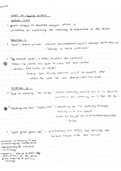
, Synthesis Of Organic liquid
Synthesis of haloalkane &
PART 1 : PREPARATION 1
i!
Separating
funnel
1) Pour 6 Scm2 Zmethyl-2-01 lock's measuring cylinder
of into a
measuring cylinder weigh the a contents .
.
,
Low density
2)Pour into socms separation funnel .
Corganic
3) Reweigh the empty measuring cylinder to deduce the mas of 2-methylpropant-ol used in reaction.
High density
4) zocm"
4
the
Measure of cone HCl , gradually add acid ,
to cne
separating
5) Place the stopper on separating funell + snake well, releasing pressure when required.
,
PART 2 :
SEPARATION
1) once allowed the mixture to
separate , remove the stopper and open the tap to collect the bottom
a layer .
-
2) close the tap-add hydrogencarbonate, to the
< thermometer
sodium
organic layer in the funel
3) snake
4) Allow mixture to separate remove bottom
, an layer
Ii
Liebigcondenser
& Repeat untill no further buildup of pressure
6) collect into Conical flash
organic layer
↓ Water
&
7) 1j
i
add anhydrous MgSO4 Slowly while swirling unill MgS0y stops clumping out
- air out
...
↑ =
M
8) Filter through filler paper into clean roundbottomed flask
. Antibumbing Round Water in
1
i
bottomed cefficient
granvels V flost
cooling
prevent large bubbles Hest
even
from forming -
PART 3 : DISTILLATION
voiling
1) Add the organic sample from the Conical flask and
antibumping granwels to the round bottomed flash , connect apparatus
.
2) collect liquidimpurities that come through the condenser below 48oC in a beaker.
3) collect liquid from condenser in the
preweighed sample tube untill no more liquid comes
through condenser.
4) weigh the l ube and
sample calculate mass of product
↓ open
6
W
water out
7)
condenser
coldwater in >
↳
-
5 2
-
&
Round bottom
flaR .
Reactant s
..
S
i antibumpting
HEAT
, Synthesis of an organic solid
Preparation of methyl 3 nitrobenzoate
PART 1 :
1) 2 . Scm3 of
methyl benzoate with Scm3 concH2SOy +icebath ·
2) add zcm3 of
HeSOy +
Cone 4NOs into an ice bath
.
3) once cooled use a
glas dropping pipette. to add the mixture from test tube to conical flask dropwise.
4) Stir + Leave for Isming
5) Add ice to the Conical fast and stir untill it melts and a pet forms .
6) filter mixture under reduced pressure
7) wash with cold water, retain few crystals for party
crystals .
PART 2 :
Recrystalation.
1) Heat ethanol
using a water bath . - Filler
Buchner
residue
- paper
funnel
2) Dissolve impure compound in minimum volume of HOT SOLVENT Filler ---
- funnel --
Filler paper
3) Filter not solution
Buchner flash > Reduced
TEL
-
pressure
4) leave to cool
filtrate
5) Filter under reduced pressure to separate crystals .
large amount of solid formed
6) Wash crystals +
Dry
. small amounts of said
Limitations
> crystal lost when filtering/washing
> some product may stay in solution after recrystalisation
& other side reaction .
PART 3 :
TLC
1) Draw a pencil line about 1 cm from bottom of TLC plate
2) capillary 1 2 and
methyl 3-nitrobenzene on TLC Each spot size , leave to
use spot to sample part and pure plate . should be the same
dry
.
3) add solvent to a beaker bellow the spots .
4) cover with a
glass to stopera pouration .
5) When solvent is near the top-stop mark the solvent front
6) calculate of values .
COMMON EXAM Q liquid
How to
purity a
-
Recrystalisation . 1) separation funnel
1) Dissolve impure compound in minimum amount ofh ot solvent 2) wash with CO2 to neutralise impurities
2) filter to remove impurities . 3) Allow layers to
(organic
separate on top
3) cool , crystals can reform but soluble impurities remain 4) Add
anhydrous salt
4) 5) Redistill put product &
scratch with glass rod
=
Bolining point
.
5) filter under reduced pressure .
6 Wash with cold solvent (won't dissolve STANDARD SOLUTION
7) Dry. 1) Dissolve solute in as mall amount
of
distilled Hy 0
2) Transfer to a volumetric flack
3) Rinse beaker with Heo + add to black
,
With HyO-2SOcm
4) Invert
, Synthesis Of Organic liquid
Synthesis of haloalkane &
PART 1 : PREPARATION 1
i!
Separating
funnel
1) Pour 6 Scm2 Zmethyl-2-01 lock's measuring cylinder
of into a
measuring cylinder weigh the a contents .
.
,
Low density
2)Pour into socms separation funnel .
Corganic
3) Reweigh the empty measuring cylinder to deduce the mas of 2-methylpropant-ol used in reaction.
High density
4) zocm"
4
the
Measure of cone HCl , gradually add acid ,
to cne
separating
5) Place the stopper on separating funell + snake well, releasing pressure when required.
,
PART 2 :
SEPARATION
1) once allowed the mixture to
separate , remove the stopper and open the tap to collect the bottom
a layer .
-
2) close the tap-add hydrogencarbonate, to the
< thermometer
sodium
organic layer in the funel
3) snake
4) Allow mixture to separate remove bottom
, an layer
Ii
Liebigcondenser
& Repeat untill no further buildup of pressure
6) collect into Conical flash
organic layer
↓ Water
&
7) 1j
i
add anhydrous MgSO4 Slowly while swirling unill MgS0y stops clumping out
- air out
...
↑ =
M
8) Filter through filler paper into clean roundbottomed flask
. Antibumbing Round Water in
1
i
bottomed cefficient
granvels V flost
cooling
prevent large bubbles Hest
even
from forming -
PART 3 : DISTILLATION
voiling
1) Add the organic sample from the Conical flask and
antibumping granwels to the round bottomed flash , connect apparatus
.
2) collect liquidimpurities that come through the condenser below 48oC in a beaker.
3) collect liquid from condenser in the
preweighed sample tube untill no more liquid comes
through condenser.
4) weigh the l ube and
sample calculate mass of product
↓ open
6
W
water out
7)
condenser
coldwater in >
↳
-
5 2
-
&
Round bottom
flaR .
Reactant s
..
S
i antibumpting
HEAT
, Synthesis of an organic solid
Preparation of methyl 3 nitrobenzoate
PART 1 :
1) 2 . Scm3 of
methyl benzoate with Scm3 concH2SOy +icebath ·
2) add zcm3 of
HeSOy +
Cone 4NOs into an ice bath
.
3) once cooled use a
glas dropping pipette. to add the mixture from test tube to conical flask dropwise.
4) Stir + Leave for Isming
5) Add ice to the Conical fast and stir untill it melts and a pet forms .
6) filter mixture under reduced pressure
7) wash with cold water, retain few crystals for party
crystals .
PART 2 :
Recrystalation.
1) Heat ethanol
using a water bath . - Filler
Buchner
residue
- paper
funnel
2) Dissolve impure compound in minimum volume of HOT SOLVENT Filler ---
- funnel --
Filler paper
3) Filter not solution
Buchner flash > Reduced
TEL
-
pressure
4) leave to cool
filtrate
5) Filter under reduced pressure to separate crystals .
large amount of solid formed
6) Wash crystals +
Dry
. small amounts of said
Limitations
> crystal lost when filtering/washing
> some product may stay in solution after recrystalisation
& other side reaction .
PART 3 :
TLC
1) Draw a pencil line about 1 cm from bottom of TLC plate
2) capillary 1 2 and
methyl 3-nitrobenzene on TLC Each spot size , leave to
use spot to sample part and pure plate . should be the same
dry
.
3) add solvent to a beaker bellow the spots .
4) cover with a
glass to stopera pouration .
5) When solvent is near the top-stop mark the solvent front
6) calculate of values .
COMMON EXAM Q liquid
How to
purity a
-
Recrystalisation . 1) separation funnel
1) Dissolve impure compound in minimum amount ofh ot solvent 2) wash with CO2 to neutralise impurities
2) filter to remove impurities . 3) Allow layers to
(organic
separate on top
3) cool , crystals can reform but soluble impurities remain 4) Add
anhydrous salt
4) 5) Redistill put product &
scratch with glass rod
=
Bolining point
.
5) filter under reduced pressure .
6 Wash with cold solvent (won't dissolve STANDARD SOLUTION
7) Dry. 1) Dissolve solute in as mall amount
of
distilled Hy 0
2) Transfer to a volumetric flack
3) Rinse beaker with Heo + add to black
,
With HyO-2SOcm
4) Invert