WGU PATHOPHYSIOLOGY D236
COMPLETE QUESTIONS AND
ANSWERS
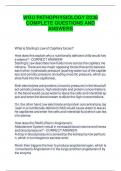
What is Starling's Law of Capillary forces?
k k k k k k k
How does this explain why a nutritionally deficient child would hav
k k k k k k k k k k
e edema? - CORRECT ANSWER-
k k k k
Starling's Law describes how fluids move across the capillary me
k k k k k k k k k
mbrane. There are two major opposing forces that act to balance
k k k k k k k k k k k
each other, hydrostatic pressure (pushing water out of the capillar
k k k k k k k k k
ies) and osmotic pressure (including oncontic pressure, which pu
k k k k k k k k
shes fluid into the capillaries).
k k k k k
Both electrolytes and proteins (oncontic pressure) in the blood aff
k k k k k k k k k
ect osmotic pressure, high electrolyte and protein concentrations
k k k k k k k k
in the blood would cause water to leave the cells and interstitial sp
k k k k k k k k k k k k
ace and enter the blood stream to dilute the high concentrations.
k k k k k k k k k k k
On, the other hand, low electrolyte and protein concentrations (as
k k k k k k k k k
seen in a nutritionally deficient child) would cause water to leave t
k k k k k k k k k k k k
he capillaries and enter the cells and interstitial fluid which can lea
k k k k k k k k k k k
d to edema.
k k
How does the RAAS (Renin-Angiotensin-
k k k k
Aldosterone System) result in increased blood volume and increa k k k k k k k k
sed blood pressure? - CORRECT ANSWER-
k k k k k
A drop in blood pressure is sensed by the kidneys by low perfusio
k k k k k k k k k k k k
n, which in turn begins to secrete renin.
k k k k k k k k
Renin then triggers the liver to produce angiotensinogen, which is
k k k k k k k k k
kconverted to Angiotensin I in the lungs and then angiotensin II by
k k k k k k k k k k k k
the enzyme k k
,Angiotensin-
converting enzyme (ACE). Angiotensin II stimulates peripheral ar
k k k k k k k
terial vasoconstriction which raises BP.
k k k k k
Angiotensin II is also stimulating the adrenal gland to release aldo
k k k k k k k k k k
sterone, which acts to increase sodium and water reabsorption in
k k k k k k k k k
creasing blood volume, while also increased potassium secretion
k k k k k k k
in urine.
k k
How can hyperkalemia lead to cardiac arrest? -
k k k k k k k
CORRECT ANSWER-
k k
Normal levels of potassium are between 3.5 and 5.2 mEq/dL. Hy
k k k k k k k k k k
perkalemia refers to potassium levels higher that 5.2 mEq/dL.
k k k k k k k k k
A major function of potassium is to conduct nerve impulses in mu
k k k k k k k k k k k
scles. Too low and muscle weakness occurs and too much can c
k k k k k k k k k k k
ause muscle spasms. k k k
This is especially dangerous in the heart muscle and an irregular
k k k k k k k k k k k
heartbeat can cause a heart attack k k k k k
The body uses the Protein Buffering System, Phosphate Bufferin
k k k k k k k k
g System, and Carbonic Acid-
k k k k
Bicarbonate System to regulate and maintain homeostatic pH, w k k k k k k k k
hat is the consequence of a pH imbalance -
k k k k k k k k
kCORRECT ANSWER- k
Proteins contain many acidic and basic group that can be affecte
k k k k k k k k k k
d by pH changes. Any increase or decrease in blood pH can alter
k k k k k k k k k k k k k
the structure of the protein (denature), thereby affecting its functio
k k k k k k k k k
n as well
k k
Describe the laboratory findings associated with metabolic acido
k k k k k k k
sis, metabolic alkalosis, respiratory acidosis and respiratory alkal
k k k k k k k
osis. (ie relative pH and CO2 levels). - CORRECT ANSWER-
k k k k k k k k k
Normal ABGs (Arterial Blood Gases) Blood pH: 7.35-
k k k k k k k
,7.45 PCO2: 35-45 mm Hg PO2: 90-100 mm Hg HCO3-: 22-
k k k k k k k k k k
26 mEq/L SaO2: 95-100%
k k k k
Respiratory acidosis and alkalosis are marked by changes in PC k k k k k k k k k
O2. Higher = acidosis and lower = alkalosis
k k k k k k k k
Metabolic acidosis and alkalosis are caused by something other t
k k k k k k k k k
han abnormal CO2 levels. This could include toxicity, diabetes, re
k k k k k k k k k
nal failure or excessive GI losses.
k k k k k k
Here are the rules to follow to determine if is respiratory or metab
k k k k k k k k k k k k
olic in nature. -
k k k
If pH and PCO2 are moving in opposite directions, then it is the p
k k k k k k k k k k k k k
CO2 levels that are causing the imbalance and it is respiratory in
k k k k k k k k k k k k
nature. k
-
If PCO2 is normal or is moving in the same direction as the pH, th
k k k k k k k k k k k k k k
en the imbalance is metabolic in nature.
k k k k k k
The anion gap is the difference between measured cations (Na+
k k k k k k k k k k
and K+) and measured anions (Cl- and HCO3-
k k k k k k k
), this calculation can be useful in determining the cause of metab
k k k k k k k k k k k
olic acidosis. k k
Why would an increased anion gap be observed in diabetic ketoa
k k k k k k k k k k
cidosis or lactic acidosis? - CORRECT ANSWER-
k k k k k k
The anion gap is the calculation of unmeasured anions in the bloo
k k k k k k k k k k k
d. k
Lactic acid and ketones both lead to the production of unmeasure
k k k k k k k k k k
d anions, which remove HCO3-
k k k k
k(a measured anion) due to buffering of the excess H+ and therefo
k k k k k k k k k k k
re leads to an increase in the AG.
k k k k k k k
Why is it important to maintain a homeostatic balance of glucose i
k k k k k k k k k k k
n the blood (ie describe the pathogenesis of diabetes)? -
k k k k k k k k k
, kCORRECT ANSWER- k
Insulin is the hormone responsible for initiating the uptake of gluc
k k k k k k k k k k
ose by the cells. Cells use glucose to produce energy (ATP).
k k k k k k k k k k k
In a normal individual, when blood glucose increases, the pancre
k k k k k k k k k
as is signaled to produced in insulin, which binds to insulin recept
k k k k k k k k k k k
ors on a cells surface and initiates the uptake of glucose.
k k k k k k k k k k k
Glucose is a very reactive molecule and if left in the blood, it can s
k k k k k k k k k k k k k k
tart to bind to other proteins and lipids, which can lead to loss of fu
k k k k k k k k k k k k k k
nction. k
AGEs are advanced glycation end products that are a result of glu
k k k k k k k k k k k
cose reacting with the endothelial lining, which can lead to damag
k k k k k k k k k k
e in the heart and kidneys.
k k k k k
Compare and contrast Type I and Type II Diabetes - k k k k k k k k k
kCORRECT ANSWER- k
Type I diabetes is caused by lack of insulin. With out insulin signal
k k k k k k k k k k k k
ing, glucose will not be taken into the cell and leads to high blood
k k k k k k k k k k k k k k
glucose (hyperglycemia). Type I is usually treated with insulin inje
k k k k k k k k k
ctions. k
Type II diabetes is caused by a desensitization to insulin signalin
k k k k k k k k k k
g. The insulin receptors are no longer responding to insulin, whic
k k k k k k k k k k
h also leads to hyperglycemia.
k k k k k
Type II is usually treated with drugs to increase the sensitization t
k k k k k k k k k k k
o insulin (metformin), dietary and life-
k k k k k
style changes or insulin injections.
k k k k
Describe some reasons for a patient needing dialysis - k k k k k k k k
CORRECT ANSWER-AEIOU-
k k
acidosis. Electrolytes, Intoxication/Ingestion, overload, uremia. P
k k k k k
atients with kidney or heart failure. k k k k k k
COMPLETE QUESTIONS AND
ANSWERS
What is Starling's Law of Capillary forces?
k k k k k k k
How does this explain why a nutritionally deficient child would hav
k k k k k k k k k k
e edema? - CORRECT ANSWER-
k k k k
Starling's Law describes how fluids move across the capillary me
k k k k k k k k k
mbrane. There are two major opposing forces that act to balance
k k k k k k k k k k k
each other, hydrostatic pressure (pushing water out of the capillar
k k k k k k k k k
ies) and osmotic pressure (including oncontic pressure, which pu
k k k k k k k k
shes fluid into the capillaries).
k k k k k
Both electrolytes and proteins (oncontic pressure) in the blood aff
k k k k k k k k k
ect osmotic pressure, high electrolyte and protein concentrations
k k k k k k k k
in the blood would cause water to leave the cells and interstitial sp
k k k k k k k k k k k k
ace and enter the blood stream to dilute the high concentrations.
k k k k k k k k k k k
On, the other hand, low electrolyte and protein concentrations (as
k k k k k k k k k
seen in a nutritionally deficient child) would cause water to leave t
k k k k k k k k k k k k
he capillaries and enter the cells and interstitial fluid which can lea
k k k k k k k k k k k
d to edema.
k k
How does the RAAS (Renin-Angiotensin-
k k k k
Aldosterone System) result in increased blood volume and increa k k k k k k k k
sed blood pressure? - CORRECT ANSWER-
k k k k k
A drop in blood pressure is sensed by the kidneys by low perfusio
k k k k k k k k k k k k
n, which in turn begins to secrete renin.
k k k k k k k k
Renin then triggers the liver to produce angiotensinogen, which is
k k k k k k k k k
kconverted to Angiotensin I in the lungs and then angiotensin II by
k k k k k k k k k k k k
the enzyme k k
,Angiotensin-
converting enzyme (ACE). Angiotensin II stimulates peripheral ar
k k k k k k k
terial vasoconstriction which raises BP.
k k k k k
Angiotensin II is also stimulating the adrenal gland to release aldo
k k k k k k k k k k
sterone, which acts to increase sodium and water reabsorption in
k k k k k k k k k
creasing blood volume, while also increased potassium secretion
k k k k k k k
in urine.
k k
How can hyperkalemia lead to cardiac arrest? -
k k k k k k k
CORRECT ANSWER-
k k
Normal levels of potassium are between 3.5 and 5.2 mEq/dL. Hy
k k k k k k k k k k
perkalemia refers to potassium levels higher that 5.2 mEq/dL.
k k k k k k k k k
A major function of potassium is to conduct nerve impulses in mu
k k k k k k k k k k k
scles. Too low and muscle weakness occurs and too much can c
k k k k k k k k k k k
ause muscle spasms. k k k
This is especially dangerous in the heart muscle and an irregular
k k k k k k k k k k k
heartbeat can cause a heart attack k k k k k
The body uses the Protein Buffering System, Phosphate Bufferin
k k k k k k k k
g System, and Carbonic Acid-
k k k k
Bicarbonate System to regulate and maintain homeostatic pH, w k k k k k k k k
hat is the consequence of a pH imbalance -
k k k k k k k k
kCORRECT ANSWER- k
Proteins contain many acidic and basic group that can be affecte
k k k k k k k k k k
d by pH changes. Any increase or decrease in blood pH can alter
k k k k k k k k k k k k k
the structure of the protein (denature), thereby affecting its functio
k k k k k k k k k
n as well
k k
Describe the laboratory findings associated with metabolic acido
k k k k k k k
sis, metabolic alkalosis, respiratory acidosis and respiratory alkal
k k k k k k k
osis. (ie relative pH and CO2 levels). - CORRECT ANSWER-
k k k k k k k k k
Normal ABGs (Arterial Blood Gases) Blood pH: 7.35-
k k k k k k k
,7.45 PCO2: 35-45 mm Hg PO2: 90-100 mm Hg HCO3-: 22-
k k k k k k k k k k
26 mEq/L SaO2: 95-100%
k k k k
Respiratory acidosis and alkalosis are marked by changes in PC k k k k k k k k k
O2. Higher = acidosis and lower = alkalosis
k k k k k k k k
Metabolic acidosis and alkalosis are caused by something other t
k k k k k k k k k
han abnormal CO2 levels. This could include toxicity, diabetes, re
k k k k k k k k k
nal failure or excessive GI losses.
k k k k k k
Here are the rules to follow to determine if is respiratory or metab
k k k k k k k k k k k k
olic in nature. -
k k k
If pH and PCO2 are moving in opposite directions, then it is the p
k k k k k k k k k k k k k
CO2 levels that are causing the imbalance and it is respiratory in
k k k k k k k k k k k k
nature. k
-
If PCO2 is normal or is moving in the same direction as the pH, th
k k k k k k k k k k k k k k
en the imbalance is metabolic in nature.
k k k k k k
The anion gap is the difference between measured cations (Na+
k k k k k k k k k k
and K+) and measured anions (Cl- and HCO3-
k k k k k k k
), this calculation can be useful in determining the cause of metab
k k k k k k k k k k k
olic acidosis. k k
Why would an increased anion gap be observed in diabetic ketoa
k k k k k k k k k k
cidosis or lactic acidosis? - CORRECT ANSWER-
k k k k k k
The anion gap is the calculation of unmeasured anions in the bloo
k k k k k k k k k k k
d. k
Lactic acid and ketones both lead to the production of unmeasure
k k k k k k k k k k
d anions, which remove HCO3-
k k k k
k(a measured anion) due to buffering of the excess H+ and therefo
k k k k k k k k k k k
re leads to an increase in the AG.
k k k k k k k
Why is it important to maintain a homeostatic balance of glucose i
k k k k k k k k k k k
n the blood (ie describe the pathogenesis of diabetes)? -
k k k k k k k k k
, kCORRECT ANSWER- k
Insulin is the hormone responsible for initiating the uptake of gluc
k k k k k k k k k k
ose by the cells. Cells use glucose to produce energy (ATP).
k k k k k k k k k k k
In a normal individual, when blood glucose increases, the pancre
k k k k k k k k k
as is signaled to produced in insulin, which binds to insulin recept
k k k k k k k k k k k
ors on a cells surface and initiates the uptake of glucose.
k k k k k k k k k k k
Glucose is a very reactive molecule and if left in the blood, it can s
k k k k k k k k k k k k k k
tart to bind to other proteins and lipids, which can lead to loss of fu
k k k k k k k k k k k k k k
nction. k
AGEs are advanced glycation end products that are a result of glu
k k k k k k k k k k k
cose reacting with the endothelial lining, which can lead to damag
k k k k k k k k k k
e in the heart and kidneys.
k k k k k
Compare and contrast Type I and Type II Diabetes - k k k k k k k k k
kCORRECT ANSWER- k
Type I diabetes is caused by lack of insulin. With out insulin signal
k k k k k k k k k k k k
ing, glucose will not be taken into the cell and leads to high blood
k k k k k k k k k k k k k k
glucose (hyperglycemia). Type I is usually treated with insulin inje
k k k k k k k k k
ctions. k
Type II diabetes is caused by a desensitization to insulin signalin
k k k k k k k k k k
g. The insulin receptors are no longer responding to insulin, whic
k k k k k k k k k k
h also leads to hyperglycemia.
k k k k k
Type II is usually treated with drugs to increase the sensitization t
k k k k k k k k k k k
o insulin (metformin), dietary and life-
k k k k k
style changes or insulin injections.
k k k k
Describe some reasons for a patient needing dialysis - k k k k k k k k
CORRECT ANSWER-AEIOU-
k k
acidosis. Electrolytes, Intoxication/Ingestion, overload, uremia. P
k k k k k
atients with kidney or heart failure. k k k k k k