NU404 Exam 3 Guide With
Complete Solution
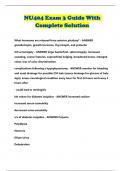
What hormones are released from anterior pituitary? - ANSWER
gonadotropin, growth hormone, thyrotropin, and prolactin
S/S acromegaly - ANSWER large hands/feet, splenomegaly, increased
sweating, coarse features, supraorbital bulging, broadened bones, enlarged
colon, loss of color discrimination
complications following a hypophysectomy - ANSWER monitor for bleeding
and nasal drainage for possible CSF leak (assess drainage for glucose of halo
sign); assess neurological condition every hour for first 24 hours and every 4
hours after
- could lead to meningitis
lab values for diabetes insipidus - ANSWER increased sodium
increased serum osmolality
decreased urine osmolality
s/s of diabetes insipidus - ANSWER Polyuria
Polydipsia
Nocturia
Dilute Urine
Dehydration
,Hypovolemic Shock
Decreased LOC
Increased HR
hypotension
weak pulse and accelerated
neurogenic DI medication treatment - ANSWER thiazide diuretics
Central DI medication treatment - ANSWER desmopressin to increase blood
pressure and help make kidneys more responsive to ADH
nursing interventions in DI - ANSWER - monitor vitals and I+O's
- encourage hydration
- fluid replacement
- administer electrolyte replacements
- fall and seizure precautions
complications of DI - ANSWER - hypovolemia and shock
- severe dehydration
- circulatory collapse
- acute renal insufficiency
lab values SIADH - ANSWER decreased serum sodium and serum osmolality
increased urine osmolality
- very concentrated urine
, s/s of SIADH - ANSWER seizures, s/s of fluid overload, malaise, confusion,
weakness, irritability, headache, neuro changes due to cerebral edema and
increased ICP
medications for SIADH - ANSWER - first fluid restriction
- diuretics such as furosemide may be administered to increase urine output
- replace sodium if low by slow IV administration of 3% NS
what should you check before giving furosemide? - ANSWER potassium
levels
s/s of addisonian crisis - ANSWER N/V, confusion, abdominal pain, extreme
weakness, hypoglycemia, dehydration, severe hypotension, loss of
consciousness
major complication of addisonian crisis - ANSWER hypovolemic shock,
seizures, hypoglycemia, hyponatremia, hypotension
- if untreated death
Addisonian crisis triggers - ANSWER injury, surgery, or infection
- already in adrenal hypofunction
Treatment of Addisonian crisis - ANSWER IV Hydrocortisone
NS boluses
hormone replacements in Addison's disease - ANSWER cortisol,
glucocorticoids, and aldosterone
- taken for life
s/s of Cushings disease - ANSWER hyperglycemia, hypokalemia, fluid
Complete Solution
What hormones are released from anterior pituitary? - ANSWER
gonadotropin, growth hormone, thyrotropin, and prolactin
S/S acromegaly - ANSWER large hands/feet, splenomegaly, increased
sweating, coarse features, supraorbital bulging, broadened bones, enlarged
colon, loss of color discrimination
complications following a hypophysectomy - ANSWER monitor for bleeding
and nasal drainage for possible CSF leak (assess drainage for glucose of halo
sign); assess neurological condition every hour for first 24 hours and every 4
hours after
- could lead to meningitis
lab values for diabetes insipidus - ANSWER increased sodium
increased serum osmolality
decreased urine osmolality
s/s of diabetes insipidus - ANSWER Polyuria
Polydipsia
Nocturia
Dilute Urine
Dehydration
,Hypovolemic Shock
Decreased LOC
Increased HR
hypotension
weak pulse and accelerated
neurogenic DI medication treatment - ANSWER thiazide diuretics
Central DI medication treatment - ANSWER desmopressin to increase blood
pressure and help make kidneys more responsive to ADH
nursing interventions in DI - ANSWER - monitor vitals and I+O's
- encourage hydration
- fluid replacement
- administer electrolyte replacements
- fall and seizure precautions
complications of DI - ANSWER - hypovolemia and shock
- severe dehydration
- circulatory collapse
- acute renal insufficiency
lab values SIADH - ANSWER decreased serum sodium and serum osmolality
increased urine osmolality
- very concentrated urine
, s/s of SIADH - ANSWER seizures, s/s of fluid overload, malaise, confusion,
weakness, irritability, headache, neuro changes due to cerebral edema and
increased ICP
medications for SIADH - ANSWER - first fluid restriction
- diuretics such as furosemide may be administered to increase urine output
- replace sodium if low by slow IV administration of 3% NS
what should you check before giving furosemide? - ANSWER potassium
levels
s/s of addisonian crisis - ANSWER N/V, confusion, abdominal pain, extreme
weakness, hypoglycemia, dehydration, severe hypotension, loss of
consciousness
major complication of addisonian crisis - ANSWER hypovolemic shock,
seizures, hypoglycemia, hyponatremia, hypotension
- if untreated death
Addisonian crisis triggers - ANSWER injury, surgery, or infection
- already in adrenal hypofunction
Treatment of Addisonian crisis - ANSWER IV Hydrocortisone
NS boluses
hormone replacements in Addison's disease - ANSWER cortisol,
glucocorticoids, and aldosterone
- taken for life
s/s of Cushings disease - ANSWER hyperglycemia, hypokalemia, fluid