100% de satisfacción garantizada Inmediatamente disponible después del pago Tanto en línea como en PDF No estas atado a nada 4.2 TrustPilot
logo-home
Examen

EMA1501 Assignment 5 (COMPLETE ANSWERS) 2024 - DUE 25 September 2024

Puntuación
4.5
(2)
Vendido
8
Páginas
19
Grado
A+
Subido en
17-09-2024
Escrito en
2024/2025

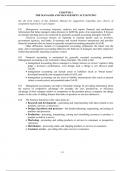
EMA1501 Assignment 5 (COMPLETE ANSWERS) 2024 - DUE 25 September 2024 ; 100% TRUSTED Complete, trusted solutions and explanations. For assistance, Whats-App 0.6.7-1.7.1-1.7.3.9. Ensure your success with us.... QUESTION 1: PRE-NUMBER CONCEPTS (25) Read the statement below and answer the questions that follow. From birth already, children are exposed to mathematical concepts and activities. For example, when feeding a baby, a mother measures the formula in millilitres; during bath times, nursery rhymes like, “One, two, three, four five- once I caught a fish alive” can be said, etc. 1.1 With the above statement in mind, discuss how the following five pre-number concepts form the foundational understanding of numbers and how these concepts contribute to logical thinking about numbers. (5x3= 15) • One-to-one correspondence • Comparison • Conservation • Ordering • Subitising 1.2 Use an example of appropriate activities for each of the above (1.1) pre-number concept to demonstrate your understanding of these concepts. (5x2= 10) EMA1501/ASSESSMENT 5 /0/2024 5 QUESTION 2: DEVELOPING MATHEMATICAL CONCEPTS THROUGH PLAY (10) Read the sentence below and answer the questions that follow. Young children learn maths informally through a wide variety of play experiences. 2.1 Identify the different types of play illustrated in the two pictures below. (4) 2.2 Explain how each type of play contributes to the development of mathematics concepts in children. (2x3= 6) Picture 1 Picture 2 QUESTION 3: TIME (20) Read the statement below and answer the questions that follow. One of the most difficult concepts for a young child to grasp is that of ‘the passage of time’. Time cannot be seen or measured directly. Illustrate how you would teach time using the following concepts, during the Grade R Daily Programme: • Birthdays • Calendar • Seasons • Day and Night (4x5= 20) 6 QUESTION 4: PATTERNS (20) Read the statement below and answer the questions that follow. Patterning is ordering according to a specific pattern/rule. We find patterns everywhere in everyday life, for example in nature, in/on buildings, on dress material, in the pattern of laying a table, in art, in music, etc. 4.1 In light of the above statement, justify the importance of patterns and how they (patterns) contribute to problem-solving. (10) 4.2 The developmental sequence for teaching patterning skills to young children in the early grades are as follows: • Stage 1: Child can recognise a pattern. • Stage 2: Child can describe a pattern. • Stage 3: Child can copy a pattern. • Stage 4: Child can extend a pattern. • Stage 5: Child can create a pattern. Briefly explain each of these steps. (5) Provide appropriate examples/activities to explain your understanding of these steps. (5) QUESTION 5: DATA HANDLING (20) Read the sentence below and answer the questions that follow. Children in the early years of schooling need to experience data handling through practical (hands-on) activities. 5.1 Explain what data handling is. (2) 5.2 Illustrate the steps involved in the data handling process. (8) EMA1501/ASSESSMENT 5 /0/2024 7 5.3 Read the following case study and then answer the question that follow: The first ring of the day is a discussion on birthdays under the theme of the week: “Seasons”. Mrs Pelo is talking to the twenty learners in her class about their birthdays, which months they are in, what seasons the months fall under, etc. Using the steps in the data handling process from 5.2, formulate a teaching activity on how Mrs Pelo can turn this opportunity into a data-handling exercise. (10) QUESTION 6: ASSESSMENT (5) Read the statement below and answer the question that follows. One of the main purposes of assessment is to provide common ground for teachers and parents or families to collaborate on a strategy to support the child using various tools. 6.1 Differentiate between

Mostrar más Leer menos
Institución
Grado


Ups! No podemos cargar tu documento ahora. Inténtalo de nuevo o contacta con soporte.

Libro relacionado

Escuela, estudio y materia

Institución
Grado

Información del documento

Subido en
17 de septiembre de 2024
Número de páginas
19
Escrito en
2024/2025
Tipo
Examen
Contiene
Preguntas y respuestas

Temas

Vista previa del contenido

EMA1501
Assignment 5 2024
Detailed Solutions, References & Explanations

Unique number:

Due Date: 25 September 2024
QUESTION 1: PRE-NUMBER CONCEPTS

1. One-to-One Correspondence

One-to-one correspondence is the ability to match one object to one number or one set of objects
to another set. For example, when a child sets the table and places one plate in front of each chair,
they are engaging in one-to-one correspondence.

Contribution to Number Understanding: This concept helps children understand that numbers
represent quantities and that each object in a set can be counted. It forms the basis for counting,
addition, and subtraction, as the child learns that each object corresponds to a single number.

Role in Logical Thinking: One-to-one correspondence allows children to develop the ability to
recognize that numbers are symbols representing actual quantities. This logical thinking is essential
for more advanced mathematical operations like addition, subtraction, and multiplication.


Terms of use
By making use of this document you agree to:
• Use this document as a guide for learning, comparison and reference purpose,
• Not to duplicate, reproduce and/or misrepresent the contents of this document as your own work,
• Fully accept the consequences should you plagiarise or misuse this document.


Disclaimer
Extreme care has been used to create this document, however the contents are provided “as is” without
any representations or warranties, express or implied. The author assumes no liability as a result of
reliance and use of the contents of this document. This document is to be used for comparison, research
and reference purposes ONLY. No part of this document may be reproduced, resold or transmitted in any
form or by any means.

$3.11
Accede al documento completo:

100% de satisfacción garantizada
Inmediatamente disponible después del pago
Tanto en línea como en PDF
No estas atado a nada

Reseñas de compradores verificados

Se muestran los 2 comentarios
1 año hace

1 año hace

4.5

2 reseñas

5
1
4
1
3
0
2
0
1
0
Reseñas confiables sobre Stuvia

Todas las reseñas las realizan usuarios reales de Stuvia después de compras verificadas.

Conoce al vendedor

Seller avatar
Los indicadores de reputación están sujetos a la cantidad de artículos vendidos por una tarifa y las reseñas que ha recibido por esos documentos. Hay tres niveles: Bronce, Plata y Oro. Cuanto mayor reputación, más podrás confiar en la calidad del trabajo del vendedor.
EduPal University of South Africa (Unisa)
Seguir Necesitas iniciar sesión para seguir a otros usuarios o asignaturas
Vendido
149205
Miembro desde
7 año
Número de seguidores
35996
Documentos
4352
Última venta
3 horas hace

4.2

13562 reseñas

5
7808
4
2689
3
1791
2
455
1
819

Recientemente visto por ti

Por qué los estudiantes eligen Stuvia

Creado por compañeros estudiantes, verificado por reseñas

Calidad en la que puedes confiar: escrito por estudiantes que aprobaron y evaluado por otros que han usado estos resúmenes.

¿No estás satisfecho? Elige otro documento

¡No te preocupes! Puedes elegir directamente otro documento que se ajuste mejor a lo que buscas.

Paga como quieras, empieza a estudiar al instante

Sin suscripción, sin compromisos. Paga como estés acostumbrado con tarjeta de crédito y descarga tu documento PDF inmediatamente.

Student with book image

“Comprado, descargado y aprobado. Así de fácil puede ser.”

Alisha Student

Preguntas frecuentes