Chapter 35. Diabetes Mellitus
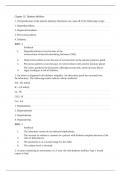
1. Overproduction of the anterior pituitary hormones can cause all of the following except:
1. Hyperthyroidism.
2. Hypercorticosolism.
3. Precocious puberty.
4. Diabetes.
ANS: 4
Feedback
1. Hyperthyroidism occurs because of the
oversecretion of thyroid stimulating hormone (TSH).
2. Hypercorticosolism occurs because of oversecretion in the anterior pituitary gland.
3. Precocious puberty occurs because of oversecretion in the anterior pituitary gland.
The cortex produces the hormones called glucocorticoids, which increase blood
4. sugar, leading to a risk of diabetes.
2. An infant is diagnosed with diabetes insipidus. An electrolyte panel has returned from
the laboratory. The following results indicate which condition?
NA: 162 mEq/L
K+: 4.0 mEq/L
CL: 99
CO2: 18
Ca+: 6.4
1. Hypokalemia
2. Hypernatremia
3. Hyperkalemia
4. Hyponatremia
ANS: 2
Feedback
1. The laboratory results do not indicate hypokalemia.
The increase in sodium is common in a patient with diabetes insipidus because of the
2. risks of dehydration.
3. The potassium is in a normal range for the child.
4. The sodium level is elevated.
3. A nurse conducting an assessment of a 3-year-old with diabetes mellitus Type 1 would
expect to find:
, 1. Polyuria.
2. Polydipsia.
3. Polyphagia.
4. All of the above.
ANS: 4
1. Overproduction of the anterior pituitary hormones can cause all of the following except:
1. Hyperthyroidism.
2. Hypercorticosolism.
3. Precocious puberty.
4. Diabetes.
ANS: 4
Feedback
1. Hyperthyroidism occurs because of the
oversecretion of thyroid stimulating hormone (TSH).
2. Hypercorticosolism occurs because of oversecretion in the anterior pituitary gland.
3. Precocious puberty occurs because of oversecretion in the anterior pituitary gland.
The cortex produces the hormones called glucocorticoids, which increase blood
4. sugar, leading to a risk of diabetes.
2. An infant is diagnosed with diabetes insipidus. An electrolyte panel has returned from
the laboratory. The following results indicate which condition?
NA: 162 mEq/L
K+: 4.0 mEq/L
CL: 99
CO2: 18
Ca+: 6.4
1. Hypokalemia
2. Hypernatremia
3. Hyperkalemia
4. Hyponatremia
ANS: 2
Feedback
1. The laboratory results do not indicate hypokalemia.
The increase in sodium is common in a patient with diabetes insipidus because of the
2. risks of dehydration.
3. The potassium is in a normal range for the child.
4. The sodium level is elevated.
3. A nurse conducting an assessment of a 3-year-old with diabetes mellitus Type 1 would
expect to find:
, 1. Polyuria.
2. Polydipsia.
3. Polyphagia.
4. All of the above.
ANS: 4