Chapter 24. Kidney and Urinary Tract
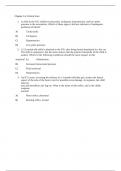
1. Which statement made by a school-age girl indicates the need for further teaching about
the prevention of urinary tract infections?
a. I always wear cotton underwear.
b. I really enjoy taking a bubble bath.
c. I go to the bathroom every 3 to 4 hours.
d. I drink four to six glasses of fluid every day.
ANS: B
Bubble baths should be avoided because they tend to cause urethral irritation, which leads to
urinary tract infection. It is desirable to wear cotton rather than nylon underwear. Nylon tends
to hold in moisture and promote bacterial growth, whereas cotton absorbs moisture. Children
should be encouraged to urinate at least four times a day. An adequate fluid intake prevents the
buildup of bacteria in the bladder.
2. The nurse assessing a child with acute poststreptococcal glomerulonephritis should be alert
for which finding?
a. Increased urine output
b. Hypotension
c. Tea-colored urine
d. Weight gain
ANS: C
Acute poststreptococcal glomerulonephritis is characterized by hematuria, proteinuria, edema,
and renal insufficiency. Tea-colored urine is an indication of hematuria. In acute
poststreptococcal glomerulonephritis, the urine output may be decreased and the blood
pressure increased. Edema may be noted around the eyelids and ankles in patients with acute
, poststreptococcal glomerulonephritis; however, weight gain is associated with
nephrotic syndrome.
3. The mother of a child who was recently diagnosed with acute glomerulonephritis asks the
nurse why the physician keeps talking about casts in the urine. The nurses response is based
on the knowledge that the presence of casts in the urine indicates:
a. glomerular injury.
b. glomerular healing.
c. recent streptococcal infection.
d. excessive amounts of protein in the urine.
ANS: A
The presence of red blood cell casts in the urine indicates glomerular injury. Casts in the
urine are abnormal findings and are indicative of glomerular injury, not glomerular healing.
A urinalysis positive for casts does not confirm a recent streptococcal infection. Casts in the
urine are unrelated to proteinuria.
4. What is a clinical finding that warrants further intervention for the child with
acute poststreptococcal glomerulonephritis?
a. Weight loss to within 1 pound of the preillness
weight b. Urine output of 1 milliliter per kilogram per
hour
c. A normal blood pressure
d. Inspiratory crackles
ANS: D
Children with excess fluid volume may have pulmonary edema. Inspiratory crackles indicate
fluid in the lungs. Pulmonary edema can be a life-threatening complication. Weight loss to
within 1 pound of the preillness weight is an indication that the child is responding to
treatment. A urine output of 1 milliliter per kilogram per hour is an acceptable urine output
and indicates
1. Which statement made by a school-age girl indicates the need for further teaching about
the prevention of urinary tract infections?
a. I always wear cotton underwear.
b. I really enjoy taking a bubble bath.
c. I go to the bathroom every 3 to 4 hours.
d. I drink four to six glasses of fluid every day.
ANS: B
Bubble baths should be avoided because they tend to cause urethral irritation, which leads to
urinary tract infection. It is desirable to wear cotton rather than nylon underwear. Nylon tends
to hold in moisture and promote bacterial growth, whereas cotton absorbs moisture. Children
should be encouraged to urinate at least four times a day. An adequate fluid intake prevents the
buildup of bacteria in the bladder.
2. The nurse assessing a child with acute poststreptococcal glomerulonephritis should be alert
for which finding?
a. Increased urine output
b. Hypotension
c. Tea-colored urine
d. Weight gain
ANS: C
Acute poststreptococcal glomerulonephritis is characterized by hematuria, proteinuria, edema,
and renal insufficiency. Tea-colored urine is an indication of hematuria. In acute
poststreptococcal glomerulonephritis, the urine output may be decreased and the blood
pressure increased. Edema may be noted around the eyelids and ankles in patients with acute
, poststreptococcal glomerulonephritis; however, weight gain is associated with
nephrotic syndrome.
3. The mother of a child who was recently diagnosed with acute glomerulonephritis asks the
nurse why the physician keeps talking about casts in the urine. The nurses response is based
on the knowledge that the presence of casts in the urine indicates:
a. glomerular injury.
b. glomerular healing.
c. recent streptococcal infection.
d. excessive amounts of protein in the urine.
ANS: A
The presence of red blood cell casts in the urine indicates glomerular injury. Casts in the
urine are abnormal findings and are indicative of glomerular injury, not glomerular healing.
A urinalysis positive for casts does not confirm a recent streptococcal infection. Casts in the
urine are unrelated to proteinuria.
4. What is a clinical finding that warrants further intervention for the child with
acute poststreptococcal glomerulonephritis?
a. Weight loss to within 1 pound of the preillness
weight b. Urine output of 1 milliliter per kilogram per
hour
c. A normal blood pressure
d. Inspiratory crackles
ANS: D
Children with excess fluid volume may have pulmonary edema. Inspiratory crackles indicate
fluid in the lungs. Pulmonary edema can be a life-threatening complication. Weight loss to
within 1 pound of the preillness weight is an indication that the child is responding to
treatment. A urine output of 1 milliliter per kilogram per hour is an acceptable urine output
and indicates