1.5 Legal, Moral, Cultural and Ethical Issues
1.5.1 Computing Related Legislation
Data Protection Act 1998:
The Data Protection Act (DPA) is a law which protects personal data from being misused.
Most people that store personal data (e.g. name, address, date of birth, race, religion) must follow
the DPA, except:
Domestic purposes – If personal data is being used when taking photos for your own
enjoyment or writing to family and friends.
Law enforcement – The police investigating a crime (e.g. if someone is suspected of a crime,
they can’t request to see the evidence about them).
Intelligence services processing – Personal data processed by the intelligence services (e.g.
MI5) is not covered by the DPA.
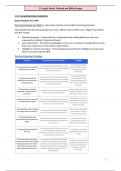
The Data Protection Principles:
1
, Actions Companies Must Take:
Companies can face extremely large fines if they breach the Data Protection Act. To ensure they
don’t breach it, companies should:
Appoint a member of staff as their data controller (someone who determines the purposes
and means on processing the personal data). They will be responsible for ensuring the Data
Protection Act is followed, and they keep in communication with the information
Commissioner.
Put in place physical or digital security measures to prevent data from being accessed
without consent.
Train their staff to abide with the principles.
Sends a copy of the personal data if a Subject Access Request (SAR) (where individuals can
request a copy of their personal data) is received. The copy must be sent securely after the
identity of the requested is verified.
To prevent a security breach, a company could:
Ensure employees have multi-factor authentication on their log-ins.
Use role-based controls, allowing different users to be assigned different permissions.
Have a form of efficient and effective security monitoring.
Regularly do penetration testing and promptly fix any issues that occur.
Rights of an Individual Under the DPA:
Data subjects have the right to:
Be informed that their data is being collected and used.
Access their personal data (with a SAR).
Have inaccurate personal data rectified or completed if it is incomplete.
Have their data be forgotten or restrict/object to processing in certain circumstances.
Data portability, which allows the data subject to obtain and reuse their personal data for
their own purposes across different services.
To withdraw consent at any time.
To complain to the Information Commissioner.
Computer Misuse Act 1990:
The Computer Misuse Act (CMA) is a law which concerns the malicious use of computers. It was
originally created to ensure hacking was covered within law. It is updated regularly so it remains
relevant.
Ways to minimise the threat from unauthorised access include digital signatures (encrypted
messages which identify the sender of the data to validate it is who they claim to be) or certificates
(SSL is a protocol which allows for a secure and encrypted link between the computer system).
Firewalls can be used to prevent external people accessing a system, and prevent DoS or DDos
attacks.
The Act outlines three primary offences:
1. Unauthorised access to computer materials.
E.g. a student finding out a teacher’s password and accessing their computer and files.
2. Unauthorised access with itent to commit further offences.
2
1.5.1 Computing Related Legislation
Data Protection Act 1998:
The Data Protection Act (DPA) is a law which protects personal data from being misused.
Most people that store personal data (e.g. name, address, date of birth, race, religion) must follow
the DPA, except:
Domestic purposes – If personal data is being used when taking photos for your own
enjoyment or writing to family and friends.
Law enforcement – The police investigating a crime (e.g. if someone is suspected of a crime,
they can’t request to see the evidence about them).
Intelligence services processing – Personal data processed by the intelligence services (e.g.
MI5) is not covered by the DPA.
The Data Protection Principles:
1
, Actions Companies Must Take:
Companies can face extremely large fines if they breach the Data Protection Act. To ensure they
don’t breach it, companies should:
Appoint a member of staff as their data controller (someone who determines the purposes
and means on processing the personal data). They will be responsible for ensuring the Data
Protection Act is followed, and they keep in communication with the information
Commissioner.
Put in place physical or digital security measures to prevent data from being accessed
without consent.
Train their staff to abide with the principles.
Sends a copy of the personal data if a Subject Access Request (SAR) (where individuals can
request a copy of their personal data) is received. The copy must be sent securely after the
identity of the requested is verified.
To prevent a security breach, a company could:
Ensure employees have multi-factor authentication on their log-ins.
Use role-based controls, allowing different users to be assigned different permissions.
Have a form of efficient and effective security monitoring.
Regularly do penetration testing and promptly fix any issues that occur.
Rights of an Individual Under the DPA:
Data subjects have the right to:
Be informed that their data is being collected and used.
Access their personal data (with a SAR).
Have inaccurate personal data rectified or completed if it is incomplete.
Have their data be forgotten or restrict/object to processing in certain circumstances.
Data portability, which allows the data subject to obtain and reuse their personal data for
their own purposes across different services.
To withdraw consent at any time.
To complain to the Information Commissioner.
Computer Misuse Act 1990:
The Computer Misuse Act (CMA) is a law which concerns the malicious use of computers. It was
originally created to ensure hacking was covered within law. It is updated regularly so it remains
relevant.
Ways to minimise the threat from unauthorised access include digital signatures (encrypted
messages which identify the sender of the data to validate it is who they claim to be) or certificates
(SSL is a protocol which allows for a secure and encrypted link between the computer system).
Firewalls can be used to prevent external people accessing a system, and prevent DoS or DDos
attacks.
The Act outlines three primary offences:
1. Unauthorised access to computer materials.
E.g. a student finding out a teacher’s password and accessing their computer and files.
2. Unauthorised access with itent to commit further offences.
2