100% de satisfacción garantizada Inmediatamente disponible después del pago Tanto en línea como en PDF No estas atado a nada 4.2 TrustPilot
logo-home
Examen

IOP4863 Assignment 5 (DETAILED ANSWERS) 2024 - DISTINCTION GUARANTEED

Puntuación
-
Vendido
3
Páginas
10
Grado
A+
Subido en
09-09-2024
Escrito en
2024/2025

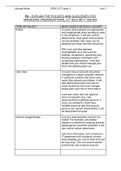
IOP4863 Assignment 5 (DETAILED ANSWERS) 2024 - DISTINCTION GUARANTEED - DISTINCTION GUARANTEED - DISTINCTION GUARANTEED Answers, guidelines, workings and references ... PART A: PERSONNEL PSYCHOLOGY Generally, South African labour laws prohibit unfair discrimination. The Labour Relations Act 66 of 1995 (as amended) and the Employment Equity Act 55 of 1998 (as amended) are explicit on issues of unfair discrimination. Despite this regulatory framework, debates around the issues of fairness remain intense. Fairness in personnel psychology must be demonstrated, using scientific methods. Discuss fairness in employment decisions by focusing on the following: 1.1. The difference between unfair discrimination and adverse impact. (2) 1.2. Discuss the complexity of fairness in employment decisions by referring to Figures 8.1; 8.3; 8.4; 8.5; 8.6; 8.7 and 8.8 in Cascio and Aguinis (2019, p. 181-184). In your discussion, refer to each scatterplot and illustrate a differential predictor-criterion relationship which is legal and appropriate, or which is inappropriate and may have adverse impact. (28) [30] Total Section A: 30 Marks PART B: CAREER PSYCHOLOGY QUESTION 1 Read the case study below carefully and answer the questions that follow. The case of Nokwanda Nokwanda is a 28-year woman from Empangeni, in KwaZulu-Natal. She moved to Johannesburg in 2019 when she found a new job in a big manufacturing firm, to assume the position of senior finance manager. She is not yet married although she would love to get married one day. She has no children yet and would like to start a family soon after she is married. She completed her matric in Empangeni and then studied at the University of Zululand (UniZulu). She graduated from UniZulu with a BCom degree in Accounting Science in 2012, and in 2014, she completed a higher diploma in Accountancy. She started her career with Deloitte and Touche, and worked as an assistant manager, then as a manager, and thereafter was promoted to senior manager. Nokwanda is the first born in her family. Her father passed away in a home invasion incident when she was 18 years old, but she still has her mother, two sisters and a brother. Nokwanda’s mother was a stay-at-home mother and after the passing of her husband, she had to find a job to provide for the family’s needs. Nokwanda was forced to assist her mother and took on part-time work as a tutor while she was at university. Nokwanda has shared with you that after her father’s death, 2 she developed anxiety and feels unsafe when in confined spaces or when she is around crowds. She believes she is much better, but she would like help to manage and hopefully overcome her anxiety. Nokwanda shared with you that her career is very important to her. She is very happy in terms of what she has achieved thus far in her career, and she wants to continue working for her current company. Things that are important to her and that she values are opportunities for growth, being valued, being able to use her expertise, good working conditions, working under minimal supervision, having flexibility in how she works, and a competitive salary. Currently, she is not experiencing most of these and this causes frustrations for her. She aspires to be in a very senior position within the next ten years – preferably as the management accountant for the company. Her current challenges on the job include a lack of career development support and minimal exposure due to her qualifications. Despite her frustrations, Nokwanda wants to continue working for her current organisation. At the same time, she knows that with the qualifications and experience she has, she may find it difficult to secure good employment elsewhere. During the career diagnostic and assessment process you realise that Nokwanda is experiencing psycho-emotional distress. Considering that you are limited in your scope as a professional career practitioner, you refer Nokwanda to an appropriately qualified professional. 1.1. Based on your evaluation of Nokwanda’s case, name and describe the level of psycho-emotional distress that she is experiencing. (4) 1.2. Describe and justify the process of ethical referral that you will apply as professional career practitioner to contain Nokwanda’s experiences of distress.

Mostrar más Leer menos
Institución
Grado


Ups! No podemos cargar tu documento ahora. Inténtalo de nuevo o contacta con soporte.

Libro relacionado

Escuela, estudio y materia

Institución
Grado

Información del documento

Subido en
9 de septiembre de 2024
Número de páginas
10
Escrito en
2024/2025
Tipo
Examen
Contiene
Preguntas y respuestas

Temas

Vista previa del contenido

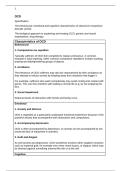
IOP4863
Assignment 5 2024
Unique #:688200
Due Date:19 September 2024


Detailed solutions, explanations, workings
and references.

+27 81 278 3372

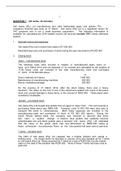
, PART A: PERSONNEL PSYCHOLOGY

QUESTION 1

1.1. The difference between unfair discrimination and adverse impact. (2)

Unfair Discrimination: Unfair discrimination occurs when individuals are treated
less favorably based on attributes such as race, gender, age, disability, or other
protected characteristics, in a manner that is not justified or reasonable. In South
Africa, the Labour Relations Act and Employment Equity Act specifically prohibit
such discrimination in all employment practices. Unfair discrimination is often direct
and intentional, where individuals or groups are intentionally excluded or
disadvantaged due to their personal characteristics.

Adverse Impact: Adverse impact refers to employment practices that, while
seemingly neutral, disproportionately affect a particular group compared to others.
This impact is not necessarily intentional but occurs when a particular practice or
test leads to a significant difference in outcomes between groups. For example, a
cognitive test might be used in hiring that, although it appears to be fair, results in
lower pass rates for a specific ethnic group due to cultural bias in the test. Adverse
impact focuses on the outcome of employment practices rather than the intent
behind them. It highlights the potential unintended consequences that can lead to
discriminatory effects.


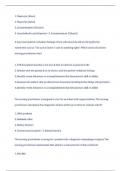
1.2. Discuss the complexity of fairness in employment decisions.

Fairness in employment decisions is crucial for ensuring that no group is
disadvantaged due to biased selection procedures. Figures 8.1 to 8.8 from Cascio
and Aguinis (2019) demonstrate various scenarios where fairness in selection
might be either achieved or compromised. These figures illustrate different
predictor-criterion relationships and how they may lead to fair or unfair outcomes,
depending on the distribution of scores and validity across different groups,
typically between minority and nonminority groups.

Figure 8.1: Positive Validity


Varsity Cube 2024 +27 81 278 3372
$3.07
Accede al documento completo:

100% de satisfacción garantizada
Inmediatamente disponible después del pago
Tanto en línea como en PDF
No estas atado a nada

Conoce al vendedor

Seller avatar
Los indicadores de reputación están sujetos a la cantidad de artículos vendidos por una tarifa y las reseñas que ha recibido por esos documentos. Hay tres niveles: Bronce, Plata y Oro. Cuanto mayor reputación, más podrás confiar en la calidad del trabajo del vendedor.
VarsityC AAA School of Advertising
Seguir Necesitas iniciar sesión para seguir a otros usuarios o asignaturas
Vendido
28683
Miembro desde
8 año
Número de seguidores
13258
Documentos
3117
Última venta
2 días hace

4.1

2819 reseñas

5
1490
4
581
3
392
2
117
1
239

Recientemente visto por ti

Por qué los estudiantes eligen Stuvia

Creado por compañeros estudiantes, verificado por reseñas

Calidad en la que puedes confiar: escrito por estudiantes que aprobaron y evaluado por otros que han usado estos resúmenes.

¿No estás satisfecho? Elige otro documento

¡No te preocupes! Puedes elegir directamente otro documento que se ajuste mejor a lo que buscas.

Paga como quieras, empieza a estudiar al instante

Sin suscripción, sin compromisos. Paga como estés acostumbrado con tarjeta de crédito y descarga tu documento PDF inmediatamente.

Student with book image

“Comprado, descargado y aprobado. Así de fácil puede ser.”

Alisha Student

Preguntas frecuentes