,Description
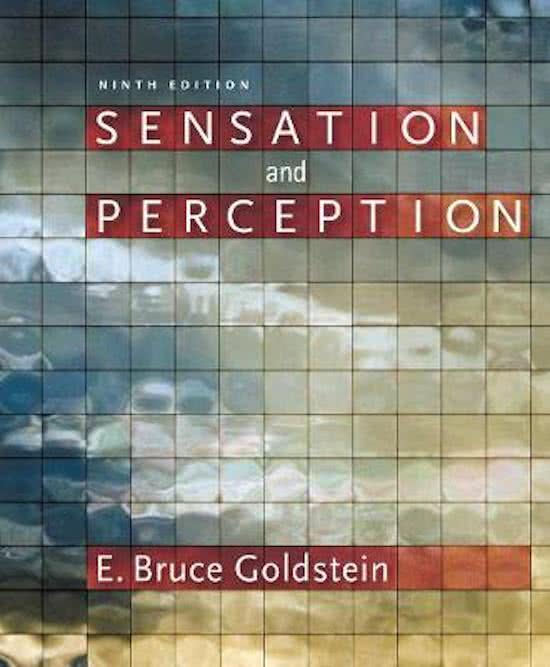
Testn Bankn forn Sensationn andn Perception,n 9thn Edition,n E.n Brucen Goldst
ein,nISBN-10:1133958494,n ISBN-13:n 9781133958499
Tablen ofn Content
1. Introductionn ton Perception.
2. Then Physiologicaln Beginningsn ofn Perception.
3. Neuraln Processingn andn Coding.
4. Corticaln Organization.
5. Perceivingn Objectsn andn Scenes.
6. Visualn Attention.
7. Takingn Action.
8. Perceivingn Motion.
9. Perceivingn Color.
10. Perceivingn Depthn andn Size.
11. Soundn andn then Perceptionn ofn Pitch.
12. Auditoryn Localization,n then Auditoryn Scene,n andn Music.
13. Speechn Perception.
14. Then Cutaneousn Senses.
15. Then Chemicaln Senses.
,Testn Bank—Chaptern 1:n Introductionn ton Perception
MULTIPLEn CHOICE
1. “Perceivingn machines”n thatn cann negotiaten then environmentn withn humanliken ease
a. weren developedn byn computern scientistsn inn then 1960s.
b. weren developedn byn computern scientistsn inn then 1970s.
c. weren developedn byn computern scientistsn inn then 1990s.
d. haven yetn ton ben developed.
2. Whichn ofn then followingn isn ann applicationn ofn perceptionn research?
a. Developingnspeechn recognitio c. Devisingn robotsn thatn cann “see.”
nnsystems.
b.nnn Treatingn hearingn problems. d.n Alln ofn these.
3. Whichn ofn then followingn isn an reasonn forn studyingn perception?
a. Ton becomen moren awaren ofn yourn ownn perceptualn experiences.
b. Ton providen informationn thatn mayn helpn withn an futuren career.
c. Ton applyn perceptionn ton everydayn problems,n suchn asn highwayn si
gnnvisibility.
d. Alln ofn these.
4. Then studyn ofn perceptionn cann overlapn with
a. medicine. c. philosophy.
b. computern science. d.nnn alln ofn these.
5. Whichn ofn then followingn isn NOTn an categoryn ofn then stagesn inn then perceptualn process?
a. Stimuli c. Serendipity
b. Neuraln Processing d.n Behavioraln Responses
6. Then processn ofn transformingn energyn inn then environmentn inton electricaln energyn inn t
henneuronsn iscalled
a. refraction. c. reduction.
b. transduction. d.n construction.
7. n
nisn then stepn inn then perceptualn processn thatn isn analogousn ton ann ATMn withdrawaln(pre
ssurenfromnbuttonnpressnbecomesnelectricalnenergynthennbecomesnanmechanicalnrespon
seresultingn inn then dispensingn ofn money).
a. Knowledge c. Action
b. Transference d.n Transduction
8. Then specificn termn forn then “stimulusn onn then receptors”n inn visualn processingn isn the
a. transducedn image. c. visualn image.
8
, b. environmentaln stimulus. d.n perception.
9
Testn Bankn forn Sensationn andn Perception,n 9thn Edition,n E.n Brucen Goldst
ein,nISBN-10:1133958494,n ISBN-13:n 9781133958499
Tablen ofn Content
1. Introductionn ton Perception.
2. Then Physiologicaln Beginningsn ofn Perception.
3. Neuraln Processingn andn Coding.
4. Corticaln Organization.
5. Perceivingn Objectsn andn Scenes.
6. Visualn Attention.
7. Takingn Action.
8. Perceivingn Motion.
9. Perceivingn Color.
10. Perceivingn Depthn andn Size.
11. Soundn andn then Perceptionn ofn Pitch.
12. Auditoryn Localization,n then Auditoryn Scene,n andn Music.
13. Speechn Perception.
14. Then Cutaneousn Senses.
15. Then Chemicaln Senses.
,Testn Bank—Chaptern 1:n Introductionn ton Perception
MULTIPLEn CHOICE
1. “Perceivingn machines”n thatn cann negotiaten then environmentn withn humanliken ease
a. weren developedn byn computern scientistsn inn then 1960s.
b. weren developedn byn computern scientistsn inn then 1970s.
c. weren developedn byn computern scientistsn inn then 1990s.
d. haven yetn ton ben developed.
2. Whichn ofn then followingn isn ann applicationn ofn perceptionn research?
a. Developingnspeechn recognitio c. Devisingn robotsn thatn cann “see.”
nnsystems.
b.nnn Treatingn hearingn problems. d.n Alln ofn these.
3. Whichn ofn then followingn isn an reasonn forn studyingn perception?
a. Ton becomen moren awaren ofn yourn ownn perceptualn experiences.
b. Ton providen informationn thatn mayn helpn withn an futuren career.
c. Ton applyn perceptionn ton everydayn problems,n suchn asn highwayn si
gnnvisibility.
d. Alln ofn these.
4. Then studyn ofn perceptionn cann overlapn with
a. medicine. c. philosophy.
b. computern science. d.nnn alln ofn these.
5. Whichn ofn then followingn isn NOTn an categoryn ofn then stagesn inn then perceptualn process?
a. Stimuli c. Serendipity
b. Neuraln Processing d.n Behavioraln Responses
6. Then processn ofn transformingn energyn inn then environmentn inton electricaln energyn inn t
henneuronsn iscalled
a. refraction. c. reduction.
b. transduction. d.n construction.
7. n
nisn then stepn inn then perceptualn processn thatn isn analogousn ton ann ATMn withdrawaln(pre
ssurenfromnbuttonnpressnbecomesnelectricalnenergynthennbecomesnanmechanicalnrespon
seresultingn inn then dispensingn ofn money).
a. Knowledge c. Action
b. Transference d.n Transduction
8. Then specificn termn forn then “stimulusn onn then receptors”n inn visualn processingn isn the
a. transducedn image. c. visualn image.
8
, b. environmentaln stimulus. d.n perception.
9