Chapter 1
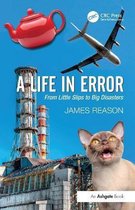
Asymmetrical behavioral spoonerism: putting cat food in the teapot
Characteristics of absent-minded errors:
- Both behavioral sequences are highly routine, no attention needed (making tea, feeding the
cat)
- Both objects afford containment (teapot and cat’s bowl)
- Some change introduced into a routine sequence misdirects the actions down the wrong
path (cat demanding food while you’re making tea)
Well-used familiar objects develop a local control zone. Once the hand enters the zone, it is
automatically directed to perform object-appropriate actions. (example: tea making)
- Revealed when walking around the house in a state of reduced intentionality (example:
waiting for a phone call and automatically picking up an apple out of the fruit bowl)
When actions are under-specified (by reduced intentionality, forgetting, misdirected attention), they
tend to default to behaviours that occur frequently in that particular context.
- Example: in tip-of-the-tongue states, we call to mind words we know but we know that isn’t
the word we’re looking for. These words are called blockers.
Chapter 2
There is no universally agreed scientific definition of errors.
- They entail some kind of deviation of human performance from an intended, desired or ideal
standard
- They are not always bad: trial-and-error learning, discoveries
- But their consequences are often undesirable. The circumstances of their occurrence shape
an error’s consequences.
3 basic elements of all human actions:
- Plans
- Actions
- Consequences
Plans begin with the need to alleviate a state of tension. There are many ways to achieve this, but a
specific intention is quickly formed. A goal can be achieved by a variety of means, but one particular
plan is favored. Having made this decision, it only remains to specify and assemble the action
consequences that will take you to your goal.
The planner does not need to fill in the fine details of each operation. These action steps are largely
automatic subroutines that are implicit in the notes already made in the mental scratchpad. The
more we engage in these habitual action consequences, the less planning is needed. Repetition
reduces the number of low-level control statements necessary to guide our behavior.
1
, 2 limitations for human performance:
- Our physical capacity to turn personal plans into actions is limited. We can only be in one
place at any time.
- We possess only a limited mental capacity for carrying out plans, usually only one can be
active at any time.
The definition of error: occasions in which a planned sequence of mental or physical activities fails to
achieve its desired goal without the intervention of some chance agency.
2 ways in which you can fail to achieve your desired objective:
- The plan of action may be entirely appropriate, but the actions do not go as planned. These
are slips and lapses (absent-mindedness) or trips and fumbles (clumsy actions).
- Your actions follow the plan exactly, but the plan itself is inadequate to achieve its desired
goal. These are mistakes and involve more complex, higher-level processes such as judging,
reasoning and decision-making. Mistakes are more subtle and complex, and harder to detect.
It’s not always obvious what kind of plan would be ideal for attaining a particular objective.
Chapter 3
Action schemas = largely automatic procedural routines
Slips stem from failures at the level of execution, often arising from the unintended activation of
action schemas. Mistakes derive from higher level mental processes. But slips and mistakes do not
always take very different forms, and sometimes errors fall somewhere between slips and mistakes.
The 3 performance levels (Rasmussen) make us able to distinguish 3 distinct error types: skill-based
slips (SB), rule-based mistakes (RB) and knowledge-based mistakes (KB)
Distinguishing the performance level:
- Type of activity: whether or not the individual was engaged in problem solving
o 2 kinds of problems: with pre-packaged solutions (RB level) or not (KB level)
o Unfamiliar problems usually involve trial-and-error learning
o SB slips generally precede the detection of a problem
o RB and KB mistakes are only called into play by the unanticipated occurrence of
some event or observation that requires deviation from the current plan of action
- Control mode
o SB slips and RB mistakes share feed-forward control, which emanates from stored
knowledge structures
o KB mistakes are feedback, because the problem solver has exhausted their stock of
problem solving routines and now has to use slow, effortful and conscious
processing, which is largely error driven
- Expertise: the more skilled someone is in performing a task, the more likely that their errors
will take ‘’strong-but-wrong’’ forms at the SB and RB levels of performance
2
Asymmetrical behavioral spoonerism: putting cat food in the teapot
Characteristics of absent-minded errors:
- Both behavioral sequences are highly routine, no attention needed (making tea, feeding the
cat)
- Both objects afford containment (teapot and cat’s bowl)
- Some change introduced into a routine sequence misdirects the actions down the wrong
path (cat demanding food while you’re making tea)
Well-used familiar objects develop a local control zone. Once the hand enters the zone, it is
automatically directed to perform object-appropriate actions. (example: tea making)
- Revealed when walking around the house in a state of reduced intentionality (example:
waiting for a phone call and automatically picking up an apple out of the fruit bowl)
When actions are under-specified (by reduced intentionality, forgetting, misdirected attention), they
tend to default to behaviours that occur frequently in that particular context.
- Example: in tip-of-the-tongue states, we call to mind words we know but we know that isn’t
the word we’re looking for. These words are called blockers.
Chapter 2
There is no universally agreed scientific definition of errors.
- They entail some kind of deviation of human performance from an intended, desired or ideal
standard
- They are not always bad: trial-and-error learning, discoveries
- But their consequences are often undesirable. The circumstances of their occurrence shape
an error’s consequences.
3 basic elements of all human actions:
- Plans
- Actions
- Consequences
Plans begin with the need to alleviate a state of tension. There are many ways to achieve this, but a
specific intention is quickly formed. A goal can be achieved by a variety of means, but one particular
plan is favored. Having made this decision, it only remains to specify and assemble the action
consequences that will take you to your goal.
The planner does not need to fill in the fine details of each operation. These action steps are largely
automatic subroutines that are implicit in the notes already made in the mental scratchpad. The
more we engage in these habitual action consequences, the less planning is needed. Repetition
reduces the number of low-level control statements necessary to guide our behavior.
1
, 2 limitations for human performance:
- Our physical capacity to turn personal plans into actions is limited. We can only be in one
place at any time.
- We possess only a limited mental capacity for carrying out plans, usually only one can be
active at any time.
The definition of error: occasions in which a planned sequence of mental or physical activities fails to
achieve its desired goal without the intervention of some chance agency.
2 ways in which you can fail to achieve your desired objective:
- The plan of action may be entirely appropriate, but the actions do not go as planned. These
are slips and lapses (absent-mindedness) or trips and fumbles (clumsy actions).
- Your actions follow the plan exactly, but the plan itself is inadequate to achieve its desired
goal. These are mistakes and involve more complex, higher-level processes such as judging,
reasoning and decision-making. Mistakes are more subtle and complex, and harder to detect.
It’s not always obvious what kind of plan would be ideal for attaining a particular objective.
Chapter 3
Action schemas = largely automatic procedural routines
Slips stem from failures at the level of execution, often arising from the unintended activation of
action schemas. Mistakes derive from higher level mental processes. But slips and mistakes do not
always take very different forms, and sometimes errors fall somewhere between slips and mistakes.
The 3 performance levels (Rasmussen) make us able to distinguish 3 distinct error types: skill-based
slips (SB), rule-based mistakes (RB) and knowledge-based mistakes (KB)
Distinguishing the performance level:
- Type of activity: whether or not the individual was engaged in problem solving
o 2 kinds of problems: with pre-packaged solutions (RB level) or not (KB level)
o Unfamiliar problems usually involve trial-and-error learning
o SB slips generally precede the detection of a problem
o RB and KB mistakes are only called into play by the unanticipated occurrence of
some event or observation that requires deviation from the current plan of action
- Control mode
o SB slips and RB mistakes share feed-forward control, which emanates from stored
knowledge structures
o KB mistakes are feedback, because the problem solver has exhausted their stock of
problem solving routines and now has to use slow, effortful and conscious
processing, which is largely error driven
- Expertise: the more skilled someone is in performing a task, the more likely that their errors
will take ‘’strong-but-wrong’’ forms at the SB and RB levels of performance
2