

Study Guide
Test 2
Health Psychology
Fall 2020
Chapter 2 (pages 18-23) – Systems of the Body: CNS and Endocrine System
(2-4 questions on Test 2 come from Chapter 2)
The nervous system: responsible for the transmission of information from the brain to the rest of
the body and from the rest of the body to the brain
- TWO PARTS OF THE NERVOUS SYSTEM
- central: brain and spinal cord
- peripheral: remaining neurons
- Voluntary: in control
- autonomic: involuntary, connects the CNS to all internal organs
- sympathetic versus: mobilizes the body for action
- parasympathetic branch: controls the activities of organ under normal circumstances
- restore body to normal state
HINDBRAIN & MIDBRAIN:
-Medulla: responsible for regulation of heart rates
-Pons:link between hindbrain and midbrain, control respiration
-Cerebellum: coordinates voluntary muscle movement, maintenance of muscle tone and posture
FORE BRAIN:
- hypothalamus: regulate cardiac function, BO, respiration, water balance, appetites,
including hunger and sexual desires
LIMBIC SYSTEM
hippocampus: detection of threat, emotionally charged memories
amygdala: feel emotions, fear
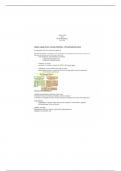
, Lobes of the brain:
- frontal: decision making, motor skills, problem solving, planning, attention
- temporal: decision making, visual memory(facial recognition), verbal memory
(language), interpreting emotions
- parietal: organizing and interpreting sensory information
- occipital: reading and recognizing words, and vision
Epinephrine:
- secreted mainly by the medulla of the adrenal glands
- increase metabolic rate, HR, BP
- dilated blood vessels
- raises blood sugar
-
norepinephrine:
- mobilize the brain and body for action
Adrenal glands :
- located top of kidneys
- part of the endocrine system
- secrete several hormones:
- cortisol, epinephrine, norepinephrine
- adrenal medulla:
- secretion of catecholamines (epinephrine & norepinephrine)
- heart rate increases, heart capillaries dilate
- BP is diverted to muscle tissue
- breathing rate increases
- digestion slows down
- pupils dilate
- adrenal cortex:
- corticosteroids
- increases protein and fat mobiliztion
- increases access to bodily energy storage
- inhibits antibody formation and inflammation
- regulates sodium retention
- functions of each and how they are tied to the stress response, substances released by
each
Chapter 6 – Stress
(8-14 questions come from Chapter 6)
Test 2
Health Psychology
Fall 2020
Chapter 2 (pages 18-23) – Systems of the Body: CNS and Endocrine System
(2-4 questions on Test 2 come from Chapter 2)
The nervous system: responsible for the transmission of information from the brain to the rest of
the body and from the rest of the body to the brain
- TWO PARTS OF THE NERVOUS SYSTEM
- central: brain and spinal cord
- peripheral: remaining neurons
- Voluntary: in control
- autonomic: involuntary, connects the CNS to all internal organs
- sympathetic versus: mobilizes the body for action
- parasympathetic branch: controls the activities of organ under normal circumstances
- restore body to normal state
HINDBRAIN & MIDBRAIN:
-Medulla: responsible for regulation of heart rates
-Pons:link between hindbrain and midbrain, control respiration
-Cerebellum: coordinates voluntary muscle movement, maintenance of muscle tone and posture
FORE BRAIN:
- hypothalamus: regulate cardiac function, BO, respiration, water balance, appetites,
including hunger and sexual desires
LIMBIC SYSTEM
hippocampus: detection of threat, emotionally charged memories
amygdala: feel emotions, fear
, Lobes of the brain:
- frontal: decision making, motor skills, problem solving, planning, attention
- temporal: decision making, visual memory(facial recognition), verbal memory
(language), interpreting emotions
- parietal: organizing and interpreting sensory information
- occipital: reading and recognizing words, and vision
Epinephrine:
- secreted mainly by the medulla of the adrenal glands
- increase metabolic rate, HR, BP
- dilated blood vessels
- raises blood sugar
-
norepinephrine:
- mobilize the brain and body for action
Adrenal glands :
- located top of kidneys
- part of the endocrine system
- secrete several hormones:
- cortisol, epinephrine, norepinephrine
- adrenal medulla:
- secretion of catecholamines (epinephrine & norepinephrine)
- heart rate increases, heart capillaries dilate
- BP is diverted to muscle tissue
- breathing rate increases
- digestion slows down
- pupils dilate
- adrenal cortex:
- corticosteroids
- increases protein and fat mobiliztion
- increases access to bodily energy storage
- inhibits antibody formation and inflammation
- regulates sodium retention
- functions of each and how they are tied to the stress response, substances released by
each
Chapter 6 – Stress
(8-14 questions come from Chapter 6)

