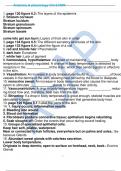
Anatomy & physiology Cht 6 HWK
1. page 130 figure 6.2: The layers of the epidermis
2. Stratum corneum
Stratum lucidum
Stratum granulosum
Stratum spinosum
Stratum basale
come lets get sun burn: Layers of thick skin in order
3. page 134 figure 6.5: The different secretory structures of the skin
4. page 133 figure 6.4: Label the figure of a nail
5. red and blonde hair: Pheomelanin
6. dark hair: Eumelanin
7. white hair: Lack of pigment
8. homeostasis, hypothalamus: As a part of maintaining , body
temperature is closely regulated. A change in body temperature is detected by
receptors in the of the brain, which then sends signals to effectors
in the skin.
9. Vasodilation: An increase in body temperature results in of blood
vessels in the dermis of the skin, allowing heat carried by the blood to dissipate.
10. merocrine sweat: An increase in body temperature also causes the nervous
sytem to stimulate glands to increase their activity.
11. Vasoconstriction: A drop in body temperature triggers , reduc-
ing blood flow and, therefore, heat loss from the skin.
12. Shivering: If a drop in body temperature is great enough, skeletal muscles are
stimulated to begin , a mechanism that generates body heat.
13. page 129 figure 6.1: Label the parts of the skin
14. 1. Injury occurs; inflammation results
2. Bleeding into wound
3. Blood clot formation
4. Fibroblasts produce connective tissue; epithelium begins rebuilding
5. Scab sloughs off: Order the events that occur during wound healing
15. Groups of specialized epithelial cells.
Keep hair soft, pliable, waterproof.
Near or connected to hair follicles, everywhere but on palms and soles.: Se-
baceous Glands
16. Abundant sweat glands with odorless secretion.
Lower body temperature.
Originate in deep dermis; open to surface on forehead, neck, back.: Eccrine
Glands
1/3
1. page 130 figure 6.2: The layers of the epidermis
2. Stratum corneum
Stratum lucidum
Stratum granulosum
Stratum spinosum
Stratum basale
come lets get sun burn: Layers of thick skin in order
3. page 134 figure 6.5: The different secretory structures of the skin
4. page 133 figure 6.4: Label the figure of a nail
5. red and blonde hair: Pheomelanin
6. dark hair: Eumelanin
7. white hair: Lack of pigment
8. homeostasis, hypothalamus: As a part of maintaining , body
temperature is closely regulated. A change in body temperature is detected by
receptors in the of the brain, which then sends signals to effectors
in the skin.
9. Vasodilation: An increase in body temperature results in of blood
vessels in the dermis of the skin, allowing heat carried by the blood to dissipate.
10. merocrine sweat: An increase in body temperature also causes the nervous
sytem to stimulate glands to increase their activity.
11. Vasoconstriction: A drop in body temperature triggers , reduc-
ing blood flow and, therefore, heat loss from the skin.
12. Shivering: If a drop in body temperature is great enough, skeletal muscles are
stimulated to begin , a mechanism that generates body heat.
13. page 129 figure 6.1: Label the parts of the skin
14. 1. Injury occurs; inflammation results
2. Bleeding into wound
3. Blood clot formation
4. Fibroblasts produce connective tissue; epithelium begins rebuilding
5. Scab sloughs off: Order the events that occur during wound healing
15. Groups of specialized epithelial cells.
Keep hair soft, pliable, waterproof.
Near or connected to hair follicles, everywhere but on palms and soles.: Se-
baceous Glands
16. Abundant sweat glands with odorless secretion.
Lower body temperature.
Originate in deep dermis; open to surface on forehead, neck, back.: Eccrine
Glands
1/3