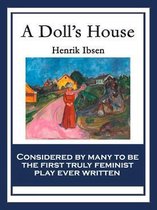
A Doll’s House AO5 Key Critics
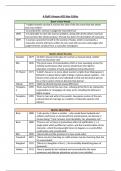
Ibsen’s Own Words
‘I might honestly say that it was for the sake of the last scene that the whole
play was written’
‘In practical life, woman is judged by masculine law’
1898 ‘It is desirable to solve the woman problem, along with all the others; but that
has not been the whole purpose. My task has been the description of humanity’
1899 ‘A woman cannot be herself in the society of today, which is exclusively a
masculine society with laws written by men and with accusers and judges who
judge feminine conduct from a masculine standpoint’
Quotes about the play
Huneker 1879 ‘[A Doll’s House is] the plea for women as human being, neither
more nor less than man’
Ellis 1890 ‘The great wave of emancipation which is now sweeping across the
civilised world means that women should have the right to
education, freedom of work and political enfranchisement’
M. Meyer 1971 ‘A Doll’s house is no more about women's rights than Shakespeare's
Richard II is about divine right of kings or ghosts about syphilis […] Its
theme is the need of every individual to find out the kind of person
he or she is and to strive to become that person’
Gilman 1972 ‘[ADH is] pitched beyond sexual difference’
Templeto 1989 ‘Ibsen was fiercely his own man, refusing all his life to be claimed by
n organization or campaigns of many sorts, including the Women’s
Rights League’
Templeto 1989 ‘Ibsen’s man and wife is the parodic, bourgeois version of the pan-
n cultural ideal of marriage as a relation of naturally superior and
inferior’
Quotes about Nora
Brun 1880 ‘I ask openly: is there a mother... who would leave husband and
children and home so she herself first and foremost can become a
human being"? And I answer most decidedly: No, absolutely not!’
Brun 1880 ‘There is not, in [Nora's] pretentious effort of justification [...] a
single point which justifies her action, and the transformation of her
character, which the playwright forces to happen, is so untruthful,
unattractive and unmotivated’
Ellis 1890 ‘[Nora held out] the promise of a new social order’
Crawford 1891 ‘[Nora may be] charming as a doll women may be charming [but she
is] unprincipled’
Weigand 1925 ‘[Nora is] a daughter of Eve […] An irresistibly bewitching piece of
femininity’
Veblen 1931 ‘Nora is petted by her husband and surrounded by the most
numerous and delicate attentions yet she is not satisfied’
Ibsen’s Own Words
‘I might honestly say that it was for the sake of the last scene that the whole
play was written’
‘In practical life, woman is judged by masculine law’
1898 ‘It is desirable to solve the woman problem, along with all the others; but that
has not been the whole purpose. My task has been the description of humanity’
1899 ‘A woman cannot be herself in the society of today, which is exclusively a
masculine society with laws written by men and with accusers and judges who
judge feminine conduct from a masculine standpoint’
Quotes about the play
Huneker 1879 ‘[A Doll’s House is] the plea for women as human being, neither
more nor less than man’
Ellis 1890 ‘The great wave of emancipation which is now sweeping across the
civilised world means that women should have the right to
education, freedom of work and political enfranchisement’
M. Meyer 1971 ‘A Doll’s house is no more about women's rights than Shakespeare's
Richard II is about divine right of kings or ghosts about syphilis […] Its
theme is the need of every individual to find out the kind of person
he or she is and to strive to become that person’
Gilman 1972 ‘[ADH is] pitched beyond sexual difference’
Templeto 1989 ‘Ibsen was fiercely his own man, refusing all his life to be claimed by
n organization or campaigns of many sorts, including the Women’s
Rights League’
Templeto 1989 ‘Ibsen’s man and wife is the parodic, bourgeois version of the pan-
n cultural ideal of marriage as a relation of naturally superior and
inferior’
Quotes about Nora
Brun 1880 ‘I ask openly: is there a mother... who would leave husband and
children and home so she herself first and foremost can become a
human being"? And I answer most decidedly: No, absolutely not!’
Brun 1880 ‘There is not, in [Nora's] pretentious effort of justification [...] a
single point which justifies her action, and the transformation of her
character, which the playwright forces to happen, is so untruthful,
unattractive and unmotivated’
Ellis 1890 ‘[Nora held out] the promise of a new social order’
Crawford 1891 ‘[Nora may be] charming as a doll women may be charming [but she
is] unprincipled’
Weigand 1925 ‘[Nora is] a daughter of Eve […] An irresistibly bewitching piece of
femininity’
Veblen 1931 ‘Nora is petted by her husband and surrounded by the most
numerous and delicate attentions yet she is not satisfied’