Intro
- We (our brain) don’t experience the world DIRECTLY, but rather through a series of “filters” called
senses
- Sense organs convert stimulation into the language of the nervous system – neural messages
- Sensory psychology: study of these senses and their effect on our behavior
- Sensation: The process by which our stimulated sensory receptors (eyes, ears,...) and nervous system
receive stimulus from the environment
- All sense organs transform physical stimulation (ie. sounds waves or light waves) into the
neural impulses that give us sensations (ie. light and dark)
- Perception: The process of bringing meaning to sensations by collecting, organizing, interpreting raw
data
- Perception creates an interpretation of sensation
- Thus, sensation is like the initial steps in processing stimulus
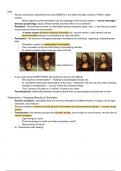
- Ie. picture puzzles where everyone sees smth diff
Looks similar but…
- If you could sense EVERYTHING, life would hurt and be very difficult
- We would be overstimulated → leading to psychological issues, etc.
- Ie. constantly noticing the temperature of the room = distraction VS how we only notice dramatic
changes in temperature → we only notice the important things
- Thus, humans only take in a “window” of what is acc there
- Psychophysics: relationship between physical stimuli and our psychological experiences to them
Transduction: Changing Stimulus to Sensation
- Sensory receptors: specialized forms of neurons stimulated by different kinds of energy such as light,
vibrations, and pressure
- Sensory receptors convert incoming stimulus information into electrochemical signals → causes neural
activity
- Transduction: the sensory process that converts energy, such as light or sound waves, into the form of
neural messages
- Light energy to vision
- Chemical energy to smell and taste (remember covid?)
- Sound waves to sound
- Ie. Transduction with hearing
, - Information goes from the senses to the thalamus → then to various areas of the brain
- Process of Transduction
1. Detection by a sensory neuron of a physical stimulus
2. When the appropriate stimulus reaches the sense organ, it activates specialized neurons called
receptors
3. The receptors respond by converting their excitation into a nerve signal
- Ie. a bar-code reader converts those lines into an electrical signal for the computer to
find the price of the product
- Processing: The neural impulse carries a code of the sensory invent in a form that can be further
processed by the brain
How our senses are alike:
- Our senses (7): vision, hearing, smell, taste, touch, pain and body position
1. All transform stimulus energy into neural impulses
2. All more sensitive to change than the constant stimulation
- Ie. change in temp, change in environment around
3. All provide us with information about the environment we are in
How our senses are different:
1. With the exception of pain, all the senses taps a different form of stimulus
2. Each sends the information to a different part of the brain
3. All operate in basically the same way, but extracts different information and sends it to its own
specialized processing region of the brain
See or Hear a Bell?
- Different sensations occur because different areas of the brain become activated
- Whether you HEAR a bell or SEE a bell depends on which part of the brain received the stimulation first
or faster
, Process of seeing things:
Phosphenes
- When you close your eyes and press gently on the corner of one eye → you “see” a pattern caused by
the pressure of your finger NOT by light
- These light sensations or visual images are phosphenes caused by fooling your visual system into
thinking it sees light when your eyes are closed (often caused by pressure)
Sensory adaptation
- Sensation is critically influenced by change → resulting in our sense organs being change detectors
- Their receptors specialize in gathering information about new and changing events
- Ie. someone who lives beside a hospital are used to the ambulance sounds and can sleep right through
it VS a friend who visits will not be able to sleep
- Vise versa: the person who lives beside a hospital will become overstimulated from the
quietness when they move to a diff place
- Sensory adaptation is the diminishing responsiveness of our sensory systems to prolonged
stimulation → sensory receptor less responsive to stimulus that is unchanging
- Unless it’s super painful, stimulation that persists without change in intensity will slowly shift to
the background of our awareness
- Sensory adaptation applies to all our senses (not just touch)
Sensory Thresholds
- Sensory thresholds: the point at which sensations begin and end; must be greater than the critical
amount to be consciously experiences
- Absolute threshold: the lowest level of stimulation that a person can consciously detect 50% of the
time the stimulation is present
- The minimum amount of sensory input you need to get in order to experience that sensation
- If it’s below your threshold, you won’t be able to process it
- Ie. for objects very far away, you have to squint your eyes to see or sometimes you simply can’t
see → different for everyone (someone with nearsightedness VS someone with perfect vision)
- We (our brain) don’t experience the world DIRECTLY, but rather through a series of “filters” called
senses
- Sense organs convert stimulation into the language of the nervous system – neural messages
- Sensory psychology: study of these senses and their effect on our behavior
- Sensation: The process by which our stimulated sensory receptors (eyes, ears,...) and nervous system
receive stimulus from the environment
- All sense organs transform physical stimulation (ie. sounds waves or light waves) into the
neural impulses that give us sensations (ie. light and dark)
- Perception: The process of bringing meaning to sensations by collecting, organizing, interpreting raw
data
- Perception creates an interpretation of sensation
- Thus, sensation is like the initial steps in processing stimulus
- Ie. picture puzzles where everyone sees smth diff
Looks similar but…
- If you could sense EVERYTHING, life would hurt and be very difficult
- We would be overstimulated → leading to psychological issues, etc.
- Ie. constantly noticing the temperature of the room = distraction VS how we only notice dramatic
changes in temperature → we only notice the important things
- Thus, humans only take in a “window” of what is acc there
- Psychophysics: relationship between physical stimuli and our psychological experiences to them
Transduction: Changing Stimulus to Sensation
- Sensory receptors: specialized forms of neurons stimulated by different kinds of energy such as light,
vibrations, and pressure
- Sensory receptors convert incoming stimulus information into electrochemical signals → causes neural
activity
- Transduction: the sensory process that converts energy, such as light or sound waves, into the form of
neural messages
- Light energy to vision
- Chemical energy to smell and taste (remember covid?)
- Sound waves to sound
- Ie. Transduction with hearing
, - Information goes from the senses to the thalamus → then to various areas of the brain
- Process of Transduction
1. Detection by a sensory neuron of a physical stimulus
2. When the appropriate stimulus reaches the sense organ, it activates specialized neurons called
receptors
3. The receptors respond by converting their excitation into a nerve signal
- Ie. a bar-code reader converts those lines into an electrical signal for the computer to
find the price of the product
- Processing: The neural impulse carries a code of the sensory invent in a form that can be further
processed by the brain
How our senses are alike:
- Our senses (7): vision, hearing, smell, taste, touch, pain and body position
1. All transform stimulus energy into neural impulses
2. All more sensitive to change than the constant stimulation
- Ie. change in temp, change in environment around
3. All provide us with information about the environment we are in
How our senses are different:
1. With the exception of pain, all the senses taps a different form of stimulus
2. Each sends the information to a different part of the brain
3. All operate in basically the same way, but extracts different information and sends it to its own
specialized processing region of the brain
See or Hear a Bell?
- Different sensations occur because different areas of the brain become activated
- Whether you HEAR a bell or SEE a bell depends on which part of the brain received the stimulation first
or faster
, Process of seeing things:
Phosphenes
- When you close your eyes and press gently on the corner of one eye → you “see” a pattern caused by
the pressure of your finger NOT by light
- These light sensations or visual images are phosphenes caused by fooling your visual system into
thinking it sees light when your eyes are closed (often caused by pressure)
Sensory adaptation
- Sensation is critically influenced by change → resulting in our sense organs being change detectors
- Their receptors specialize in gathering information about new and changing events
- Ie. someone who lives beside a hospital are used to the ambulance sounds and can sleep right through
it VS a friend who visits will not be able to sleep
- Vise versa: the person who lives beside a hospital will become overstimulated from the
quietness when they move to a diff place
- Sensory adaptation is the diminishing responsiveness of our sensory systems to prolonged
stimulation → sensory receptor less responsive to stimulus that is unchanging
- Unless it’s super painful, stimulation that persists without change in intensity will slowly shift to
the background of our awareness
- Sensory adaptation applies to all our senses (not just touch)
Sensory Thresholds
- Sensory thresholds: the point at which sensations begin and end; must be greater than the critical
amount to be consciously experiences
- Absolute threshold: the lowest level of stimulation that a person can consciously detect 50% of the
time the stimulation is present
- The minimum amount of sensory input you need to get in order to experience that sensation
- If it’s below your threshold, you won’t be able to process it
- Ie. for objects very far away, you have to squint your eyes to see or sometimes you simply can’t
see → different for everyone (someone with nearsightedness VS someone with perfect vision)