SENTENCES ASSIGNMENT 1
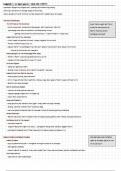
Complete Sentence - CORRECT ANSWERS-Has a subject, precicate (verb), and
makes sense
Simple Subject - CORRECT ANSWERS-Noun or pronoun that tells what or who the
sentence is about.
Complete Subject - CORRECT ANSWERS-The simple subject and all of its modifiers
(words that describe or limit)
Simple Predicate - CORRECT ANSWERS-A verb or verb phrase that tells what the
subject is doing or what is being done to the subject.
Complete Predicate - CORRECT ANSWERS-A verb or verb phrase and its modifiers,
objects, and complements.
Phrase - CORRECT ANSWERS-A group of related words without a subject and verb.
(They often begin with a preposition.)
Clause - CORRECT ANSWERS-A group of related words including a subject and verb.
Dependent Clause - CORRECT ANSWERS-Depends on independent clauses for their
meaning. They often begin with words such as if, when, because, and as.
Independent Clauses - CORRECT ANSWERS-Complete sentence.
Simple Sentence - CORRECT ANSWERS-One independent clause.
Compound Sentence - CORRECT ANSWERS-Contains two independent clauses
connected by a conjunction, semicolon, or conjunctive adverb.
Complex Sentence - CORRECT ANSWERS-Contains an independent clause and a
dependent clause.
Compound-Complex Sentence - CORRECT ANSWERS-Contains at least two
independent clauses and one dependent clause.
Subject-Verb - CORRECT ANSWERS-Most basic pattern; the verb follows the subject.
Mary(s) ran.(v)
I(s) laughed.(v)
Subject-Action Verb-Object - CORRECT ANSWERS-The verb follows the subject, and
the object follows the verb.
Mary(s) had(v) a lamb.(o)
Complete Sentence - CORRECT ANSWERS-Has a subject, precicate (verb), and
makes sense
Simple Subject - CORRECT ANSWERS-Noun or pronoun that tells what or who the
sentence is about.
Complete Subject - CORRECT ANSWERS-The simple subject and all of its modifiers
(words that describe or limit)
Simple Predicate - CORRECT ANSWERS-A verb or verb phrase that tells what the
subject is doing or what is being done to the subject.
Complete Predicate - CORRECT ANSWERS-A verb or verb phrase and its modifiers,
objects, and complements.
Phrase - CORRECT ANSWERS-A group of related words without a subject and verb.
(They often begin with a preposition.)
Clause - CORRECT ANSWERS-A group of related words including a subject and verb.
Dependent Clause - CORRECT ANSWERS-Depends on independent clauses for their
meaning. They often begin with words such as if, when, because, and as.
Independent Clauses - CORRECT ANSWERS-Complete sentence.
Simple Sentence - CORRECT ANSWERS-One independent clause.
Compound Sentence - CORRECT ANSWERS-Contains two independent clauses
connected by a conjunction, semicolon, or conjunctive adverb.
Complex Sentence - CORRECT ANSWERS-Contains an independent clause and a
dependent clause.
Compound-Complex Sentence - CORRECT ANSWERS-Contains at least two
independent clauses and one dependent clause.
Subject-Verb - CORRECT ANSWERS-Most basic pattern; the verb follows the subject.
Mary(s) ran.(v)
I(s) laughed.(v)
Subject-Action Verb-Object - CORRECT ANSWERS-The verb follows the subject, and
the object follows the verb.
Mary(s) had(v) a lamb.(o)