8/17/24, 5:23 AM
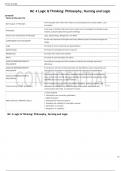
MC 4 Logic & Thinking: Philosophy, Nursing and Logic
Jeremiah
Terms in this set (19)
From the greek word. Philo which means Love and Sophia which means wisdom. Love
Etymological of Philosophy
of wisdom
is the study or discipline that uses human reason took to investigate the ultimate causes,
Philosophy
reasons, and principles which govern all things
What are the Components of Philosophy Logic, Epistemology, Metaphysics, and Ethics
are the main branches of discipline that study different aspects of human thoughts and
COMPONENTS OF PHILOSOPHY
reality.
Logic the study of correct reasoning and argumentation
Epistemology the study of knowledge and how to acquire it
Metaphysics the study of the nature and existence
Ethics the study of world principles and valves
LOGIC AS INTRODUCTION TO it provides the concepts and kills necessary to identify and evaluate arguments
PHILOSOPHY effectively
LOGIC AS INTRODUCTION TO it provides an overview of what arguments are, the different. types of arguments one
PHILOSOPHY can expect to encounter in both and everyday life, and how to evaluate them.
It analyzes the way in which human experience the world it teaches critical thinking,
LOGIC AS INTRODUCTION TO
close reading, clear writing, and logical analysis to understand the language we use to
PHILOSOPHY
describe the world and our place within it.
as the mental process of actively and skillfully perception, analysis, synthesis, and
Critical thinking in Logic and Nursing evaluation of collected information through observation, experience and
communication that leads. to a decision for action
1. Critical Analysis
2. Introduction and concluding justification
3. Valid Conclusion
MAIN CRITICAL THINKING SKILLS 4. Distinguish OF Facts and opinions
5. Evaluating the credibility of information sources
6. Clarification of concepts
7. Recognition of conditions
MC 4 Logic & Thinking: Philosophy, Nursing and Logic
1/2
MC 4 Logic & Thinking: Philosophy, Nursing and Logic
Jeremiah
Terms in this set (19)
From the greek word. Philo which means Love and Sophia which means wisdom. Love
Etymological of Philosophy
of wisdom
is the study or discipline that uses human reason took to investigate the ultimate causes,
Philosophy
reasons, and principles which govern all things
What are the Components of Philosophy Logic, Epistemology, Metaphysics, and Ethics
are the main branches of discipline that study different aspects of human thoughts and
COMPONENTS OF PHILOSOPHY
reality.
Logic the study of correct reasoning and argumentation
Epistemology the study of knowledge and how to acquire it
Metaphysics the study of the nature and existence
Ethics the study of world principles and valves
LOGIC AS INTRODUCTION TO it provides the concepts and kills necessary to identify and evaluate arguments
PHILOSOPHY effectively
LOGIC AS INTRODUCTION TO it provides an overview of what arguments are, the different. types of arguments one
PHILOSOPHY can expect to encounter in both and everyday life, and how to evaluate them.
It analyzes the way in which human experience the world it teaches critical thinking,
LOGIC AS INTRODUCTION TO
close reading, clear writing, and logical analysis to understand the language we use to
PHILOSOPHY
describe the world and our place within it.
as the mental process of actively and skillfully perception, analysis, synthesis, and
Critical thinking in Logic and Nursing evaluation of collected information through observation, experience and
communication that leads. to a decision for action
1. Critical Analysis
2. Introduction and concluding justification
3. Valid Conclusion
MAIN CRITICAL THINKING SKILLS 4. Distinguish OF Facts and opinions
5. Evaluating the credibility of information sources
6. Clarification of concepts
7. Recognition of conditions
MC 4 Logic & Thinking: Philosophy, Nursing and Logic
1/2