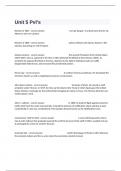
Unit 5 Pvl's
Election of 1824 - correct answer "corrupt bargain" and backroom deal for JQ
Adams to win over Jackson
Election of 1828 - correct answer Jackson defeats John Quincy Adams in this
election, becoming our 7th President
Andrew Jackson - correct answer The seventh President of the United States
(1829-1837), who as a general in the War of 1812 defeated the British at New Orleans (1815). As
president he opposed the Bank of America, objected to the right of individual states to nullify
disagreeable federal laws, and increased the presidential powers.
Henry Clay - correct answer A northern American politician. He developed the
American System as well as negotiated numerous compromises.
John Quincy Adams - correct answer Secretary of State, He served as sixth
president under Monroe. In 1819, he drew up the Adams-Onis Treaty in which Spain gave the United
States Florida in exchange for the United States dropping its claims to Texas. The Monroe Doctrine was
mostly Adams' work.
John C. Calhoun - correct answer In 1828, he lead the fight against protective
tariffs which hurt the south economically. Created the doctrine of nullification which said that a state
could decide if a law was constitutional. This situation became known as the Nullification Crisis.
Compromise Tariff of 1833 - correct answer A new tariff proposed by Henry
Clay & John Calhoun that gradually lowered the tariff to the level of the tariff of 1816; avoided civil war
& prolonged the union for another 30 years.
Seminole War - correct answer conflict that began in florida in 1817 between
the seminole indians and the us army when the seminoles resisted removal
, Dawes Act - correct answer 1887 law that distributed reservation land to
individual Native American owners
Panic of 1837 - correct answer When Jackson was president, many state banks
received government money that had been withdrawn from the Bank of the U.S. These banks issued
paper money and financed wild speculation, especially in federal lands. Jackson issued the Specie
Circular to force the payment for federal lands with gold or silver. Many state banks collapsed as a
result. A panic ensued (1837). Bank of the U.S. failed, cotton prices fell, businesses went bankrupt, and
there was widespread unemployment and distress.
John Tyler - correct answer elected Vice President and became the 10th
President of the United States when Harrison died 1841-1845, President responsible for annexation of
Mexico after receiving mandate from Polk, opposed many parts of the Whig program for economic
recovery
Democrats - correct answer Political party lead by Andrew Jackson from 1828
to 1856. Campaigned against strong central government and fought to end elitism.
Whigs - correct answer conservatives and popular with pro-Bank people and
plantation owners. They mainly came from the National Republican Party, which was once largely
Federalists. They took their name from the British political party that had opposed King George during
the American Revolution. Their policies included support of industry, protective tariffs, and Clay's
American System. They were generally upper class in origin. Included Clay and Webster
Log Cabin Campaign - correct answer name given to William Henry Harrison's
campaign for the presidency in 1840, from the Whigs' use of a log cabin as their symbol
Age of the Common Man - correct answer Jackson's presidency was the called
the Age of the Common Man. He felt that government should be run by common people - a democracy
based on self-sufficient middle class with ideas formed by liberal education and a free press. All white
men could now vote, and the increased voting rights allowed Jackson to be elected.
Spoils System - correct answer A system of public employment based on
rewarding party loyalists and friends.
Election of 1824 - correct answer "corrupt bargain" and backroom deal for JQ
Adams to win over Jackson
Election of 1828 - correct answer Jackson defeats John Quincy Adams in this
election, becoming our 7th President
Andrew Jackson - correct answer The seventh President of the United States
(1829-1837), who as a general in the War of 1812 defeated the British at New Orleans (1815). As
president he opposed the Bank of America, objected to the right of individual states to nullify
disagreeable federal laws, and increased the presidential powers.
Henry Clay - correct answer A northern American politician. He developed the
American System as well as negotiated numerous compromises.
John Quincy Adams - correct answer Secretary of State, He served as sixth
president under Monroe. In 1819, he drew up the Adams-Onis Treaty in which Spain gave the United
States Florida in exchange for the United States dropping its claims to Texas. The Monroe Doctrine was
mostly Adams' work.
John C. Calhoun - correct answer In 1828, he lead the fight against protective
tariffs which hurt the south economically. Created the doctrine of nullification which said that a state
could decide if a law was constitutional. This situation became known as the Nullification Crisis.
Compromise Tariff of 1833 - correct answer A new tariff proposed by Henry
Clay & John Calhoun that gradually lowered the tariff to the level of the tariff of 1816; avoided civil war
& prolonged the union for another 30 years.
Seminole War - correct answer conflict that began in florida in 1817 between
the seminole indians and the us army when the seminoles resisted removal
, Dawes Act - correct answer 1887 law that distributed reservation land to
individual Native American owners
Panic of 1837 - correct answer When Jackson was president, many state banks
received government money that had been withdrawn from the Bank of the U.S. These banks issued
paper money and financed wild speculation, especially in federal lands. Jackson issued the Specie
Circular to force the payment for federal lands with gold or silver. Many state banks collapsed as a
result. A panic ensued (1837). Bank of the U.S. failed, cotton prices fell, businesses went bankrupt, and
there was widespread unemployment and distress.
John Tyler - correct answer elected Vice President and became the 10th
President of the United States when Harrison died 1841-1845, President responsible for annexation of
Mexico after receiving mandate from Polk, opposed many parts of the Whig program for economic
recovery
Democrats - correct answer Political party lead by Andrew Jackson from 1828
to 1856. Campaigned against strong central government and fought to end elitism.
Whigs - correct answer conservatives and popular with pro-Bank people and
plantation owners. They mainly came from the National Republican Party, which was once largely
Federalists. They took their name from the British political party that had opposed King George during
the American Revolution. Their policies included support of industry, protective tariffs, and Clay's
American System. They were generally upper class in origin. Included Clay and Webster
Log Cabin Campaign - correct answer name given to William Henry Harrison's
campaign for the presidency in 1840, from the Whigs' use of a log cabin as their symbol
Age of the Common Man - correct answer Jackson's presidency was the called
the Age of the Common Man. He felt that government should be run by common people - a democracy
based on self-sufficient middle class with ideas formed by liberal education and a free press. All white
men could now vote, and the increased voting rights allowed Jackson to be elected.
Spoils System - correct answer A system of public employment based on
rewarding party loyalists and friends.