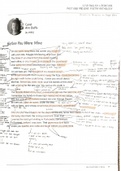
class 12 cbse macroeconomics circular flow of income handwritten notes
The Circular Flow of Income is a fundamental concept in macroeconomics that illustrates the continuous movement of money and resources between different sectors of the economy. Here’s a brief overview: 1. Basic Concept: The Circular Flow of Income model depicts how income flows between households and firms through markets for goods and services, and the factor markets (labor, capital, etc.). 2. Two-Sector Model: Households: Provide factors of production (labor, capital) and receive income (wages, rent, interest, profit). Firms: Produce goods and services and pay households for their factors of production. 3. Flow of Money: Expenditure Flow: Households spend their income on goods and services produced by firms. Income Flow: Firms pay households for their labor and other resources. 4. Role of Government and Foreign Sector (Expanded Model): Government: Collects taxes and injects spending into the economy. Foreign Sector: Includes exports and imports, affecting the income flow between domestic and international markets. 5. Leakages and Injections: Leakages: Savings, taxes, and imports that reduce the flow of income. Injections: Investments, government spending, and exports that increase the flow of income. These handwritten notes provide a visual and detailed explanation of how income circulates in an economy, emphasizing the interconnections between different economic agents and sectors.
Libro relacionado
- Desconocido
- 9789351996842
- Desconocido
Escuela, estudio y materia
- Institución
- Escuela secundaria
- Economics
- Año escolar
- 2
Información del documento
- Subido en
- 6 de agosto de 2024
- Número de páginas
- 10
- Escrito en
- 2024/2025
- Tipo
- Notas de lectura
- Profesor(es)
- Ridhi sharma
- Contiene
- 11th to 12th grade
Temas
-
class 12
-
macroecomics
-
2024 edition
-
handwritten notes
-
cbse
-
chapter 1
-
circular flow of income