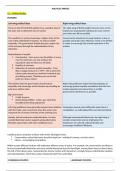
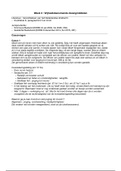
CONFLICT DEEP GREEN SHALLOW GREEN
S
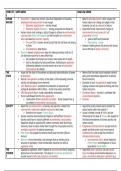
HUMAN Ecocentrism – nature has intrinsic value that independent of humanity. Belief in anthropocentrism, which argues that
NATURE Enlightened anthropocentrism is not enough. human nature can change and adapt so that
Biospheric egalitarianism – minimal impact humanity can act as a steward of nature.
Biocentric equality: Bookchin – ‘ecology recognises not hierarchy’ Argue that human nature much change its
Human nature must undergo a radical change to achieve an environmental environmental consciousness for self-
consciousness (Naess and Leopold), so that humanity’s environmental preservation (Carson).
ethics are based on biocentric equality. ‘gods of profit and production’
The Land Ethic: humans should accept that the land does not belong Silent Spring – Carson
to them. However shallow greens still perceive the human
Gila Wilderness, New Mexico race at the top of nature’s hierarchy.
Merchant blames enlightenment ideas for making humanity think that it
can dominate nature for its own selfish ends.
She equates the triumph over science over nature akin to death.
Only by the patriarchy being overthrown, facilitating an egalitarian
relationship between men and women can a new environmental
consciousness be created.
THE Argue that the state is the problem and advocate decentralisation of power Believe that the state should negotiate national
STATE to bioregions. policy and international agreements to protect
Dismiss managerialism as futile, as the state is still overseeing economic the environment.
activity and damaging the environment. Examples of such managerialism would involve
1972 Meadows report – predicted the exhaustion of resources and capping emission and quotas on fishing and finite
ecological devastation within 100yrs – found to be overly pessimistic. natural resources.
1983 Brundtland Report: made sustainability mainstream. Brundtland Report – poverty is correlated with
Trump’s withdrawal from the Paris Agreement. environmental depletion.
Continuation of the industrialist paradigm – Trump showed there is Fairtrade
no coherent environmental consciousness.
SOCIETY Reject the conventional ethics of society and argue for a break from Argue that society should seek to protect the
consumerism, materialism and the mechanistic world view. natural world rather than exploit it.
Dominion over nature – Francis Bacon Accept a limited concept of holism and are
Society would be decentralised and based on self-sufficient bioregions. influenced by the ideas of Carson, who argued for
Society would have a radically different environmental consciousness. the interconnectedness of humans society and
Happiness would be equated with creative communal work that brings natural society.
humanity closer to nature rather than through the consumption and the Enlightened anthropocentrism accepts limits to
insatiable acquisition of material possessions. growth and that society must move beyond
Peter Singer has argued that animal should have the same rights as traditional ethic and accept the principle of
humans. intergenerational equity.
Bookchin: the environmental crisis emerges from an existing social Environmental ethics: animal liberation
structure of oppression. Small communities should be ran with an (Peter Singer) and obligations to future
egalitarian ethos. generations (Derek Parfit).
THE Opposed to capitalism, which it regards as consciousness that is singularly Argue that green capitalism can use market
ECONOM destructive to the environment. The ideas of Schumacher and Bookchin forces to change environmental behaviour via
Y revolve around small-scale production and localism. green consumerism and green capitalism (e.g.
S
HUMAN Ecocentrism – nature has intrinsic value that independent of humanity. Belief in anthropocentrism, which argues that
NATURE Enlightened anthropocentrism is not enough. human nature can change and adapt so that
Biospheric egalitarianism – minimal impact humanity can act as a steward of nature.
Biocentric equality: Bookchin – ‘ecology recognises not hierarchy’ Argue that human nature much change its
Human nature must undergo a radical change to achieve an environmental environmental consciousness for self-
consciousness (Naess and Leopold), so that humanity’s environmental preservation (Carson).
ethics are based on biocentric equality. ‘gods of profit and production’
The Land Ethic: humans should accept that the land does not belong Silent Spring – Carson
to them. However shallow greens still perceive the human
Gila Wilderness, New Mexico race at the top of nature’s hierarchy.
Merchant blames enlightenment ideas for making humanity think that it
can dominate nature for its own selfish ends.
She equates the triumph over science over nature akin to death.
Only by the patriarchy being overthrown, facilitating an egalitarian
relationship between men and women can a new environmental
consciousness be created.
THE Argue that the state is the problem and advocate decentralisation of power Believe that the state should negotiate national
STATE to bioregions. policy and international agreements to protect
Dismiss managerialism as futile, as the state is still overseeing economic the environment.
activity and damaging the environment. Examples of such managerialism would involve
1972 Meadows report – predicted the exhaustion of resources and capping emission and quotas on fishing and finite
ecological devastation within 100yrs – found to be overly pessimistic. natural resources.
1983 Brundtland Report: made sustainability mainstream. Brundtland Report – poverty is correlated with
Trump’s withdrawal from the Paris Agreement. environmental depletion.
Continuation of the industrialist paradigm – Trump showed there is Fairtrade
no coherent environmental consciousness.
SOCIETY Reject the conventional ethics of society and argue for a break from Argue that society should seek to protect the
consumerism, materialism and the mechanistic world view. natural world rather than exploit it.
Dominion over nature – Francis Bacon Accept a limited concept of holism and are
Society would be decentralised and based on self-sufficient bioregions. influenced by the ideas of Carson, who argued for
Society would have a radically different environmental consciousness. the interconnectedness of humans society and
Happiness would be equated with creative communal work that brings natural society.
humanity closer to nature rather than through the consumption and the Enlightened anthropocentrism accepts limits to
insatiable acquisition of material possessions. growth and that society must move beyond
Peter Singer has argued that animal should have the same rights as traditional ethic and accept the principle of
humans. intergenerational equity.
Bookchin: the environmental crisis emerges from an existing social Environmental ethics: animal liberation
structure of oppression. Small communities should be ran with an (Peter Singer) and obligations to future
egalitarian ethos. generations (Derek Parfit).
THE Opposed to capitalism, which it regards as consciousness that is singularly Argue that green capitalism can use market
ECONOM destructive to the environment. The ideas of Schumacher and Bookchin forces to change environmental behaviour via
Y revolve around small-scale production and localism. green consumerism and green capitalism (e.g.