Additional Midterm Practice Questions
How should I study for the midterm (and final exam!)?
You are likely similar to most students when they study....they do what will help them the least
(highlighting, re-reading). Unfortunately, those strategies test recognition (being able to
recognize information) but not recall (being able to call up information when we need it).
Midterms and exams in accounting test recall....so using your old high school strategies is
useless for study purposes in an accounting course.
What does research show works well for courses that require recall?
#1: Write your own questions and then solve them.
There are three different types of questions you should make up. First, questions about the
concepts (called knowledge questions). This is best done using cue cards (Dollarama sells a
package for $1). While reading the chapter write questions on one side of the card and the
solution on the other.
Can you give me an example?
Sure. From page 1 of Chapter 1 an appropriate card would have the following:
Question: What is a business?
Solution: Making, buying, or selling goods or providing services for money.
Once you have all your cards set up for the chapter you don't need to review your chapter any
more...you do that automatically when you go through the cards!
OK, concept questions I understand. What's the second type of question I should
make up?
Second, questions that apply the concepts (called application questions). This is where you
have to apply a concept and calculate something.
Can you give me an example?
OK. From page 2 of Chapter 1, the first Check your understanding question asked you what
business sector a fashion designer is in and why it belongs in that sector. Knowing the three
business sectors is a knowledge question BUT being able to apply that concept to figure out
,which businesses are in which sectors is an application of knowledge. These types of questions
are what make up many of the end of chapter Practice Questions.
To make up these questions go to the end of chapter Practice Questions. Using those as
inspiration make up new questions (with new scenarios, new numbers). Then write a solution.
Application questions take more time to make up than knowledge questions (after all,
knowledge questions come right from the chapter!) but they have high value for recall
purposes.
KEY for application questions: solve them without looking at the chapter information. If you
are solving application questions with your textbook and notes open beside you then you have
now made them recognition questions...and you lost the value of writing the questions for
recall!!
OK, knowledge and application questions I understand. What's the third type of
question I should make up?
Questions that analyze the results of the application questions (called analysis questions).
These take the results of the application questions and try and figure out what they mean.
Can you give me an example?
There are a lot of examples in the Practice Questions at the end of every chapter but let's just
make one up here so you get a good idea of what you are looking for in the Practice Questions.
Say you just completed the financial statements for a business (that would be an application
question, by the way!) Analysis questions using those financial statements would be as follows:
What is the business’s financial position? (You need to know that financial position is shown by
the balance sheet and then you would need to be able to analyze what is happening on the
balance sheet.)
Is the business profitable? What, if anything, could the business do to become more profitable
if they were unable to increase their sales? (You need to know that profitability comes from
the income statement and be able to review the operating expenses so you can determine
where you can cut costs.)
What are their main sources (inflows) of cash from? Does this make sense considering the
industry they are in? (You need to know that cash flows are only shown on the statement of
cash flows and then which activities have the greatest inflow. Also, which activities SHOULD
have inflow, and for which activities would it make more sense to see an outflow instead of an
inflow.)
,There are a lot of analysis questions included in the Practice Questions at the end of each
chapter. When you are making up the application questions develop the analysis questions at
the same time. Then solve them.
OK, this sounds like A LOT of work!!! What else does research show works well
for recall?
#2: Regularly (disbursed practice) solve mixed up (interweaving) NEW questions with no aids
(close your textbook and notes!)
Disbursed practice means that you have to write questions regularly....NOT one or two practice
sessions 2 to 3 days before the midterm and final exam. Massed practice (cramming is what
you call it) is useless for recall. That's because, when you group all your practice into a short
period of time, you are testing recognition, NOT RECALL!!. So practice every night for a period
of time...not cramming for one or two nights right before the midterm or exam. The same
NUMBER OF MINUTES of practice when it is disbursed gets better midterm results than
cramming. Makes sense...our memories work best when they are tested after a short time of
forgetting. Disbursed practice (dividing practice over time) allows a short forgetting time so
you can better practise your recall.
Interweaving means you mix up what you are studying. Most students will do all of the
Chapter 1 questions first. The feel like they "get it" by the end of doing all the Chapter 1
questions so they move on to Chapter 2...and never touch Chapter 1 again. But, this is the
same as massed practice (see above if you already forgot what that is!). You might FEEL like
you got Chapter 1 but, really, about half way through the Chapter 1 questions you started
working on recognition....not recall.
Write practice questions in a random order. For example, write one question from Chapter 1,
then one from Chapter 5, then one from Chapter 2....mix them up. First, it better tests recall
AND because that is how you will see them on the midterm or final exam!
NO AIDS allowed!! NEVER open your textbook or notes when you are writing
questions....EVER. When you can't figure something out read the question again, slowly, and
then write down everything you DO know...and then struggle some more.
Research shows that, in North America, the average time a student struggles with a question is
5.4 minutes before giving up and looking at the solution....which is then testing your
RECOGNITION but not your RECALL!! Compare that to the Philippines (they out-rank North
American students in academic outcomes for both math and science). They work on a question
for approximately 25 minutes before giving up. As a consequence they LEARN more because
learning is a struggle and the more we struggle the more your brain has to work at RECALL!!
, Is there anything else I can do to improve the likelihood of passing the midterm?
Yes....work in cooperative groups to do all of the above. Discussing when you understand and
don't understand something helps your brain to remember...and that helps your ability to recall
information later one. Students who work in cooperative groups outside of class outperform all
other students, regardless of IQ. We learn best through discussion and particularly discussion
with students who are studying the same thing. Research shows the optimal (best) size group
is 3 to 4. Unfortunately, groups of 2 don't show the same benefits....because groups of 2 often
strengthen misconceptions (misunderstandings) and don't disagree enough (which is good for
learning as long as it's friendly disagreeing).
Ask questions. Your instructors are there for you during their office hours. If you don't
understand something go and ASK. After all, that's what they are there for. Research shows
that students who visit an instructor during office hours outperform all the remaining students
in a course. This is likely because they get the help they need when they need it...instead of
struggling on their own.
Being successful in a university course is not like being successful at high school. Many students
found high school easy - they did nothing but highlight, reread, and cram to get good marks.
That's not going to happen in a university accounting course. We expect you to be able to solve
problems...and for that you have to be able to use recall.
So how do I start?
Below are ADDITIONAL practice questions (because students asked for more questions....not
because the end of chapter questions and Aplia were not enough but because students would
like more!) They are all new and you have never seen them before. The solutions are NOT in
this document (removing the temptation to check out the solutions without struggling) and
they are mixed up (interweaving). Start here...and then keep going. Being able to do these
questions without looking at your notes or the chapters tells you that you have the ability to
recall information when you need it....and that’s exactly what you need to be able to do for
the midterm. You should also be able to do all the practice questions from the end of every
chapter (which you should have been doing already!) and the questions on Aplia (ditto!).....and
then make up some of your own.
So, here are more questions as requested by students for additional practice. I hope that they
help you to practise the recall you require for the midterm.
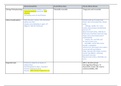
WARNING: many of the charts included in this package are images because they could not be
included any other way. You will have to print off these charts in order to complete the
question.
How should I study for the midterm (and final exam!)?
You are likely similar to most students when they study....they do what will help them the least
(highlighting, re-reading). Unfortunately, those strategies test recognition (being able to
recognize information) but not recall (being able to call up information when we need it).
Midterms and exams in accounting test recall....so using your old high school strategies is
useless for study purposes in an accounting course.
What does research show works well for courses that require recall?
#1: Write your own questions and then solve them.
There are three different types of questions you should make up. First, questions about the
concepts (called knowledge questions). This is best done using cue cards (Dollarama sells a
package for $1). While reading the chapter write questions on one side of the card and the
solution on the other.
Can you give me an example?
Sure. From page 1 of Chapter 1 an appropriate card would have the following:
Question: What is a business?
Solution: Making, buying, or selling goods or providing services for money.
Once you have all your cards set up for the chapter you don't need to review your chapter any
more...you do that automatically when you go through the cards!
OK, concept questions I understand. What's the second type of question I should
make up?
Second, questions that apply the concepts (called application questions). This is where you
have to apply a concept and calculate something.
Can you give me an example?
OK. From page 2 of Chapter 1, the first Check your understanding question asked you what
business sector a fashion designer is in and why it belongs in that sector. Knowing the three
business sectors is a knowledge question BUT being able to apply that concept to figure out
,which businesses are in which sectors is an application of knowledge. These types of questions
are what make up many of the end of chapter Practice Questions.
To make up these questions go to the end of chapter Practice Questions. Using those as
inspiration make up new questions (with new scenarios, new numbers). Then write a solution.
Application questions take more time to make up than knowledge questions (after all,
knowledge questions come right from the chapter!) but they have high value for recall
purposes.
KEY for application questions: solve them without looking at the chapter information. If you
are solving application questions with your textbook and notes open beside you then you have
now made them recognition questions...and you lost the value of writing the questions for
recall!!
OK, knowledge and application questions I understand. What's the third type of
question I should make up?
Questions that analyze the results of the application questions (called analysis questions).
These take the results of the application questions and try and figure out what they mean.
Can you give me an example?
There are a lot of examples in the Practice Questions at the end of every chapter but let's just
make one up here so you get a good idea of what you are looking for in the Practice Questions.
Say you just completed the financial statements for a business (that would be an application
question, by the way!) Analysis questions using those financial statements would be as follows:
What is the business’s financial position? (You need to know that financial position is shown by
the balance sheet and then you would need to be able to analyze what is happening on the
balance sheet.)
Is the business profitable? What, if anything, could the business do to become more profitable
if they were unable to increase their sales? (You need to know that profitability comes from
the income statement and be able to review the operating expenses so you can determine
where you can cut costs.)
What are their main sources (inflows) of cash from? Does this make sense considering the
industry they are in? (You need to know that cash flows are only shown on the statement of
cash flows and then which activities have the greatest inflow. Also, which activities SHOULD
have inflow, and for which activities would it make more sense to see an outflow instead of an
inflow.)
,There are a lot of analysis questions included in the Practice Questions at the end of each
chapter. When you are making up the application questions develop the analysis questions at
the same time. Then solve them.
OK, this sounds like A LOT of work!!! What else does research show works well
for recall?
#2: Regularly (disbursed practice) solve mixed up (interweaving) NEW questions with no aids
(close your textbook and notes!)
Disbursed practice means that you have to write questions regularly....NOT one or two practice
sessions 2 to 3 days before the midterm and final exam. Massed practice (cramming is what
you call it) is useless for recall. That's because, when you group all your practice into a short
period of time, you are testing recognition, NOT RECALL!!. So practice every night for a period
of time...not cramming for one or two nights right before the midterm or exam. The same
NUMBER OF MINUTES of practice when it is disbursed gets better midterm results than
cramming. Makes sense...our memories work best when they are tested after a short time of
forgetting. Disbursed practice (dividing practice over time) allows a short forgetting time so
you can better practise your recall.
Interweaving means you mix up what you are studying. Most students will do all of the
Chapter 1 questions first. The feel like they "get it" by the end of doing all the Chapter 1
questions so they move on to Chapter 2...and never touch Chapter 1 again. But, this is the
same as massed practice (see above if you already forgot what that is!). You might FEEL like
you got Chapter 1 but, really, about half way through the Chapter 1 questions you started
working on recognition....not recall.
Write practice questions in a random order. For example, write one question from Chapter 1,
then one from Chapter 5, then one from Chapter 2....mix them up. First, it better tests recall
AND because that is how you will see them on the midterm or final exam!
NO AIDS allowed!! NEVER open your textbook or notes when you are writing
questions....EVER. When you can't figure something out read the question again, slowly, and
then write down everything you DO know...and then struggle some more.
Research shows that, in North America, the average time a student struggles with a question is
5.4 minutes before giving up and looking at the solution....which is then testing your
RECOGNITION but not your RECALL!! Compare that to the Philippines (they out-rank North
American students in academic outcomes for both math and science). They work on a question
for approximately 25 minutes before giving up. As a consequence they LEARN more because
learning is a struggle and the more we struggle the more your brain has to work at RECALL!!
, Is there anything else I can do to improve the likelihood of passing the midterm?
Yes....work in cooperative groups to do all of the above. Discussing when you understand and
don't understand something helps your brain to remember...and that helps your ability to recall
information later one. Students who work in cooperative groups outside of class outperform all
other students, regardless of IQ. We learn best through discussion and particularly discussion
with students who are studying the same thing. Research shows the optimal (best) size group
is 3 to 4. Unfortunately, groups of 2 don't show the same benefits....because groups of 2 often
strengthen misconceptions (misunderstandings) and don't disagree enough (which is good for
learning as long as it's friendly disagreeing).
Ask questions. Your instructors are there for you during their office hours. If you don't
understand something go and ASK. After all, that's what they are there for. Research shows
that students who visit an instructor during office hours outperform all the remaining students
in a course. This is likely because they get the help they need when they need it...instead of
struggling on their own.
Being successful in a university course is not like being successful at high school. Many students
found high school easy - they did nothing but highlight, reread, and cram to get good marks.
That's not going to happen in a university accounting course. We expect you to be able to solve
problems...and for that you have to be able to use recall.
So how do I start?
Below are ADDITIONAL practice questions (because students asked for more questions....not
because the end of chapter questions and Aplia were not enough but because students would
like more!) They are all new and you have never seen them before. The solutions are NOT in
this document (removing the temptation to check out the solutions without struggling) and
they are mixed up (interweaving). Start here...and then keep going. Being able to do these
questions without looking at your notes or the chapters tells you that you have the ability to
recall information when you need it....and that’s exactly what you need to be able to do for
the midterm. You should also be able to do all the practice questions from the end of every
chapter (which you should have been doing already!) and the questions on Aplia (ditto!).....and
then make up some of your own.
So, here are more questions as requested by students for additional practice. I hope that they
help you to practise the recall you require for the midterm.
WARNING: many of the charts included in this package are images because they could not be
included any other way. You will have to print off these charts in order to complete the
question.