YMCA CPR QUESTIONS & ANSWERS SCORED A+ TO PASS
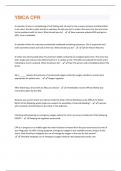
A coworker of yours is complaining of not feeling well. He says he has a severe pressure and discomfort in his chest. His skin is pale, and he is sweating. He asks you not to make a fuss over him, but you know he has problems with his heart. What should you do? - Have someone activate EMS and get an AED, if one is available. A coworker thinks she may have accidentally swallowed something poisonous. She is responsive and looks worried but does not look or feel sick. What should you do? - Call the Poison Help line. A roofer was electrocuted when his aluminum ladder contacted an energized power line. The scene has been made safe and you have determined he is in cardiac arrest. The AED has analyzed the heart and is indicating a shock is advised. What should you do? - Clear the person and immediately deliver the shock. A(n) ______ reduces the pressure of compressed oxygen inside the oxygen cylinder to a level more appropriate for patient care. - Oxygen regulator After delivering a shock with an AED, you should: - Immediately resume CPR and follow any instructions given by the AED. Because you cannot clearly see injuries inside the body, internal bleeding can be difficult to detect. Which of the following would make you suspect the possibility of internal bleeding? - A person who received a forceful blow to the chest or the abdomen. Checking and preparing an emergency oxygen system for return to service includes all of the following EXCEPT: - Keeping the regulator pressurized. CPR is in progress on a middle-aged man who had been removed from the pool unconscious by two of your lifeguards. An AED is being prepared. Emergency oxygen is also available and you bring it to the scene. How should you integrate the use of emergency oxygen in the care for this person? - Smoothly integrate use of emergency oxygen without interrupting the priority care.Early recognition of cardiac arrest and activation of an emergency response protocol; immediate high quality CPR; rapid defibrillation; effective BLS and ALS care and transportation; and effective postcardiac arrest care at a hospital are the links in which chain of survival? - Adults outside a hospital Emergency oxygen can help a person who may be experiencing: - Difficulty in breathing.
Escuela, estudio y materia
- Institución
- YMCA
- Grado
- YMCA
Información del documento
- Subido en
- 29 de julio de 2024
- Número de páginas
- 9
- Escrito en
- 2023/2024
- Tipo
- Examen
- Contiene
- Preguntas y respuestas
Temas
-
ymca

Documento también disponible en un lote