ACVM PARASITOLOGY BOARDS NVCP CASE OF THE MONTH EXAM REVIEW QUESTIONS AND ANSWERS, 100% ACCURATE, GRADED A+/ VERIFIED.
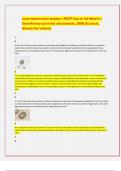
ACVM PARASITOLOGY BOARDS NVCP CASE OF THE MONTH EXAM REVIEW QUESTIONS AND ANSWERS, 100% ACCURATE, GRADED A+/ VERIFIED. 1 Q A five-year-old intact male coonhound presented with weight loss, lethargy, and bloody diarrhea. On physical examination, abdominal pain was evident. Laboratory tests revealed hypoalbuminemia, hyperglobulinemia, hypercalcemia, and nonregenerative anemia. These parasite eggs were found on fecal sedimentation. What are they? A This is Heterobilharzia americana, a digenean trematode that causes canine schistomiasis in the southeastern United States. Normally a parasite of raccoons, dogs are readily infected when they wade or swim in water with active cercaria. Infection can lead to development of a severe, potentially fatal enteritis associated with the movement of the eggs from the mesenteric venules to the intestinal lumen. Treatment requires high-dose praziquantel or fenbendazole, but is not rewarding in all cases. The prognosis in severely affected dogs can be poor. 2 Q A 7-month-old steer from southern California passed a number of small rectangular proglottids in his feces. When crushed and examined microscopically, each proglottid was found to contain a number of egg clusters, with each egg containing a set of six distinct hooks. What parasite is this? A This is Wyominia tetoni, a tapeworm of mountain sheep in the western United States that occasionally infects cattle. Effective treatments would be expected to be similar to those that are used for Moneizia sp. infections in cattle. 3 Q A seven-year-old Quarter Horse presented with head shaking and obvious duress. Examination of the ears under sedation revealed these organisms. What is this parasite? A Otobius megnini, the spinose ear tick, is found in the ears of horses, cattle, dogs, cats, and occasionally people in the southwestern United States. These soft ticks are readily recognized by the presence of prominent spines on the cuticle, which are understandably irritating to the host. In severe infestations, neurologic signs may result. Only the larval and nymphal stages are parasitic; adults are free-living in the environment. 4 Q A fecal sample was submitted from an adult female cat in Oklahoma as part of a routine annual wellness examination. This organism was found on fecal float. What parasite is this? A The feline whipworm, Trichuris felis, referred to by some authors as Trichuris campanula, is considered rare in cats in the continental United States other than occasional cases reported from southern Florida. Further discussions with the owner of this cat revealed she had recently moved with her cat to Oklahoma from the Caribbean. Looks like the cat and owner weren’t the only animals that moved! Although nothing is labeled to treat this parasite in cats in the US, something labeled as effective for whipworms in dogs, such as fenbendazole, milbemycin, or topical moxidectin would be expected to be effective.
Escuela, estudio y materia
- Institución
- ACVM
- Grado
- ACVM
Información del documento
- Subido en
- 23 de julio de 2024
- Número de páginas
- 25
- Escrito en
- 2023/2024
- Tipo
- Examen
- Contiene
- Preguntas y respuestas
Temas
-
acvm parasitology boards nvcp case of the month

Documento también disponible en un lote