GCSE English Literature & Language
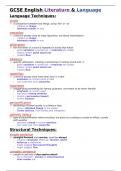
Language Techniques:
simile
a comparison between two things, using ‘like’ or ‘as’
creates an image
interests reader in text
metaphor
a word or phrase used to imply figurative, not literal resemblance
creates an image
interests reader in text
alliteration
the first letter of a word is repeated in words that follow
gives variation in sentences → interests the reader
makes certain point stand out
creates flow
sibilance
specific alliteration, creating a whooshing or hissing sound with ‘s’
gives variation in sentences → interests the reader
makes certain point stand out
creates flow
repetition
a word or phrase seen more than once in a text
emphasis on certain point or idea
can make text more powerful
hyperbole
exaggerating something for literary purposes, not meant to be taken literally
emphasis on certain point
expresses strong emotion
makes a persuasive impact
evokes humour
personification
attributing a human quality to a thing or idea
gives a detailed image to the reader
varies devices, from similes and metaphors
pathetic fallacy
type of personification where emotions are given to a setting to create an effect, usually
with weather
portrays a mood + human emotion
can make text more powerful
Structural Techniques:
simple sentence
straight-forward and concise, could be abrupt
creates a dramatic effect eg. tension, shock
enforces a statement
might suggest fast paced thoughts
might suggest fear
complex sentence
usually to add lots of descriptive detail
for a character - stream of consciousness
tires reader out
Language Techniques:
simile
a comparison between two things, using ‘like’ or ‘as’
creates an image
interests reader in text
metaphor
a word or phrase used to imply figurative, not literal resemblance
creates an image
interests reader in text
alliteration
the first letter of a word is repeated in words that follow
gives variation in sentences → interests the reader
makes certain point stand out
creates flow
sibilance
specific alliteration, creating a whooshing or hissing sound with ‘s’
gives variation in sentences → interests the reader
makes certain point stand out
creates flow
repetition
a word or phrase seen more than once in a text
emphasis on certain point or idea
can make text more powerful
hyperbole
exaggerating something for literary purposes, not meant to be taken literally
emphasis on certain point
expresses strong emotion
makes a persuasive impact
evokes humour
personification
attributing a human quality to a thing or idea
gives a detailed image to the reader
varies devices, from similes and metaphors
pathetic fallacy
type of personification where emotions are given to a setting to create an effect, usually
with weather
portrays a mood + human emotion
can make text more powerful
Structural Techniques:
simple sentence
straight-forward and concise, could be abrupt
creates a dramatic effect eg. tension, shock
enforces a statement
might suggest fast paced thoughts
might suggest fear
complex sentence
usually to add lots of descriptive detail
for a character - stream of consciousness
tires reader out