History 3.1 Breadth section C questions
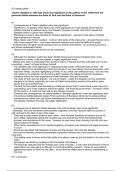
The key factor in upholding the King’s authority in the years 1399-1509 was his relationship
with the nobility
Introduction
- the key factor in upholding the King’s authority in the years 1399-1509 was his relationship with
the nobility
- This is as in order for it to be the key factor in upholding the king’s authority, it would have to be
a factor which has shown itself to seriously destabilise the king if it does not exist
- Although certainly there were other factors which upheld the king’s authority, as a whole from
the years 1399-1509, the main reason for upholding the king’s authority was relationships with
the nobility, as for the most part they supported the king eg through retinues and protection of
the realm, and in many cases, the king’s authority collapsed without the support of the nobility
= proof that it was upheld by them
P1
- the King relied heavily on nobility in order to uphold his authority as magnates had large
retainers and also provided protection of the realm
- The system of maintenance meant that Kings were reliant on magnates and their large retinues,
often who were directly loyal to the noble
- The system was e ectively built on maintenance. Even statues against retaining eg passed by
Edward IV contained loopholes, as the king was reliant on nobles to provide them with retinues
- Eg - Edward IV used noble’s retinues in 1475 when he invade France with Burgundy and
Brittany.
- Another signi cant reliance on nobles due to their retinues is shown by Henry VII. He used
Thomas Stanley, earl of Darby’s, large retinue to suppress the rebellion led by Perkin Warbeck
and backed by the Scottish
- The king relied on nobles for protection of the realm - eg, Edward IV made his brother, Richard
of Gloucester, head of the Council of the North , which coordinated protection from the Scottish
threat across the border . Very necessary as the King, in London, can’t be defending
everywhere at once
- Therefore, a good relationship with the nobility was needed in order for the king to manage
England. If a good relationship isn’t maintained, it means that they are weakened by lack of
men / protection for the realm
- Eg, Thomas Stanley, earl of Derby, did not provide his troops - estimated 4,000 - 6,000 - to
either side of the battle, without his forces Richard III was outnumbered and Henry VII won the
Battle of Bosworth
P2
- it could be argued that the key factor in upholding the king’s authority in the years 1399-1509
was not relationship with the nobility, but nancial resources available to the crown, which
allowed the King to comfortably rule with authority
- Eg - Henry VI had 370,000£ debts (equivalent to £170 million now) , enhanced by mismanaging
of royal nances / war in France by advisors. Therefore he relied on loans from leading nobles -
eg the Duke of York was owed £38,000 . This destabilised his regime even further then it
already was, and was part of the reason for Cade’s rebellion, who executed Baron Saye, a key
member of the government
- This was a breakdown in authority - suggesting that without nancial backing the king’s
authority was very unstable
- When the nance of the kingdom were stable - eg as with Henry VII, the King’s authority was
arguably more upheld. Eg, Henry VII implemented nancial policies which would restore
nancial stability to England - eg reduced the amount of debt owed by the crown which
stabilised the economy and reduced in ation, and also was involved in overseas trade and
encouraging growth of the merchant class and introduction of new taxes
- This led to nancial stability and therefore upheld the king’s authority
- However, although it was certainly a strong reason for upholding the king’s authority as it
brought stability and added to the king’s prestige it was not the key reason for upholding the
King’s authority
fi fi fifi fi ff fl fi fi fi
, - This is as although the nance of the country may destabilise the king, it was not responsible
enough in itself for bringing about the downfall of a king, which is what the key factor for
upholding the king would be
- Ie - it was not Henry VI’s bad nances that brought him down, and although Henry VII had good
nances still faced a number of signi cant rebellions. It was leading nobles that led to Henry
VI’s downfall rather then bad nances, and Henry VII’s nancial stability did not lead to any
fewer rebellions, which were backed by nobles eg Yorkists who backed the Simnel rebellion
P3
- proof that the key factor in upholding the king’s authority in the years 1399-1509 was his
relationship with the nobility is proved by the existence of over-mighty subjects
- These were nobles who were able to signi cantly undermine the king’s authority, proving that
nobles’s support, rather then opposition, was essential in upholding the king’s authority
- Eg the duke of York Richard Neville was able to signi cantly undermine Henry VI’s authority and
his son, Edward IV, was able to usurp him
- He was backed by the earl of Warwick, the ‘kingmaker’ who along with George, duke of
Clarence, rebelled again Edward and brie y put Henry VI back on the throne
- It could be argued that it was the king’s personality and strength rather then nobles which
upheld the king’s authority. Eg, Henry VI was a weak and ine ectual king, whilst Edward IV was
a skilled ghter . However, the argument that nobles upheld the king’s authority is more
convincing as it was this that could take away the authority of the king, whereas having an
unpopular character was not necessarily an important in uencing factor in comparison to the
- Henry VI still had many supporters and was reinstated on the throne despite his ine ective
ruling. This shows that the personality of a king was not a huge factor as it did not stop nobles
exerting their power
- Omg this is so so awful
fi
fi fi fifi fi flfi fi fi fl ff ff
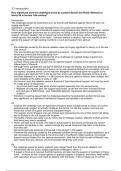
The key factor in upholding the King’s authority in the years 1399-1509 was his relationship
with the nobility
Introduction
- the key factor in upholding the King’s authority in the years 1399-1509 was his relationship with
the nobility
- This is as in order for it to be the key factor in upholding the king’s authority, it would have to be
a factor which has shown itself to seriously destabilise the king if it does not exist
- Although certainly there were other factors which upheld the king’s authority, as a whole from
the years 1399-1509, the main reason for upholding the king’s authority was relationships with
the nobility, as for the most part they supported the king eg through retinues and protection of
the realm, and in many cases, the king’s authority collapsed without the support of the nobility
= proof that it was upheld by them
P1
- the King relied heavily on nobility in order to uphold his authority as magnates had large
retainers and also provided protection of the realm
- The system of maintenance meant that Kings were reliant on magnates and their large retinues,
often who were directly loyal to the noble
- The system was e ectively built on maintenance. Even statues against retaining eg passed by
Edward IV contained loopholes, as the king was reliant on nobles to provide them with retinues
- Eg - Edward IV used noble’s retinues in 1475 when he invade France with Burgundy and
Brittany.
- Another signi cant reliance on nobles due to their retinues is shown by Henry VII. He used
Thomas Stanley, earl of Darby’s, large retinue to suppress the rebellion led by Perkin Warbeck
and backed by the Scottish
- The king relied on nobles for protection of the realm - eg, Edward IV made his brother, Richard
of Gloucester, head of the Council of the North , which coordinated protection from the Scottish
threat across the border . Very necessary as the King, in London, can’t be defending
everywhere at once
- Therefore, a good relationship with the nobility was needed in order for the king to manage
England. If a good relationship isn’t maintained, it means that they are weakened by lack of
men / protection for the realm
- Eg, Thomas Stanley, earl of Derby, did not provide his troops - estimated 4,000 - 6,000 - to
either side of the battle, without his forces Richard III was outnumbered and Henry VII won the
Battle of Bosworth
P2
- it could be argued that the key factor in upholding the king’s authority in the years 1399-1509
was not relationship with the nobility, but nancial resources available to the crown, which
allowed the King to comfortably rule with authority
- Eg - Henry VI had 370,000£ debts (equivalent to £170 million now) , enhanced by mismanaging
of royal nances / war in France by advisors. Therefore he relied on loans from leading nobles -
eg the Duke of York was owed £38,000 . This destabilised his regime even further then it
already was, and was part of the reason for Cade’s rebellion, who executed Baron Saye, a key
member of the government
- This was a breakdown in authority - suggesting that without nancial backing the king’s
authority was very unstable
- When the nance of the kingdom were stable - eg as with Henry VII, the King’s authority was
arguably more upheld. Eg, Henry VII implemented nancial policies which would restore
nancial stability to England - eg reduced the amount of debt owed by the crown which
stabilised the economy and reduced in ation, and also was involved in overseas trade and
encouraging growth of the merchant class and introduction of new taxes
- This led to nancial stability and therefore upheld the king’s authority
- However, although it was certainly a strong reason for upholding the king’s authority as it
brought stability and added to the king’s prestige it was not the key reason for upholding the
King’s authority
fi fi fifi fi ff fl fi fi fi
, - This is as although the nance of the country may destabilise the king, it was not responsible
enough in itself for bringing about the downfall of a king, which is what the key factor for
upholding the king would be
- Ie - it was not Henry VI’s bad nances that brought him down, and although Henry VII had good
nances still faced a number of signi cant rebellions. It was leading nobles that led to Henry
VI’s downfall rather then bad nances, and Henry VII’s nancial stability did not lead to any
fewer rebellions, which were backed by nobles eg Yorkists who backed the Simnel rebellion
P3
- proof that the key factor in upholding the king’s authority in the years 1399-1509 was his
relationship with the nobility is proved by the existence of over-mighty subjects
- These were nobles who were able to signi cantly undermine the king’s authority, proving that
nobles’s support, rather then opposition, was essential in upholding the king’s authority
- Eg the duke of York Richard Neville was able to signi cantly undermine Henry VI’s authority and
his son, Edward IV, was able to usurp him
- He was backed by the earl of Warwick, the ‘kingmaker’ who along with George, duke of
Clarence, rebelled again Edward and brie y put Henry VI back on the throne
- It could be argued that it was the king’s personality and strength rather then nobles which
upheld the king’s authority. Eg, Henry VI was a weak and ine ectual king, whilst Edward IV was
a skilled ghter . However, the argument that nobles upheld the king’s authority is more
convincing as it was this that could take away the authority of the king, whereas having an
unpopular character was not necessarily an important in uencing factor in comparison to the
- Henry VI still had many supporters and was reinstated on the throne despite his ine ective
ruling. This shows that the personality of a king was not a huge factor as it did not stop nobles
exerting their power
- Omg this is so so awful
fi
fi fi fifi fi flfi fi fi fl ff ff