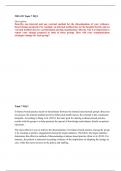
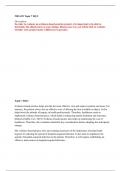
OPOTA
SPO'S
EXAM
QUESTIONS
AND
ANSWERS
Explain
the
relationship
between
a
SPO
and
a
test
question
-
ANS-A
test
question
must
respond
directly
to
an
SPO
and
every
SPO
may
be
the
basis
of
a
test
question
Explain
the
ultimate
reason
for
law
enforcement
training
-
ANS-T o
be
able
to
protect
the
life
and
property
of
yourself
and
the
public
List
a
peace
officer's
main
goals
-
ANS--
Enforce
the
laws
-
Preserve
the
peace,
-
Prevent
crime
-
Protect
civil
rights
and
liberties
-
Provide
services
Explain
items
to
consider
when
exercising
discretion
-
ANS--
Use
sound
judgment
to
determine
which
laws
are
to
be
formally
enforced
-
Determine
if
there
is
a
more
constructive
remedy
without
arrest
or
citation
Explain
the
factors
necessary
for
the
commission
of
crime
-
ANS-Desire
-
the
motivation
behind
criminal
behavior
Victim
-
potential
target,
unaware
of
surroundings
Opportunity
-
crime
prevention
strategies
State
the
core
concepts
of
community
policing
-
ANS--partnership
between
community
and
police
-crime
prevention
-organizational
change
of
agency
-problem
solving
approach
to
police
role
is
proactive
Considerations
for
off
duty
situations
-
ANS-Behavior
-
social
media,
uphold
ethics
Situational
Awareness-
be
alert,
pre
plan,
off
duty
weapon
policy ,
be
a
good
witness
State
the
purpose
of
Bill
of
Rights
-
ANS-protect
a
individual's
freedoms -prevent
government
from
interfering
in
protected
rights
Describe
the
major
components
of
the
criminal
justice
system
-
ANS-Law
Enforcement
Courts
-
hold
fair
&
impartial
trials,
guilt
or
innocence,
Impose
sentences
Corrections
-
supervise
offender
Goals
of
Sentencing
-
ANS--protect
society
-punish
offender/rehabilitate
-restore
the
victim
Recognize
the
tenets
of
the
Below
100
-
ANS--wear
your
seatbelt
-wear
your
vest
-WIN
what's
important
now
-watch
your
speed
-complacency
kills
Lawful
-
ANS-defined
by
laws
and
standards
Criminal
Law
-
ANS-identifies
what
actions
are
prohibited
Rules
of
Agency
-
ANS-Administrative
rules,
general
orders
Constitutional
Law
-
ANS-amendments
Police
Legitimacy
-
ANS-exists
when
the
public
view
the
police
as
authorized
to
exercise
power
in
order
to
maintain
social
order ,
manage
conflicts,
and
solve
problems
in
community
Judgement
1/3
public
trust
and
confidence
in
police
as
being
honest,
trying
to
do
jobs
well,
and
protecting
community
-
ANS-Result
individuals
are
more
likely
to
become
actively
involved
in
police
community
partnerships
Judgment
#2
public
willingness
to
defer
the
law
and
police
authority
-
ANS-Result
Correlation
between
those
who
obey
and
those
who
view
police
as
legitimate,
cooperate
by
reporting
crimes
and
providing
information
Judgement
#3
public
belief
that
police
actions
are
morally
justified
and
appropriate
-
ANS-Result citizens
are
more
likely
to
cooperate
and
defer
in
moments
of
crisis
circumstances
when
filming
police
officers
is
permissible
-
ANS--one
party
consents
-as
long
as
it
does
not
interfere
with
officers
carrying
out
their
duties
Race
-
ANS-modern
concept
used
to
classify
people
by
similar ,
observable
physical
characteristics
Genetically
influenced
traits
-
ANS-Skin
color ,
hair,
eye
shape,
blood
type,
intelligence
connection
between
in
/
out
groups,
and
police
legitimacy
-
ANS-some
people
interpret
their
encounters
with
police
in
terms
of
their
group's
societal
position
rather
than
immediate
circumstances
of
the
police
contact
Types
of
Racism
-
ANS-individual,
interpersonal,
institutional,
structural
Individual
Racism
-
ANS-internalized,
unexpressed
biases
and
prejudices
based
on
race
Interpersonal
Racism
-
ANS-occurs
between
individuals,
public
expressions
of
racial
prejudice
and
hate
institutional
racism
-
ANS-discriminatory
policies
and
treatment
by
institutions
Structural
Racism
-
ANS-Collective
way
of
history ,
culture,
power
inequality ,
unequal
access
to
opportunities
Components
of
bias
-
ANS-stereotypes,
prejudice,
attitude
Stereotypes
-
ANS-generalizations
about
the
perceived
typical
characteristics
of
a
social
category
Prejudice
-
ANS-a
often
negative
prejudgment
based
on
characteristics
such
as
race,
age
Attitude
-
ANS-positive
or
negative
feelings
associated
with
individuals
or
groups
Bias-based
profiling
-
ANS--Racial/illegal
profiling
-unequal
treatment
by
officers
by
stopping,
questioning,
searching,
detaining
on
basis
of
their
ethnicity Criminal
profiling
-
ANS-Based
on
observed
behaviors
and
characteristics
Two
types
of
Bias
-
ANS-explicit
and
implicit
Explicit
Bias
-
ANS-conscious
preference
for
a
social
category
Implicit
bias
-
ANS-preference
for
a
social
category
based
on
stereotypes
that
we
hold
and
tend
to
develop
in
early
life
Two
modes
of
thinking
-
ANS-automatic
(system
1)
deliberative
(system
2)
System
1
thinking
-
ANS-automatic,
effortless,
unconscious,
very
fast
System
2
thinking
-
ANS-Conscious,
controlled,
effortful,
slower
practical
purpose
-
ANS-simplifies
tasks
which
most
adults
do
without
having
to
systematically
think
about
each
step
protection
mechanism
-
ANS-we
evaluate
everything
we
see
to
determine
if
threatening
or
not
strategies
to
counter
implicit
biases
-
ANS--Guarding
against
influence
in
decision
making
-awareness
-know
when
you're
susceptible
(
in
complete
info,
cognitive
load,
fatigue)
-slow
down
thinking
-empathetic
-effort
(intention,
attention,
time)
Two-pronged
Approach
to
Procedural
Justice
-
ANS-person
based
approach
community
based
model
person
based
approach
-
ANS-emphasizes
the
importance
of
face
to
face
interactions
between
officer
and
a
citizen
Community
based
model
-
ANS-ultimate
goal
is
to
achieve
police
legitimacy
through
entire
society
SPO'S
EXAM
QUESTIONS
AND
ANSWERS
Explain
the
relationship
between
a
SPO
and
a
test
question
-
ANS-A
test
question
must
respond
directly
to
an
SPO
and
every
SPO
may
be
the
basis
of
a
test
question
Explain
the
ultimate
reason
for
law
enforcement
training
-
ANS-T o
be
able
to
protect
the
life
and
property
of
yourself
and
the
public
List
a
peace
officer's
main
goals
-
ANS--
Enforce
the
laws
-
Preserve
the
peace,
-
Prevent
crime
-
Protect
civil
rights
and
liberties
-
Provide
services
Explain
items
to
consider
when
exercising
discretion
-
ANS--
Use
sound
judgment
to
determine
which
laws
are
to
be
formally
enforced
-
Determine
if
there
is
a
more
constructive
remedy
without
arrest
or
citation
Explain
the
factors
necessary
for
the
commission
of
crime
-
ANS-Desire
-
the
motivation
behind
criminal
behavior
Victim
-
potential
target,
unaware
of
surroundings
Opportunity
-
crime
prevention
strategies
State
the
core
concepts
of
community
policing
-
ANS--partnership
between
community
and
police
-crime
prevention
-organizational
change
of
agency
-problem
solving
approach
to
police
role
is
proactive
Considerations
for
off
duty
situations
-
ANS-Behavior
-
social
media,
uphold
ethics
Situational
Awareness-
be
alert,
pre
plan,
off
duty
weapon
policy ,
be
a
good
witness
State
the
purpose
of
Bill
of
Rights
-
ANS-protect
a
individual's
freedoms -prevent
government
from
interfering
in
protected
rights
Describe
the
major
components
of
the
criminal
justice
system
-
ANS-Law
Enforcement
Courts
-
hold
fair
&
impartial
trials,
guilt
or
innocence,
Impose
sentences
Corrections
-
supervise
offender
Goals
of
Sentencing
-
ANS--protect
society
-punish
offender/rehabilitate
-restore
the
victim
Recognize
the
tenets
of
the
Below
100
-
ANS--wear
your
seatbelt
-wear
your
vest
-WIN
what's
important
now
-watch
your
speed
-complacency
kills
Lawful
-
ANS-defined
by
laws
and
standards
Criminal
Law
-
ANS-identifies
what
actions
are
prohibited
Rules
of
Agency
-
ANS-Administrative
rules,
general
orders
Constitutional
Law
-
ANS-amendments
Police
Legitimacy
-
ANS-exists
when
the
public
view
the
police
as
authorized
to
exercise
power
in
order
to
maintain
social
order ,
manage
conflicts,
and
solve
problems
in
community
Judgement
1/3
public
trust
and
confidence
in
police
as
being
honest,
trying
to
do
jobs
well,
and
protecting
community
-
ANS-Result
individuals
are
more
likely
to
become
actively
involved
in
police
community
partnerships
Judgment
#2
public
willingness
to
defer
the
law
and
police
authority
-
ANS-Result
Correlation
between
those
who
obey
and
those
who
view
police
as
legitimate,
cooperate
by
reporting
crimes
and
providing
information
Judgement
#3
public
belief
that
police
actions
are
morally
justified
and
appropriate
-
ANS-Result citizens
are
more
likely
to
cooperate
and
defer
in
moments
of
crisis
circumstances
when
filming
police
officers
is
permissible
-
ANS--one
party
consents
-as
long
as
it
does
not
interfere
with
officers
carrying
out
their
duties
Race
-
ANS-modern
concept
used
to
classify
people
by
similar ,
observable
physical
characteristics
Genetically
influenced
traits
-
ANS-Skin
color ,
hair,
eye
shape,
blood
type,
intelligence
connection
between
in
/
out
groups,
and
police
legitimacy
-
ANS-some
people
interpret
their
encounters
with
police
in
terms
of
their
group's
societal
position
rather
than
immediate
circumstances
of
the
police
contact
Types
of
Racism
-
ANS-individual,
interpersonal,
institutional,
structural
Individual
Racism
-
ANS-internalized,
unexpressed
biases
and
prejudices
based
on
race
Interpersonal
Racism
-
ANS-occurs
between
individuals,
public
expressions
of
racial
prejudice
and
hate
institutional
racism
-
ANS-discriminatory
policies
and
treatment
by
institutions
Structural
Racism
-
ANS-Collective
way
of
history ,
culture,
power
inequality ,
unequal
access
to
opportunities
Components
of
bias
-
ANS-stereotypes,
prejudice,
attitude
Stereotypes
-
ANS-generalizations
about
the
perceived
typical
characteristics
of
a
social
category
Prejudice
-
ANS-a
often
negative
prejudgment
based
on
characteristics
such
as
race,
age
Attitude
-
ANS-positive
or
negative
feelings
associated
with
individuals
or
groups
Bias-based
profiling
-
ANS--Racial/illegal
profiling
-unequal
treatment
by
officers
by
stopping,
questioning,
searching,
detaining
on
basis
of
their
ethnicity Criminal
profiling
-
ANS-Based
on
observed
behaviors
and
characteristics
Two
types
of
Bias
-
ANS-explicit
and
implicit
Explicit
Bias
-
ANS-conscious
preference
for
a
social
category
Implicit
bias
-
ANS-preference
for
a
social
category
based
on
stereotypes
that
we
hold
and
tend
to
develop
in
early
life
Two
modes
of
thinking
-
ANS-automatic
(system
1)
deliberative
(system
2)
System
1
thinking
-
ANS-automatic,
effortless,
unconscious,
very
fast
System
2
thinking
-
ANS-Conscious,
controlled,
effortful,
slower
practical
purpose
-
ANS-simplifies
tasks
which
most
adults
do
without
having
to
systematically
think
about
each
step
protection
mechanism
-
ANS-we
evaluate
everything
we
see
to
determine
if
threatening
or
not
strategies
to
counter
implicit
biases
-
ANS--Guarding
against
influence
in
decision
making
-awareness
-know
when
you're
susceptible
(
in
complete
info,
cognitive
load,
fatigue)
-slow
down
thinking
-empathetic
-effort
(intention,
attention,
time)
Two-pronged
Approach
to
Procedural
Justice
-
ANS-person
based
approach
community
based
model
person
based
approach
-
ANS-emphasizes
the
importance
of
face
to
face
interactions
between
officer
and
a
citizen
Community
based
model
-
ANS-ultimate
goal
is
to
achieve
police
legitimacy
through
entire
society