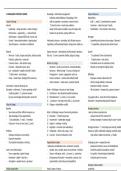
10 MANAGING STRATEGIC CHANGE Knowledge + information management Culture influences
- Collection and distribution of knowledge in firm Stakeholders
Causes of change - staff rec expertise + procedures so knowl not lost - Staff - ↓ motiv if ↓involvement (no power)
Internal - ↑ internal comms + avoid same problems - Customers – culture focused = loyalty
- Leadership – change structure + culture (merger) - Range of info easily accessible so easy to change roles - Shareholders – risk, rewards or lose money
- Performance – opportunity, ↓ = retrenchment - Needs to be up to date, employ staff to run
- Staff changes – required skills (train, recruit, out) Managers
- Growth – international markets + adapt product Mechanistic structure - centralised, tall, efficient resource - Leadership style (previous from merger / takeover)
- Type of business – innovative vs traditional (repetitive), staff specialised (taylor), change slow, stable env - ↑ competitive, entrepreneurial culture (innov)
External Organic structure – decentralised, staff involved in decisions, Growth
- New tech – faster, cheaper production, shorter product flat struc ↑ comm, teamwork, flexible, adapt to change - ↑ recruitment (if not retrenchment)
lifecycles, update freq = comp adv - ↑ rigid structure + role culture
- Consumer tastes – alter product range Barriers to change - Centralised comms to coordinate activity
- Economy – disposable income, price - Structural – tall struc, bad comms, misunderstanding - Depends on strength of original culture
- Law – production + suppliers (inc/dis if notice) - Resources – before change ↑ success, training cost
- ↑ ethical views – brand image - Management – comms, engagement, lack trust Difficulties
- Comp – market share, strategic drift, insolvency - Passive resistance – continue old methods (staff) - Employee resistance (been there LT)
- Active resistance – trade unions, customer boycott - Hard to change attitudes + behaviour
Incremental = planned, timescale set - Expensive training + processes
Disruptive = unforeseen, ↑ promo spending, sell off Kotter + Schlesinger 4 reasons to resist change - HR recruitment – change induc, payment systems
Could be positive - ↑ customer demand 1) Self interest = how situation benefits themselves
Eg coca cola changed colouring after cancer link 2) Misunderstand = ↓ comms ↓ trust, anxiety E.g. google culture – share info with all employees,
3) ↓ tolerance = fear bad at new skills, ↓ job security innovation + intrapreneurship (gmail), flexiwork
Value of change 4) Disagree = stakeholders conflict
Benefits Strategic planning
- Save money and time, efficient resource use Kotter + Schlesinger 6 ways of overcoming resistance = plan to achieve corporate aims
- Take advantage of new opportunities 1) Education - ↑ benefit awareness - Analyse internal S+W, external O+T
- ↑ job satisfaction, ↑ motiv, ↑ retention 2) Involvement – stakeholders engage - Develop strategies + functional obj for each + monito
- Outsource + focus on core comp (↓ costs) 3) Support – meetings + training
4) Negotiate – incentives (vol redundancy) Strategic decisions – ↑ risk (change ext environ), feasibili
Problems 5) Manipulate – desire roles, exag ↓ trust (resources, skills), stakeholder mapping, sensitivity analys
- Employee resistance as uncertainty 6) Coercion – threat of redundancy if not Only useful in stable environment, ↓ flexible
- Expensive machinery
- ST production disruption as training Organisational culture Contingency plan = unexpected event
= behaviour and attitudes (rules, recruitment, rewards) - Expensive fund (train, insure) so find likelihood
Lewin’s force field analysis - Routine, story, symbols, power struc (Johnson + Scholes) - Sensitivity analysis (assumptions, what if)
- Forces supporting / against change - Strong = staff agree, motiv, ↓ turnover, ↓ supervision - Act quickly + decisively (good leadership)
- Numbered + added = total force - Entrepreneurial (creative + innovative), customer, clan - Continuity plan for recovery
- Strengthen + weaken forces or go ahead (paternalistic), market focused (competition)
Strategic implementation
Flexible organisation Handy’s types of culture Leadership
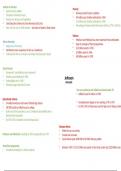
- Collection and distribution of knowledge in firm Stakeholders
Causes of change - staff rec expertise + procedures so knowl not lost - Staff - ↓ motiv if ↓involvement (no power)
Internal - ↑ internal comms + avoid same problems - Customers – culture focused = loyalty
- Leadership – change structure + culture (merger) - Range of info easily accessible so easy to change roles - Shareholders – risk, rewards or lose money
- Performance – opportunity, ↓ = retrenchment - Needs to be up to date, employ staff to run
- Staff changes – required skills (train, recruit, out) Managers
- Growth – international markets + adapt product Mechanistic structure - centralised, tall, efficient resource - Leadership style (previous from merger / takeover)
- Type of business – innovative vs traditional (repetitive), staff specialised (taylor), change slow, stable env - ↑ competitive, entrepreneurial culture (innov)
External Organic structure – decentralised, staff involved in decisions, Growth
- New tech – faster, cheaper production, shorter product flat struc ↑ comm, teamwork, flexible, adapt to change - ↑ recruitment (if not retrenchment)
lifecycles, update freq = comp adv - ↑ rigid structure + role culture
- Consumer tastes – alter product range Barriers to change - Centralised comms to coordinate activity
- Economy – disposable income, price - Structural – tall struc, bad comms, misunderstanding - Depends on strength of original culture
- Law – production + suppliers (inc/dis if notice) - Resources – before change ↑ success, training cost
- ↑ ethical views – brand image - Management – comms, engagement, lack trust Difficulties
- Comp – market share, strategic drift, insolvency - Passive resistance – continue old methods (staff) - Employee resistance (been there LT)
- Active resistance – trade unions, customer boycott - Hard to change attitudes + behaviour
Incremental = planned, timescale set - Expensive training + processes
Disruptive = unforeseen, ↑ promo spending, sell off Kotter + Schlesinger 4 reasons to resist change - HR recruitment – change induc, payment systems
Could be positive - ↑ customer demand 1) Self interest = how situation benefits themselves
Eg coca cola changed colouring after cancer link 2) Misunderstand = ↓ comms ↓ trust, anxiety E.g. google culture – share info with all employees,
3) ↓ tolerance = fear bad at new skills, ↓ job security innovation + intrapreneurship (gmail), flexiwork
Value of change 4) Disagree = stakeholders conflict
Benefits Strategic planning
- Save money and time, efficient resource use Kotter + Schlesinger 6 ways of overcoming resistance = plan to achieve corporate aims
- Take advantage of new opportunities 1) Education - ↑ benefit awareness - Analyse internal S+W, external O+T
- ↑ job satisfaction, ↑ motiv, ↑ retention 2) Involvement – stakeholders engage - Develop strategies + functional obj for each + monito
- Outsource + focus on core comp (↓ costs) 3) Support – meetings + training
4) Negotiate – incentives (vol redundancy) Strategic decisions – ↑ risk (change ext environ), feasibili
Problems 5) Manipulate – desire roles, exag ↓ trust (resources, skills), stakeholder mapping, sensitivity analys
- Employee resistance as uncertainty 6) Coercion – threat of redundancy if not Only useful in stable environment, ↓ flexible
- Expensive machinery
- ST production disruption as training Organisational culture Contingency plan = unexpected event
= behaviour and attitudes (rules, recruitment, rewards) - Expensive fund (train, insure) so find likelihood
Lewin’s force field analysis - Routine, story, symbols, power struc (Johnson + Scholes) - Sensitivity analysis (assumptions, what if)
- Forces supporting / against change - Strong = staff agree, motiv, ↓ turnover, ↓ supervision - Act quickly + decisively (good leadership)
- Numbered + added = total force - Entrepreneurial (creative + innovative), customer, clan - Continuity plan for recovery
- Strengthen + weaken forces or go ahead (paternalistic), market focused (competition)
Strategic implementation
Flexible organisation Handy’s types of culture Leadership