Unit 1 – a basic understanding of criminal procedure
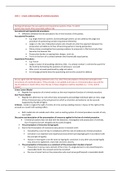
Distinguish between the accusatorial and inquisitorial systems of law. To which
system does South Africa essentially adhere? (6)
Accusatorial and Inquisitorial procedures
Difference between the two procedures lies in the functions of the parties.
Accusatorial Procedure:
e.g. Anglo-American systems and SA (although witness can be called by the judge and
procedure of questioning contains inquisitorial elements)
Judge is in the role of detached umpire who should not enter the argument between the
prosecution and defence for fear of becoming partial or loosing perspective.
Police primary investigative force passing evidence to prosecutor in file format who then
becomes the dominus litis.
Prosecution decides on appropriate charges, court etc.
Trial is in the form of a contest between two theoretically equal parties.
Inquisitorial Procedure:
e.g. France
Judge is master of proceedings (dominus litis) – he actively conduct | controls the search for
the truth by dominating the questions of witnesses | accused.
After arrest: accused questioned by judge not police.
In trial judge primarily does the questioning and not the counsel for defense
Do you agree with the following statement and, if so, why? The presumption of innocence principle is the
cornerstone of constitutionalism. If this principle is not upheld at all costs in criminal procedure law and the
law of evidence in South Africa, then the law in these categories could be classified as a ``crime control
model''.
Crime Control Model
Regards the repression of criminal conduct as the most important function of criminal procedure.
Due Process Model
Regards the adherence to rules which duly and properly acknowledge individual rights at every stage
of the criminal process as the only ground on which a conviction and sentence can be secured.
Supported by the Bill of Rights.
Criticism – tends to neglect the right of victims of crime and law abiding citizens in favour of the rights of the
accused as a result truth seeking suffers.
Both models do not exclude each other, and no existing system of criminal procedure consists of only
one model.
Discussion and description of the presumption of innocence applied in the law of criminal procedure
Criminal procedure does not deal with the detection, investigation and prosecution of criminals,
but of suspects (not yet charged) and Accused (charged).
The presumption of innocence & legal guilt:
Due to the Presumption of innocence every person is innocent until:-
Convicted by a court of law in compliance with the rules of evidence & criminal procedure.
Conviction is an objective and impartial pronouncement proving legal guilt in accordance with
the principle of legality.
Factual or moral guilt is not the same as legal guilt, conviction in any other way except legally
may amount to vigilantism, mob trials and even anarchy.
The presumption of innocence as a statement of the prosecution’s burden of proof:
Prosecution to prove every element of the crime. If a single element is not proved beyond a
reasonable doubt the accused cannot be convicted.
the onus of proof rests on the prosecution who must prove guilt beyond a reasonable doubt.
Distinguish between the accusatorial and inquisitorial systems of law. To which
system does South Africa essentially adhere? (6)
Accusatorial and Inquisitorial procedures
Difference between the two procedures lies in the functions of the parties.
Accusatorial Procedure:
e.g. Anglo-American systems and SA (although witness can be called by the judge and
procedure of questioning contains inquisitorial elements)
Judge is in the role of detached umpire who should not enter the argument between the
prosecution and defence for fear of becoming partial or loosing perspective.
Police primary investigative force passing evidence to prosecutor in file format who then
becomes the dominus litis.
Prosecution decides on appropriate charges, court etc.
Trial is in the form of a contest between two theoretically equal parties.
Inquisitorial Procedure:
e.g. France
Judge is master of proceedings (dominus litis) – he actively conduct | controls the search for
the truth by dominating the questions of witnesses | accused.
After arrest: accused questioned by judge not police.
In trial judge primarily does the questioning and not the counsel for defense
Do you agree with the following statement and, if so, why? The presumption of innocence principle is the
cornerstone of constitutionalism. If this principle is not upheld at all costs in criminal procedure law and the
law of evidence in South Africa, then the law in these categories could be classified as a ``crime control
model''.
Crime Control Model
Regards the repression of criminal conduct as the most important function of criminal procedure.
Due Process Model
Regards the adherence to rules which duly and properly acknowledge individual rights at every stage
of the criminal process as the only ground on which a conviction and sentence can be secured.
Supported by the Bill of Rights.
Criticism – tends to neglect the right of victims of crime and law abiding citizens in favour of the rights of the
accused as a result truth seeking suffers.
Both models do not exclude each other, and no existing system of criminal procedure consists of only
one model.
Discussion and description of the presumption of innocence applied in the law of criminal procedure
Criminal procedure does not deal with the detection, investigation and prosecution of criminals,
but of suspects (not yet charged) and Accused (charged).
The presumption of innocence & legal guilt:
Due to the Presumption of innocence every person is innocent until:-
Convicted by a court of law in compliance with the rules of evidence & criminal procedure.
Conviction is an objective and impartial pronouncement proving legal guilt in accordance with
the principle of legality.
Factual or moral guilt is not the same as legal guilt, conviction in any other way except legally
may amount to vigilantism, mob trials and even anarchy.
The presumption of innocence as a statement of the prosecution’s burden of proof:
Prosecution to prove every element of the crime. If a single element is not proved beyond a
reasonable doubt the accused cannot be convicted.
the onus of proof rests on the prosecution who must prove guilt beyond a reasonable doubt.