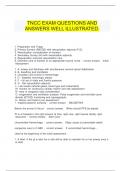
TNCC EXAM QUESTIONS AND ANSWERS WELL ILLUSTRATED.
TNCC EXAM QUESTIONS AND ANSWERS WELL ILLUSTRATED. 1. hPreparation hand hTriage 2. hPrimary hSurvery h(ABCDE) hwith hresuscitation hadjuncts h(F,G) 3. hReevaluation h(consideration hof htransfer) 4. hSecondary hSurvey h(HI) hwith hreevaluation hadjuncts 5. hReevaluation hand hpost hresuscitation hcare 6. hDefinitive hcare hof htransfer hto han happropriate htrauma hnurse h- h hcorrect hanswer. h h hInitial hAssessment 1. hA- hairway hand hAlertness hwith hsimultaneous hcervical hspinal hstabilization 2. hB- hbreathing hand hVentilation h 3. hcirculation hand hcontrol hof hhemorrhage 4. hD h- hdisability h(neurologic hstatus) 5. hF h- hfull hset hof hvitals hand hFamily hpresence 6. hG h- hGet hresuscitation hadjuncts hL- hLab hresults h(arterial hgases, hblood htype hand hcrossmatch) hM- hmonitor hfor hcontinuous hcardiac hrhythm hand hrate hassessment hN- hnaso hor horogastric htube hconsideration hO- hoxygenation hand hventilation hanalysis: hPulse hoxygemetry hand hend-tidal hcaron hdioxide h(ETC02) hmonitoring hand hcapnopgraphy hH- hHistory hand hhead hto htoe hassessment hI- hInspect hposterior hsurfaces h- h hcorrect hanswer. h h hABCDEFGHI Before hthe harrival hof hthe hpt h- h hcorrect hanswer. h h hWhen hshould hPPE hbe hplaced: Pt his hat hhospital hin hthe hright hamount hof htime, hright hcare, hright htrauma hfacility, hright hresources h- h hcorrect hanswer. h h hSafe hCare: Uncontrolled hHemorrhage h- h hcorrect hanswer. h h hMajor hcause hof hpreventable hdeath: reorganize hcare hto hC-ABC h- h hcorrect hanswer. h h hIf huncontrolled hhemorrhage h.. Used hat hthe hbeginning hof hthe hinitial hassessment 1. hA hAlert. hIf hthe hpt his halert hhe hor hshe hwill hbe hable hto hmaintain hhis hor hher hairway honce hit his hclear. 2. hV hresponds hto hverbal hstimuli hresponds hto hpain. hIf hthe hpatient hneeds hverbal hstimulation hto hrespond, han hairway hadjunct hmay hbe hneeded hto hkeep hthe htongue hfrom hobstructing hthe hairway. h 3. hP hresponds hto hpain. hIf hthe hpt. hresponds honly hto hpain, hhe hor hshe hmay hnot hbe hable hto hmaintain hhis hor hher hairway hadjunct hmay hneed hto hbe hplaced hwhile hfurther hassessment his hmade hto hdetermine hthe hneed hfor hintubation. h 4. hU hUnresponsive. hIf hthe hpt. his hunresponsive, hannounce hit hloudly hto hthe hteam hand hdirect hsomeone hto hchk hin hthe hpt his hpulseless hwhile hassessing hif hthe hcause hof hthe hproblem his hthe hairway. h- h hcorrect hanswer. h h hAirway hand hAVPU: ask hpt hto hpen hhis hor hher hmouth h- h hcorrect hanswer. h h hWhile hassessing hairway hthe hpatient his halert hand hresponds hto hverbal hstimuli hyou hshould.. jaw hthrust hmaneuver hto hopen hairway hand hassess hfor hobstruction. hIf hpt hhas ha hsuspected hcsi, hthe hjaw hthrust hprocedure hshould hbe hdone hby htwo hproviders. hOne hprovider hcan hmaintain hc-spine hand hthe hother hcan hperform hthe hjaw hthrust hmaneuver. h- h hcorrect hanswer. h h hWhile hassessing hairway hpt his hunable hto hopen hmouth, hresponds honly hto hpain, hor his hunresponsive hyou hshould.. 1. hThe htongue hobstructing hthe hairway 2. hloose hor hmissing hteeth 3. hforeign hobjects 4. hblood, hvomit, hor hsecretions' 5. hedema 6. hburns hor hevidence hof hinhalation hinjury Auscultiate hor hlisten hfor: 1. hObstructive hairway hsounds hsuch has hsnoring hor hgurgling 2. hPossible hocclusive hmaxillofacial hbony hdeformity 3. hSubcutaneous hemphysema h- h hcorrect hanswer. h h hInspect hthe hmouth hfor: 1. hCheck hthe hpresence hof hadequate hrise hand hfall hof hthe hchest hwith hassisted hventilation 2. hAbsence hof hgurgling hon hauscultation hover hthe hepigastrium h 3. hBilateral hbreath hsounds hpresent hon hauscultation h 4. hPresence hof hcarbon hdioxide h(CO2) hverified hby ha hCO2 hdevice hor hmonitor h- h hcorrect hanswer. h h hIf hthe hpt hhas ha hdefinitive hairway hin hwhat hshould hyou hdo? 1. hSuction hthe hairway 2, hUse hcare hto havoid hstimulating hthe hgag hreflex 3. hIf hthe hairway his hobstructed hby hblood hor hvomitus hsecretions, huse ha hrigid hsuction hdevice If hforeign hbody his hnoted, hremove hit hcarefully hwith hforceps hor hanother happropriate hmethod h- h hcorrect hanswer. h h hIf hAirway his hnot hpatent 1. hApnea 2. hGCS h8 hor hless 3. hMaxillary hfractures 4. hEvidence hof hinhalation hinjury h(facial hburns) 5. hLaryngeal hor htracheal hinjury hor hneck hhematoma 6. hHigh hrisk hof haspiration hand hpatients hinability hto hprotect hthe hairway 7. hCompromised hor hineffective hventilation h- h hcorrect hanswer. h h hFollowing hconditions hmight hrequire ha hdefinitive hairway Breathing: hTo hassess hbreathing hexpose hthe hchest: 1. hInspect hfor ha. hspontaneous hbreathing hb. hsymmetrical hrise hand hfall hc. hdepth, hpattern, hand hrate hof hrespiration hd. hsigns hof hdifficulty hbreathing hsuch has haccessory hmuscle huse h he. hskin hcolor h(normal, hpale, hflushed, hcyanotic) hf. hcontusions, habrasions, hdeformities h(flail hchest) hg. hopen hpneumothoraces h(sucking hchest hwounds) hh. hJVD hi. hsigns hof hinhalation hinjury h(singed hnasal hhairs, hcarbonaceous hsputum) h- h hcorrect hanswer. h h hB tracheal hdeviation hand hjvd h- h hcorrect hanswer. h h hLate hsigns hof htension hpneumo: 1. hequal hbreath hsounds hbilaterally hat hthe hsecond hintercostal hspace hmidclavicular hline hand hthe hbases hfor hfifth hintercostal hspace hat hthe haxillary hline h- h hcorrect hanswer. h h hAuscultate hthe hchest hfor: 1. hbony hfractures hand hpossible hrib hfractures, hwhich hmay himpact hventilation h 2. hpalpate hfor hcrepitus h 3. hsubcutaneous hemphysema hwhich hmay hbe ha hsign hfor ha hpneumothorax 4. hsoft htissue hinjury h- h hcorrect hanswer. h h hPalpate hthe hchest hfor 1. hopen hthe hairway, huse hjaw hthrust h 2. hinsert han horal hairway h 3. hassist hventilations hwith ha hbag hmask h 4. hprepare hfor hdefinitive hairway h- h hcorrect hanswer. h h hIf hbreathing his habsent.. trauma hits hneed hearly hsupplemental hoxygen, hstart hwith h15 hmL hO2 hand htitrate hoxygen hdelivery. h- h hcorrect hanswer. h h hOxygen hon htrauma hpatients Circulation hand hControl hof hHemorrhage Inspect hfirst hfor hany huncontrolled hbleeding Skin hcolor palpate hfor hcentral hpulses h- hcarotid hand hfemoral h- hrate, hrhythm, hand hstrength h Skin htemp: hcool, hdiaphoretic, hor hwarm hand hdry h- h hcorrect hanswer. h h hC apply hdirect hpressure hto hbleeding elevate hextremity apply hpressure hover harterial hsites Consider ha hpelvic hbinder hfor hpelvic hfractures consider ha htourniquet cannulate htwo hveins hwith hlarge hcaliber hIV h- hif hunable hto hgain hassess hconsider hIO h ha. hobtain hlabs, htype hand hcross hb. hinfuse hwarm hisotonic hfluids hc. hconsider hbalanced hresuscitation h hd. huse hrapid hinfusion hdevice h- h hcorrect hanswer. h h hC hInterventions: Disability h- hNeurologic hStatus h 1. hAssess hpupils hfor hequality, hshape, hand hreactivity h(PERRL) 2. hAssess hGCS h(eye hopening, hverbal hresponse, hand hmotor hresponse) h- h hcorrect hanswer. h h hD 1. hGet ha hCT h 2. hConsider hABG h's hif hdecreased hLOC 3. hConsider hglucose hcheck h- h hcorrect hanswer. h h hD hInterventions Exposure hand hEnvironmental hControl Remove hall hclothes hand hassess hfor hany hobvious hinjuries hand huncontrolled hbleeding h- h hcorrect hanswer. h h hE IF hclothing his hneeded hfor hevidence hpreserve hin hpaper hbag. Maintain hbody htemp h- hcover hthe hpt, hturn hup hheat hin hroom, hadminister hwarm hfluids h- h hcorrect hanswer. h h hE hInterventions: Full hset hof hvitals hand hfamily hpresence h- h hcorrect hanswer. h h hF Get hResuscitation hAdjuncts hL h- hLabs h(maybe ha hlactic hacid), ha hb hg h's, hblood htype M h- hmonitors h N h- hnaso hor horo hgastric htubes O hOxygen hand hETC02 hmonitors P h- hpain hassessment hand hmanagement h- h hcorrect hanswer. h h hG Reevaluation hand hConsider hthe hneed hto hTransfer h- h hcorrect hanswer. h h hFinal hstep hin hprimary hsurvey H,I h- h hcorrect hanswer. h h hSecondary hSurvery History hand hHead hto htoe h MIST h- hprehospital hreport MOI Injuries hsustained S hs/s hin hthe hfield T htreatment hin hthe hfield if hpatients hfamily hpresent hget ha hbetter hhx hon hthem h- h hcorrect hanswer. h h hH Sample his hpart hof hhistory S hsymptoms hassociated hwith hinjury A hallergies hand htetanus hstatus M hmeds hcurrently hon hincluding hanticoagulant htherapy P hpast hmedical hhx L hlast horal hintake E hEvents hand henvironment hfactors hrelated hto hthe hinjury h- h hcorrect hanswer. h h hSAMPLE inspect hfor hlacs, habrasions, hasymmetry hof hfacial hexpressions palate hfor hdepressions hand htenderness look hat hears hfor hdrainage h- h hcorrect hanswer. h h hHead hto htoe hassessment: hHead hand hface immobilize hcervical hspine, htenderness, htracheal hdeviation h- h hcorrect hanswer. h h hHead hto htoe hassessment: hNeck hand hcervical hspine inspect, hauscultate, hpalpate any hspontaneous hbreathing, hrate, hdepth, hand hdegree hof heffort, huse hof haccessory hmuscles h lacs, hcontusions, h auscilate hlung hsounds hand hheart hsounds h- h hcorrect hanswer. h h hHead hto htoe hassessment: hChest don't hforget hflanks!!! inspect hof hlacs, hpuncture hwounds, hcontusions, h
Escuela, estudio y materia
- Institución
- TNCC
- Grado
- TNCC
Información del documento
- Subido en
- 1 de julio de 2024
- Número de páginas
- 9
- Escrito en
- 2023/2024
- Tipo
- Examen
- Contiene
- Preguntas y respuestas
Temas
-
tncc exam questions and answers

Documento también disponible en un lote