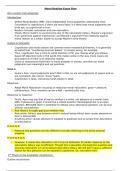
Moral Realism Essay Plan
Avi’s version (not amazing):
Introduction:
- Define Moral Realism (MR): mind independent moral properties (objectively true).
- Correlation to cognitivism; if there are moral facts it is likely that moral judgments are
truth apt, so cognitivism is true.
- Realism includes naturalism and non-naturalism.
- Thesis: Moral realism is unconvincing due to the naturalistic fallacy, Mackie’s argument
from queerness against intuitionism, and Mackie’s argument from relativity against
moral realism as a whole. Easier to accept Mackie’s error theory.
Outline & Strengths:
- Cognitivism and moral realism are common sense metaethical theories; it is generally
accepted that “murdering innocent babies” is morally wrong, for example.
- Thus, cognitivism has a mind to world direction of fit; you change what you believe
based off objective facts in the world, this makes sense in the way moral issues are
discussed (as if there is an objective reality).
- Gives us reassurance that there is moral progress in society, and that our moral
judgments are meaningful and not pointless.
Issue 1:
- Hume’s Fork: moral judgments aren’t MoF or RoI, so are not judgments of reason and so
are not beliefs. We cannot “know” them.
- Cognitivism is false, indicating moral realism is false.
Response:
- Adopt Moral Naturalism: focusing on reductive moral naturalism, good = pleasure,
utilitarianism. Thus, morality can be a MoF – synthetically true.
Response to response:
- Firstly, Ayer may say that all we’ve verified is a smile, not pleasure or a moral claim.
- OQA: if pleasure is good, it should be a closed question (tautological) but is an open
question, BECAUSE there is potential for debate since alternative positions can be true
without contradiction.
- And Hume’s is-ought gap (just mention this)
- Naturalistic Fallacy: gap between what is natural being ethical beer causes pleasure so
beer is pleasurable.
- Anything which causes pleasure is equated to goodness and so jumps from descriptive
to prescriptive.
R to R to R:
- Pleasure and goodness are two different concepts referring to the same external
property.
R to R to R to R:
- However, it seems like naturalism can’t truly be defended. Its earlier response to the
naturalistic fallacy was insufficient: Though this is plausible, this begs the question and
assumes naturalism is true to defeat naturalistic fallacy. We still don’t have a sufficient
reason for why pleasure can be equated to goodness. So, naturalism fails.
2nd Theory to be evaluated: intuitionism.
Outline intuitionism:
, - Define: moral properties are not natural properties; what is “good” is just known
through rational intuition and reflecting upon the moral judgment itself – a form of a
priori synthetic knowledge.
- Derives from the naturalistic fallacy and Moore’s OQA: pleasure can’t be defined as
good.
- So good can’t be defined as anything, it is a simple concept sui generis (unique) like the
colour yellow.
- Self-evident.
Issue of intuitionism:
- Mackie’s argument from queerness: metaphysical queerness (how can facts motivate
us?), & epistemological queerness (how do we know these moral properties?)
Response:
- Adopt naturalism: they motivate us because Bentham quote – sovereign.
- We know them because happiness is psychological, can empirically experience it. But
this fails.
- Non-naturalists would argue that it is not only knowledge of morality which faces the
objection. Truths such as mathematical truths or logical truths also face this objection
(because we know they are right or wrong through non-natural, or unusual ways) and
therefore it is normal, so moral truths are not metaphysically queer.
Further Evaluating with intuitionism:
- Intuitionism, at the hinge between moral realism and anti-realism, so far can be
defended.
- Intuitionism attempts to respond to queerness by saying we have a special faculty
within our minds meaning we can intuit these moral properties, regardless of their
queerness.
- Warnock’s replies to this: that is a cop out, you still avoid fundamental metaethical
question of why they deem something as good – intuitionism is so vague that it doesn’t
end up providing a coherent system of morality. Moreover, labels what is morally right
or wrong in an ad hoc manner; confident about their theory but cannot explain it at all,
seems unreliable.
- Non-naturalism doesn’t account for moral discourse – you can’t really debate about
what is moral or not because you just “know” what is good, you intuit it. Seems like a
lack of reasoning and justification to get to that conclusion.
- Two mature minds through intuition should know moral truths, but this is very
implausible.
- But what about moral debates/ discourse which can influence people’s decisions?
- So, intuitionism (non-naturalism) fails.
Issue 3: A general issue of moral realism
- Hume’s argument from motivation – the fact that beliefs don’t motivate us suggests
that morality is not a belief based on objective facts, so moral objectivity is false, leads
to Mackie’s argument from relativity.
- Mackie’s argument from relativity; descriptive moral relativity supports metaethics
moral relativity, and unlike science, where you misunderstand the science, we don’t
have a distorted perception of objective morality, it is due to different ways of life.
- Morality is thus dependent on each society.
Realist response:
- Societies share general ethical principles: don’t kill, steal, lie, etc.
- Suggests there is some understanding of common moral facts.
Avi’s version (not amazing):
Introduction:
- Define Moral Realism (MR): mind independent moral properties (objectively true).
- Correlation to cognitivism; if there are moral facts it is likely that moral judgments are
truth apt, so cognitivism is true.
- Realism includes naturalism and non-naturalism.
- Thesis: Moral realism is unconvincing due to the naturalistic fallacy, Mackie’s argument
from queerness against intuitionism, and Mackie’s argument from relativity against
moral realism as a whole. Easier to accept Mackie’s error theory.
Outline & Strengths:
- Cognitivism and moral realism are common sense metaethical theories; it is generally
accepted that “murdering innocent babies” is morally wrong, for example.
- Thus, cognitivism has a mind to world direction of fit; you change what you believe
based off objective facts in the world, this makes sense in the way moral issues are
discussed (as if there is an objective reality).
- Gives us reassurance that there is moral progress in society, and that our moral
judgments are meaningful and not pointless.
Issue 1:
- Hume’s Fork: moral judgments aren’t MoF or RoI, so are not judgments of reason and so
are not beliefs. We cannot “know” them.
- Cognitivism is false, indicating moral realism is false.
Response:
- Adopt Moral Naturalism: focusing on reductive moral naturalism, good = pleasure,
utilitarianism. Thus, morality can be a MoF – synthetically true.
Response to response:
- Firstly, Ayer may say that all we’ve verified is a smile, not pleasure or a moral claim.
- OQA: if pleasure is good, it should be a closed question (tautological) but is an open
question, BECAUSE there is potential for debate since alternative positions can be true
without contradiction.
- And Hume’s is-ought gap (just mention this)
- Naturalistic Fallacy: gap between what is natural being ethical beer causes pleasure so
beer is pleasurable.
- Anything which causes pleasure is equated to goodness and so jumps from descriptive
to prescriptive.
R to R to R:
- Pleasure and goodness are two different concepts referring to the same external
property.
R to R to R to R:
- However, it seems like naturalism can’t truly be defended. Its earlier response to the
naturalistic fallacy was insufficient: Though this is plausible, this begs the question and
assumes naturalism is true to defeat naturalistic fallacy. We still don’t have a sufficient
reason for why pleasure can be equated to goodness. So, naturalism fails.
2nd Theory to be evaluated: intuitionism.
Outline intuitionism:
, - Define: moral properties are not natural properties; what is “good” is just known
through rational intuition and reflecting upon the moral judgment itself – a form of a
priori synthetic knowledge.
- Derives from the naturalistic fallacy and Moore’s OQA: pleasure can’t be defined as
good.
- So good can’t be defined as anything, it is a simple concept sui generis (unique) like the
colour yellow.
- Self-evident.
Issue of intuitionism:
- Mackie’s argument from queerness: metaphysical queerness (how can facts motivate
us?), & epistemological queerness (how do we know these moral properties?)
Response:
- Adopt naturalism: they motivate us because Bentham quote – sovereign.
- We know them because happiness is psychological, can empirically experience it. But
this fails.
- Non-naturalists would argue that it is not only knowledge of morality which faces the
objection. Truths such as mathematical truths or logical truths also face this objection
(because we know they are right or wrong through non-natural, or unusual ways) and
therefore it is normal, so moral truths are not metaphysically queer.
Further Evaluating with intuitionism:
- Intuitionism, at the hinge between moral realism and anti-realism, so far can be
defended.
- Intuitionism attempts to respond to queerness by saying we have a special faculty
within our minds meaning we can intuit these moral properties, regardless of their
queerness.
- Warnock’s replies to this: that is a cop out, you still avoid fundamental metaethical
question of why they deem something as good – intuitionism is so vague that it doesn’t
end up providing a coherent system of morality. Moreover, labels what is morally right
or wrong in an ad hoc manner; confident about their theory but cannot explain it at all,
seems unreliable.
- Non-naturalism doesn’t account for moral discourse – you can’t really debate about
what is moral or not because you just “know” what is good, you intuit it. Seems like a
lack of reasoning and justification to get to that conclusion.
- Two mature minds through intuition should know moral truths, but this is very
implausible.
- But what about moral debates/ discourse which can influence people’s decisions?
- So, intuitionism (non-naturalism) fails.
Issue 3: A general issue of moral realism
- Hume’s argument from motivation – the fact that beliefs don’t motivate us suggests
that morality is not a belief based on objective facts, so moral objectivity is false, leads
to Mackie’s argument from relativity.
- Mackie’s argument from relativity; descriptive moral relativity supports metaethics
moral relativity, and unlike science, where you misunderstand the science, we don’t
have a distorted perception of objective morality, it is due to different ways of life.
- Morality is thus dependent on each society.
Realist response:
- Societies share general ethical principles: don’t kill, steal, lie, etc.
- Suggests there is some understanding of common moral facts.