Definition
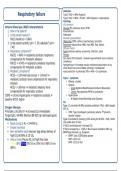
Respiratory failure Type 1 PaO2 < 8kPa (Hypoxia)
Type 2 PaO2 < 8kPa + PaCO2 > 6kPa (Hypoxia + Hypercapnia)
Aetiology
V/Q mismatch
Arterial blood gas (ABG) interpretation Vascular PE, pulmonary shunt, PHTN
1. How is the patient? Pneumothorax
2. Is the patient hypoxic? Atelectasis
PaO2 should be > 10kPa Alveolar hypoventilation
Obstructive COPD, asthma, bronchiectasis, bronchitis
3. Is the patient acidotic (pH < 7.35) /alkalotic? (pH > Restrictive reduced drive, NMD, chest MSK, fluid, fibrosis
7.45) Diffusion failure
4. Respiratory component? Fluid pulmonary oedema, pneumonia, infarction, blood
PaCO2 > 6kPa respiratory acidosis/ respiratory Fibrosis
compensation for metabolic alkalosis Can lead to V/Q mismatch + alveolar hypoventilation due to reduced
compliance
PaCO2 < 4.7kPa respiratory alkalosis/ respiratory Hypoperfusion increased vascular resistance/vasoconstrict to try
compensation for metabolic acidosis shunt blood to an area of better exchange widespread
5. Metabolic component? vasoconstriction pulmonary HTN RVH = Cor pulmonale
HCO3- < 22mmol/ base excess < -2mmol/l
Signs + symptoms
metabolic acidosis/ renal compensation for respiratory
Wheeze, crackles
alkalosis Hypoxia
HCO3- > 26mmol metabolic alkalosis/ renal o Acute Agitation Breathlessness Confusion Drowsiness
compensation for respiratory acidosis o Chronic Polycythaemia PHTN Cor pulmonale
COPD = chronic Hypercapnia respiratory acidosis Hypercapnia
baseline HCO3- higher o A flapping tremor Bounding pulse Cyanosis
Mx
Type 1 O2 (maintain 94-98%) assisted ventilation if PaO2 <8kPa despite
Oxygen therapy 60% O2
Principles: critically ill? Increase [O2] immediately CPAP: Type 1/cardiogenic pulmonary oedema prevents
Target SpO2: 94-98% (Normal) 88-92% (@ risk/hypercapnic) alveolar collapse
Mechanisms Type 2 Controlled O2 therapy @ 24% aiming for 88-92% + PaO2 >8kPa
Check ABG after 20 mins
Nasal prongs 1-4L = 24-40% O2
If PaCO2 normal/reduced Increase FiO2
Simple facemask If PaCO2 increased by > 1.5kPa Non-invasive ventilation (NIV) e.g.
Non-rebreathe mask reservoir bag allows delivery of BIPAP/resp stimulant e.g. Doxapram
high [O2] 60-90% at 10-15L BIPAP: Type 2/COPD/sleep apnoea
Venturi mask Precise [O2] at high flow rates IPAP: 4-5cm H2O
EPAP: 12-15cm H2O
Yellow (5%) White (8%) Blue (24%) Red (40%) Green
(60%)
Respiratory failure Type 1 PaO2 < 8kPa (Hypoxia)
Type 2 PaO2 < 8kPa + PaCO2 > 6kPa (Hypoxia + Hypercapnia)
Aetiology
V/Q mismatch
Arterial blood gas (ABG) interpretation Vascular PE, pulmonary shunt, PHTN
1. How is the patient? Pneumothorax
2. Is the patient hypoxic? Atelectasis
PaO2 should be > 10kPa Alveolar hypoventilation
Obstructive COPD, asthma, bronchiectasis, bronchitis
3. Is the patient acidotic (pH < 7.35) /alkalotic? (pH > Restrictive reduced drive, NMD, chest MSK, fluid, fibrosis
7.45) Diffusion failure
4. Respiratory component? Fluid pulmonary oedema, pneumonia, infarction, blood
PaCO2 > 6kPa respiratory acidosis/ respiratory Fibrosis
compensation for metabolic alkalosis Can lead to V/Q mismatch + alveolar hypoventilation due to reduced
compliance
PaCO2 < 4.7kPa respiratory alkalosis/ respiratory Hypoperfusion increased vascular resistance/vasoconstrict to try
compensation for metabolic acidosis shunt blood to an area of better exchange widespread
5. Metabolic component? vasoconstriction pulmonary HTN RVH = Cor pulmonale
HCO3- < 22mmol/ base excess < -2mmol/l
Signs + symptoms
metabolic acidosis/ renal compensation for respiratory
Wheeze, crackles
alkalosis Hypoxia
HCO3- > 26mmol metabolic alkalosis/ renal o Acute Agitation Breathlessness Confusion Drowsiness
compensation for respiratory acidosis o Chronic Polycythaemia PHTN Cor pulmonale
COPD = chronic Hypercapnia respiratory acidosis Hypercapnia
baseline HCO3- higher o A flapping tremor Bounding pulse Cyanosis
Mx
Type 1 O2 (maintain 94-98%) assisted ventilation if PaO2 <8kPa despite
Oxygen therapy 60% O2
Principles: critically ill? Increase [O2] immediately CPAP: Type 1/cardiogenic pulmonary oedema prevents
Target SpO2: 94-98% (Normal) 88-92% (@ risk/hypercapnic) alveolar collapse
Mechanisms Type 2 Controlled O2 therapy @ 24% aiming for 88-92% + PaO2 >8kPa
Check ABG after 20 mins
Nasal prongs 1-4L = 24-40% O2
If PaCO2 normal/reduced Increase FiO2
Simple facemask If PaCO2 increased by > 1.5kPa Non-invasive ventilation (NIV) e.g.
Non-rebreathe mask reservoir bag allows delivery of BIPAP/resp stimulant e.g. Doxapram
high [O2] 60-90% at 10-15L BIPAP: Type 2/COPD/sleep apnoea
Venturi mask Precise [O2] at high flow rates IPAP: 4-5cm H2O
EPAP: 12-15cm H2O
Yellow (5%) White (8%) Blue (24%) Red (40%) Green
(60%)