18: Relations with Indigenous People
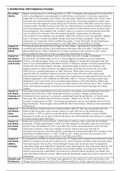
Challenges in In Egypt, there was a countrywide revolution by Egyptians and Sudanese against the
Egypt British occupation in 1919, after the British exiled the nationalist leader Saad Zaghloul and
other members of his party. There was widespread civil disobedience, rioting,
demonstrations and strikes encompassing all classes of society. There were attacks on
military bases, civilian facilities and personnel, in which Egyptian villages were burnt and
railways destroyed. At least 800 Egyptians were killed and 1600 wounded. Following the
'Milner report', Egypt was granted independent in 1922, but relations remained strained.
Britain refused to recognise full Egyptian sovereignty over Sudan, or to withdraw all its
forces. Even after a further treaty in 1936, Britain retained troops in the Suez area.
Challenges in There were also tensions in Palestine and these escalated in the 1930s as more Jews,
Palestine fleeing Nazism, entered the country. Arab protest mounted and the inter-racial violence
increased as the Jews formed the Haganah (an underground Jewish militia in Palestine
1920-48 that became the national army of Israel after the partition of Palestine in 1948),
to protect themselves. More militant Jewish nationalist formed secret units e.g. the Stern
Gang (a militant Zionist terrorist organisation founded in 1940 by Avram Stern) which
wage open war on both the British and the Arabs. By 1945 there was open conflict
between the two communities that the British were unable to control. Britain announced
their departure in 1947, leaving the issue to the UN
Challenges in Before the war, the British government was already facing the prospect of civil war in
Ireland in Ireland where a religious divide between the Protestant and the Catholic was
WW1 threatening to wreck the 1912/13 Home Rule Bill granting Irish independence. In March
1914, British soldiers at Curragh mutinied, refusing to take action to enforce Home Rule on
the hostile north. Conflict occurred as both sides armed themselves: the 'Ulster
Volunteers' verses the 'National Volunteers' in the south. There were three deaths and
many casualties in July 1914 and Home Rule had to be suspended for the duration of the
war. Protest escalated during the war and a southern pro-independence organisation,
Sinn Fein, organised an unsuccessful rising in Dublin during Easter 1916.
Post WW1 In 1919, the frustrations caused by the delays to Irish Home Rule led members of Sinn Fein,
Ireland who won a majority of the Irish seats at Westminster in 1918 general election, to establish
an Irish assembly in Dublin. They declared an Irish Republic and their Irish Republican
Army (IRA) began a guerrilla war against the British, who reinforced the Royal Irish
Constabulary with the 'Blank and Tans' (temporary policemen) supporting them. The
conflict ended with the 1921 Anglo-Irish Treaty which created the Irish Free State as a self-
governing Dominion within the British Empire. The 6 northern counties promptly used their
legal rights to 'opt out'. Eamon de Valera, one of the principle Irish leaders, refused to
accept the treaty - partly because the Irish Free State was not a republic and partly
because it involved splitting the country. This brought further civil war which ended in
1923 with the defeat of Valera and the republicans.
Further Southern Ireland was subsequently treated as a Dominion, gaining equality of status in
developments the 1931 Statute of Westminster. Valera still continued his protest however. He refused to
in Ireland attend the Imperial Conference of 1937 and drew up a new constitution which
effectively turned Ireland into a republic - Eire. Eire adopted a position of neutralist in the
Second World War and in 1948 separated itself entirely from the rest of Britain in the
Republic of Ireland Act. The Irish showed that British imperialism could be successfully
challenged
Difficulties in There was tribal politics; no defined national identity. There were fewer educated elites
developing (to lead nationalist groups) - indigenous people were not represented in the civil service.
African There was a less educated population (to engage). There was a less urban population
nationalism (poorer communication) - fewer common grievances. There was less political
representation (esp. in colonies with white settlers) - which meant there was no clear
forum for grievances. There was widespread collaboration of chiefs and local rulers (who
liked the status quo). British policies undermined nationalism (esp. Trusteeship) - which
made the local population believe the Brit. might improve things. Limited economic
development (made the creation of modern nation state less viable)
National A group of political activists from Nigeria, Gambia, Sierra Leone and the Gold Coast
Congress of formed in 1919. It was started to promote political representation of Africans which was
West Africa had been limited. It was supported by the swelling numbers of the black middle-class
lawyers, teachers, doctors, many of whom were European educated. It's demands for
greater representation were initially ignored. Some concessions were granted in the
Challenges in In Egypt, there was a countrywide revolution by Egyptians and Sudanese against the
Egypt British occupation in 1919, after the British exiled the nationalist leader Saad Zaghloul and
other members of his party. There was widespread civil disobedience, rioting,
demonstrations and strikes encompassing all classes of society. There were attacks on
military bases, civilian facilities and personnel, in which Egyptian villages were burnt and
railways destroyed. At least 800 Egyptians were killed and 1600 wounded. Following the
'Milner report', Egypt was granted independent in 1922, but relations remained strained.
Britain refused to recognise full Egyptian sovereignty over Sudan, or to withdraw all its
forces. Even after a further treaty in 1936, Britain retained troops in the Suez area.
Challenges in There were also tensions in Palestine and these escalated in the 1930s as more Jews,
Palestine fleeing Nazism, entered the country. Arab protest mounted and the inter-racial violence
increased as the Jews formed the Haganah (an underground Jewish militia in Palestine
1920-48 that became the national army of Israel after the partition of Palestine in 1948),
to protect themselves. More militant Jewish nationalist formed secret units e.g. the Stern
Gang (a militant Zionist terrorist organisation founded in 1940 by Avram Stern) which
wage open war on both the British and the Arabs. By 1945 there was open conflict
between the two communities that the British were unable to control. Britain announced
their departure in 1947, leaving the issue to the UN
Challenges in Before the war, the British government was already facing the prospect of civil war in
Ireland in Ireland where a religious divide between the Protestant and the Catholic was
WW1 threatening to wreck the 1912/13 Home Rule Bill granting Irish independence. In March
1914, British soldiers at Curragh mutinied, refusing to take action to enforce Home Rule on
the hostile north. Conflict occurred as both sides armed themselves: the 'Ulster
Volunteers' verses the 'National Volunteers' in the south. There were three deaths and
many casualties in July 1914 and Home Rule had to be suspended for the duration of the
war. Protest escalated during the war and a southern pro-independence organisation,
Sinn Fein, organised an unsuccessful rising in Dublin during Easter 1916.
Post WW1 In 1919, the frustrations caused by the delays to Irish Home Rule led members of Sinn Fein,
Ireland who won a majority of the Irish seats at Westminster in 1918 general election, to establish
an Irish assembly in Dublin. They declared an Irish Republic and their Irish Republican
Army (IRA) began a guerrilla war against the British, who reinforced the Royal Irish
Constabulary with the 'Blank and Tans' (temporary policemen) supporting them. The
conflict ended with the 1921 Anglo-Irish Treaty which created the Irish Free State as a self-
governing Dominion within the British Empire. The 6 northern counties promptly used their
legal rights to 'opt out'. Eamon de Valera, one of the principle Irish leaders, refused to
accept the treaty - partly because the Irish Free State was not a republic and partly
because it involved splitting the country. This brought further civil war which ended in
1923 with the defeat of Valera and the republicans.
Further Southern Ireland was subsequently treated as a Dominion, gaining equality of status in
developments the 1931 Statute of Westminster. Valera still continued his protest however. He refused to
in Ireland attend the Imperial Conference of 1937 and drew up a new constitution which
effectively turned Ireland into a republic - Eire. Eire adopted a position of neutralist in the
Second World War and in 1948 separated itself entirely from the rest of Britain in the
Republic of Ireland Act. The Irish showed that British imperialism could be successfully
challenged
Difficulties in There was tribal politics; no defined national identity. There were fewer educated elites
developing (to lead nationalist groups) - indigenous people were not represented in the civil service.
African There was a less educated population (to engage). There was a less urban population
nationalism (poorer communication) - fewer common grievances. There was less political
representation (esp. in colonies with white settlers) - which meant there was no clear
forum for grievances. There was widespread collaboration of chiefs and local rulers (who
liked the status quo). British policies undermined nationalism (esp. Trusteeship) - which
made the local population believe the Brit. might improve things. Limited economic
development (made the creation of modern nation state less viable)
National A group of political activists from Nigeria, Gambia, Sierra Leone and the Gold Coast
Congress of formed in 1919. It was started to promote political representation of Africans which was
West Africa had been limited. It was supported by the swelling numbers of the black middle-class
lawyers, teachers, doctors, many of whom were European educated. It's demands for
greater representation were initially ignored. Some concessions were granted in the