Taylor's Clinical Nursing Skills
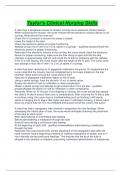
Taylor's Clinical Nursing Skills A client has a peripheral access IV infusion running via an electronic infusion device. While monitoring the infusion, the nurse notices that the electronic infusion device is not running. What should the nurse do? Check the IV connector to ensure the clamp is closed. Lower the height of the pole. Check the electronic device for proper functioning. Attempt to flush the IV with 5 to 10 mL saline in a syringe. - qualified answersCheck the electronic device for proper functioning. Rationale:If the electronic infusion is not running, the nurse would check the electronic device for proper functioning, make sure the flow clamp is open and that the drip chamber is approximately half full, and check the IV site for problems with the catheter. If the IV is free flowing, the nurse would raise the height of the IV pole. The nurse could also attempt to flush the IV with 1 to 3 mL of saline in a syringe. A client has been receiving an IV piggyback medication via gravity. On assessment the nurse notes that the infusion has not completed but is no longer dripping in the drip chamber. What action should the nurse perform first? Hang the IV piggyback medication higher on the IV pole. Using a sterile syringe, flush the site with 10 mL of sterile saline. Assess the client's IV site for infiltration or other complication. Obtain a sterile syringe and attempt to get a blood return from the site. - qualified answersAssess the client's IV site for infiltration or other complication. Rationale: When an IV infusion is not dripping or infusing, the nurse should first assess the client's IV site to ensure there are no complications. After ensuring the IV site is safe to continue using, the nurse may try troubleshooting such as flushing it with sterile saline or hanging the IV bag a little higher and see if it will begin infusing. A blood return does not ensure that the IV is not infiltrated and should not be the nurse's first action. A client has had a nasogastric tube inserted in preparation for tube feedings. When developing the client's plan of care, the nurse would anticipate checking the placement of the tube at which time? After administering an intermittent tube feeding Before administering a medication through the tube Every 8 hours during a continuous tube feeding At the beginning of each shift - qualified answersBefore administering a medication through the tube Rationale:The nurse would verify correct placement of the nasogastric tube after the initial insertion, before beginning a feeding or instilling medications or liquids, and at 4- hour intervals during continuous feedings. This ensures that the tip of the tube is situated in the stomach or intestine, preventing inadvertent administration of substances
Escuela, estudio y materia
- Institución
- Taylor\'s Clinical Nursing Skills
- Grado
- Taylor\'s Clinical Nursing Skills
Información del documento
- Subido en
- 16 de junio de 2024
- Número de páginas
- 70
- Escrito en
- 2023/2024
- Tipo
- Examen
- Contiene
- Preguntas y respuestas
Temas
-
taylors clinical nursing skills

Documento también disponible en un lote