HHIS221: HUMAN HISTOLOGY
Lesson 12 | Urinary System
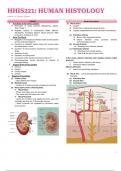
KIDNEY Renal Vasculature
● Functions of the Urinary System (1) Renal Artery
➔ Elimination of waste products (Nitrogenous wastes, ➔ Largest
Toxin, Drugs ) ➔ Divides into 2 segmental arteries at hilum
➔ Regulate aspects of homeostasis (Water balance, ➔ supplies oxygenated blood from the heart to the kidneys.
Electrolytes, Acid-base balance, Blood pressure, RBC
production, Activation of vit.D) (a) Interlobar Arteries
● Renal Functions ➔ Branch from segmental arteries
➔ Regulation of the balance between water and electrolytes ➔ Extend between renal pyramids towards
and the acid-base balance; corticomedullary junction
➔ Excretion of metabolic wastes along with excess water (b) Arcuate Arteries
and electrolytes in urine ➔ Branches from interlobar arteries
➔ Excretion of many bioactive substances, including many (c) Interlobular Arteries
drugs; ➔ Branches from arcuate arteries
➔ Secretion of renin ➔ Extend all the way to renal cortex
➔ Secretion of erythropoietin
➔ Conversion of the steroid prohormone vitamin D In the cortex, afferent arterioles enter capillary clusters called
➔ Gluconeogenesis during starvation or periods of glomeruli
prolonged fasting ● Where blood is filtered in the kidney
● Organs of the Urinary system ● drained by efferent arterioles
➔ Kidneys Efferent arterioles
➔ Ureters ● branch into peritubular capillaries
➔ Urinary bladder
➔ Urethra (2) Renal Vein – carries deoxygenated blood from the kidney to
● Regions of the Kidney the heart.
(1) Cortex (outer) (a) Interlobar Vein
– stains darker than medulla (b) Arcuate Vein
(2) Medulla (inner) (c) Interlobular Vein
– contains 8-12 renal pyramids containing a renal lobe
(3) Renal pelvis (inner collecting tube)
➔ Renal Hilum
– Where renal artery and vein are located
– The ureter exits the kidney from here
➔ Renal Pyramids
– apical end contains renal papilla and minor calyx that
eventually become one of three major calyces
– Renal Pyramids are separated by structures called
renal columns
1
Lesson 12 | Urinary System
KIDNEY Renal Vasculature
● Functions of the Urinary System (1) Renal Artery
➔ Elimination of waste products (Nitrogenous wastes, ➔ Largest
Toxin, Drugs ) ➔ Divides into 2 segmental arteries at hilum
➔ Regulate aspects of homeostasis (Water balance, ➔ supplies oxygenated blood from the heart to the kidneys.
Electrolytes, Acid-base balance, Blood pressure, RBC
production, Activation of vit.D) (a) Interlobar Arteries
● Renal Functions ➔ Branch from segmental arteries
➔ Regulation of the balance between water and electrolytes ➔ Extend between renal pyramids towards
and the acid-base balance; corticomedullary junction
➔ Excretion of metabolic wastes along with excess water (b) Arcuate Arteries
and electrolytes in urine ➔ Branches from interlobar arteries
➔ Excretion of many bioactive substances, including many (c) Interlobular Arteries
drugs; ➔ Branches from arcuate arteries
➔ Secretion of renin ➔ Extend all the way to renal cortex
➔ Secretion of erythropoietin
➔ Conversion of the steroid prohormone vitamin D In the cortex, afferent arterioles enter capillary clusters called
➔ Gluconeogenesis during starvation or periods of glomeruli
prolonged fasting ● Where blood is filtered in the kidney
● Organs of the Urinary system ● drained by efferent arterioles
➔ Kidneys Efferent arterioles
➔ Ureters ● branch into peritubular capillaries
➔ Urinary bladder
➔ Urethra (2) Renal Vein – carries deoxygenated blood from the kidney to
● Regions of the Kidney the heart.
(1) Cortex (outer) (a) Interlobar Vein
– stains darker than medulla (b) Arcuate Vein
(2) Medulla (inner) (c) Interlobular Vein
– contains 8-12 renal pyramids containing a renal lobe
(3) Renal pelvis (inner collecting tube)
➔ Renal Hilum
– Where renal artery and vein are located
– The ureter exits the kidney from here
➔ Renal Pyramids
– apical end contains renal papilla and minor calyx that
eventually become one of three major calyces
– Renal Pyramids are separated by structures called
renal columns
1