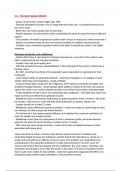
3.5 - The Irish Famine 1843-51:
- Cause of the famine: potato ‘blight’ Sep 1845
- Disease damaged the potato crop so badly that there was only 1 successful harvest over
the next 4 years
- More than one million people died of starvation
- Natural disaster, but other factors when considering the extent to which the famine affected
Ireland
- The condition of Ireland’s agricultural system didn’t reduce its impact but rather enhanced it
- System of landownership and the monoculture practised by Ireland’s poorest farmers
- Created a very vulnerable population without the ability to absorb any shock to its fragile
existence
Absentee landlords and middlemen:
- Ireland didn’t have a vast amount of natural resources eg. coal which other nations were
able to exploit during the industrial revolution
- Instead, they had good quality land
- With the exception of some industrialisation in the north-east of the country, Ireland was a
farming nation
- By 1841 more than two-thirds of the population were dependent on agriculture for their
livelihoods
- Land owned mainly by absentee landlords - employed managers to run estates on their
behalf, whilst they lived elsewhere, usually in Britain
- Landownership taken away from the indigenous Irish Catholics and given to English and
Scottish Protestant families. These families either settled in Ireland or let their new lands to
others who were in the country already and then lived off the money these rents generated
- These landlords let their land to local individuals aka middlemen - look after their lands and
make sure they ran efficiently to generate income
- Middlemen took out fixed price long leases on great quantities of land, minimum 100 acres
but usually 1,000 acres or more and they paid landowners an agreed, regular rent
- Leases usually for at least 21 years
- Middleman would effectively become a landlord - made his money by subdividing the land
and renting it to other people aka tenant farmers
- On the face of it, the system seemed efficient, but instituted the continual subdivision of
land into smaller and smaller parcels
- Middleman would give out small pieces of land to maximise profits, the tenant farmers
would do the same to poorer farmers or cottiers (only 1-3 acres)
- With more and more people involved, it meant rent prices increased because of costs
associated with larger plots
Ireland remained a nation of mostly small farmers whose economic foundation was
particularly fragile because the middleman system forced Irish agriculture to remain on a
small scale and without an effective means to grow. This problem was magnified by the
unwillingness of the absentee landowner to make improvements to his land, since his
income was fixed to the price agreed with the middleman. Eg. new homes. Therefore, any
investment would yield a return after the expiry of the lease. The lack of investment meant
that it could never realise its full potential - made Irish agriculture stagnated with little or no
substantial improvement being undertaken in the pre-famine period.
, Landholdings:
- System of middlemen problematic: exploited poorer farmers but also prevented them from
extending their landholdings and kept them ties to small plots
- Population of Ireland increased - demand for land increased - plots became even smaller,
land seen as unusable was now being adopted
- 1841: 7% of landholdings were more than 30 acres, 45% were under 5 acres
- Those who owned less than 5 acres known as cottiers, poorest, lived hand to mouth
- Early 1840s - more than 300,000 cottiers - population of 8 million. Shows the potential
vulnerability of the Irish agricultural system
- The large percentage of small farms meant that every patch of available land would be
farmed as much as possible so as to maximise their yield
- This withdrew vital nutrients from the land and also exhausted it
- It didn’t provide any substantial surplus which could be relied upon in the event of bad
harvest
- Irish farmers were effectively operating at their limit and did not necessarily have the
capacity to absorb any shock that might occur
Monoculture and blight:
- The premium on the land meant that few Irish could diversify in what they grew, therefore
they increasingly engaged in monoculture - the practice of planting only one crop at a time
- 1840s it was potato, produced high yield compared to grain crops
- Potato accounted for more than 1/5th of the country’s total agricultural output
- Ideal diet because of the balance of nutrients it offered at a relatively cheap price
- As the potato became the staple diet of the poor, with families consuming between 10 and
15 pounds of them each day, Ireland’s reliance on potatoes became absolute
- Perishable, couldn't be stored like grain. This meant that good harvests were essential
since a lot of people depended on it as the only source of food and income
- Because they couldn’t store it there was a need to have it in regular supply, failed harvest
meant that people would feel the effects immediately
- 1845 England had a disease affecting their potato crops (potato blight) - fungal disease that
originated in South America turning potatoes mouldy and inedible
- The blight quickly spread across Ireland, catastrophic to the country
- One third of harvest in 1845 was destroyed, 1846: 3 quarters lost, 1847: average, 1848:
one third deficient
- Without the potatoes, people quickly began to starve and by the end of 1845 Ireland was in
the grip of famine
Impact of famine on the populace:
- The fragile nature of the Irish agricultural system and also the over reliance upon the potato
by Ireland’s poorest people meant that when blight hit and the harvests between 1845-48
were destroyed meant that the majority suffered greatly
- Second harvest 1846 failed - first recorded deaths from starvation. Deaths were the first of
more than 1 million Irish by 1851, but in 1846 many died from associated diseases such as
typhus and relapsing fever - known as ‘famine fever’ as they were so common
- Winter 1847 they became an epidemic - due to the weather combined with the lack of
good-quality food
- Early months of 1847 alone - 250,000 people died of either starvation or fever
- Cause of the famine: potato ‘blight’ Sep 1845
- Disease damaged the potato crop so badly that there was only 1 successful harvest over
the next 4 years
- More than one million people died of starvation
- Natural disaster, but other factors when considering the extent to which the famine affected
Ireland
- The condition of Ireland’s agricultural system didn’t reduce its impact but rather enhanced it
- System of landownership and the monoculture practised by Ireland’s poorest farmers
- Created a very vulnerable population without the ability to absorb any shock to its fragile
existence
Absentee landlords and middlemen:
- Ireland didn’t have a vast amount of natural resources eg. coal which other nations were
able to exploit during the industrial revolution
- Instead, they had good quality land
- With the exception of some industrialisation in the north-east of the country, Ireland was a
farming nation
- By 1841 more than two-thirds of the population were dependent on agriculture for their
livelihoods
- Land owned mainly by absentee landlords - employed managers to run estates on their
behalf, whilst they lived elsewhere, usually in Britain
- Landownership taken away from the indigenous Irish Catholics and given to English and
Scottish Protestant families. These families either settled in Ireland or let their new lands to
others who were in the country already and then lived off the money these rents generated
- These landlords let their land to local individuals aka middlemen - look after their lands and
make sure they ran efficiently to generate income
- Middlemen took out fixed price long leases on great quantities of land, minimum 100 acres
but usually 1,000 acres or more and they paid landowners an agreed, regular rent
- Leases usually for at least 21 years
- Middleman would effectively become a landlord - made his money by subdividing the land
and renting it to other people aka tenant farmers
- On the face of it, the system seemed efficient, but instituted the continual subdivision of
land into smaller and smaller parcels
- Middleman would give out small pieces of land to maximise profits, the tenant farmers
would do the same to poorer farmers or cottiers (only 1-3 acres)
- With more and more people involved, it meant rent prices increased because of costs
associated with larger plots
Ireland remained a nation of mostly small farmers whose economic foundation was
particularly fragile because the middleman system forced Irish agriculture to remain on a
small scale and without an effective means to grow. This problem was magnified by the
unwillingness of the absentee landowner to make improvements to his land, since his
income was fixed to the price agreed with the middleman. Eg. new homes. Therefore, any
investment would yield a return after the expiry of the lease. The lack of investment meant
that it could never realise its full potential - made Irish agriculture stagnated with little or no
substantial improvement being undertaken in the pre-famine period.
, Landholdings:
- System of middlemen problematic: exploited poorer farmers but also prevented them from
extending their landholdings and kept them ties to small plots
- Population of Ireland increased - demand for land increased - plots became even smaller,
land seen as unusable was now being adopted
- 1841: 7% of landholdings were more than 30 acres, 45% were under 5 acres
- Those who owned less than 5 acres known as cottiers, poorest, lived hand to mouth
- Early 1840s - more than 300,000 cottiers - population of 8 million. Shows the potential
vulnerability of the Irish agricultural system
- The large percentage of small farms meant that every patch of available land would be
farmed as much as possible so as to maximise their yield
- This withdrew vital nutrients from the land and also exhausted it
- It didn’t provide any substantial surplus which could be relied upon in the event of bad
harvest
- Irish farmers were effectively operating at their limit and did not necessarily have the
capacity to absorb any shock that might occur
Monoculture and blight:
- The premium on the land meant that few Irish could diversify in what they grew, therefore
they increasingly engaged in monoculture - the practice of planting only one crop at a time
- 1840s it was potato, produced high yield compared to grain crops
- Potato accounted for more than 1/5th of the country’s total agricultural output
- Ideal diet because of the balance of nutrients it offered at a relatively cheap price
- As the potato became the staple diet of the poor, with families consuming between 10 and
15 pounds of them each day, Ireland’s reliance on potatoes became absolute
- Perishable, couldn't be stored like grain. This meant that good harvests were essential
since a lot of people depended on it as the only source of food and income
- Because they couldn’t store it there was a need to have it in regular supply, failed harvest
meant that people would feel the effects immediately
- 1845 England had a disease affecting their potato crops (potato blight) - fungal disease that
originated in South America turning potatoes mouldy and inedible
- The blight quickly spread across Ireland, catastrophic to the country
- One third of harvest in 1845 was destroyed, 1846: 3 quarters lost, 1847: average, 1848:
one third deficient
- Without the potatoes, people quickly began to starve and by the end of 1845 Ireland was in
the grip of famine
Impact of famine on the populace:
- The fragile nature of the Irish agricultural system and also the over reliance upon the potato
by Ireland’s poorest people meant that when blight hit and the harvests between 1845-48
were destroyed meant that the majority suffered greatly
- Second harvest 1846 failed - first recorded deaths from starvation. Deaths were the first of
more than 1 million Irish by 1851, but in 1846 many died from associated diseases such as
typhus and relapsing fever - known as ‘famine fever’ as they were so common
- Winter 1847 they became an epidemic - due to the weather combined with the lack of
good-quality food
- Early months of 1847 alone - 250,000 people died of either starvation or fever