Lecture: Infection and Immunity
Date: Thursday 1st February
Time: 11am – 12pm
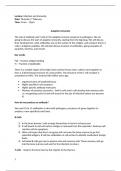
Adaptive Immunity
The role of antibody and T cells in the adaptive immune response to pathogens. We are
going to discuss the start of adaptive immunity, starting from the big bang. We will discuss
their development, what antibodies see on the surface of the antigen, and compare that to t
cells in antigenic peptides. We will also discuss invasion of antibodies, giving examples of
parasites, bacteria, and viruses.
Key words
Fab – fraction antigen binding
Fc – Fraction crystallizable.
There is a variable region of the light chain and the heavy chain, which come together to
form a 3-dimensional structure of a lute protein. The structure of the T cell receptor is
presented on MHC. This evolved 500 million years ago:
organised areas of lymphoid tissue
Highly specified t cell receptors
Highly specific antibody molecules
Memory of previous encounter – both b cells and t cells develop into memory cells
i.e. recognising covid-19 and will search for the site of infection before you become
ill.
How do we produce an antibody?
We need 10 to 11 antibodies to deal with pathogens, put pieces of genes together to
produce a new specificity each time.
B-Cells
1) In the bone barrow t cells arrange themselves to form b cell precursor
2) B cell bound to self-cell surface antigen is removed from the repertoire. Destroys self-
reactive cells by apoptosis.
3) Other cell types that don’t recognise self can leave the bone marrow to go find
potential antigens. B cell has antibodies on cell surface to identify multivalent foreign
body.
4) Activated B cells give rise to plasma cells and memory cells. These memory cells go
into the bone marrow and wait for the infection to return.
T cells – made in the bone barrow but migrate to the thymus.
1
Date: Thursday 1st February
Time: 11am – 12pm
Adaptive Immunity
The role of antibody and T cells in the adaptive immune response to pathogens. We are
going to discuss the start of adaptive immunity, starting from the big bang. We will discuss
their development, what antibodies see on the surface of the antigen, and compare that to t
cells in antigenic peptides. We will also discuss invasion of antibodies, giving examples of
parasites, bacteria, and viruses.
Key words
Fab – fraction antigen binding
Fc – Fraction crystallizable.
There is a variable region of the light chain and the heavy chain, which come together to
form a 3-dimensional structure of a lute protein. The structure of the T cell receptor is
presented on MHC. This evolved 500 million years ago:
organised areas of lymphoid tissue
Highly specified t cell receptors
Highly specific antibody molecules
Memory of previous encounter – both b cells and t cells develop into memory cells
i.e. recognising covid-19 and will search for the site of infection before you become
ill.
How do we produce an antibody?
We need 10 to 11 antibodies to deal with pathogens, put pieces of genes together to
produce a new specificity each time.
B-Cells
1) In the bone barrow t cells arrange themselves to form b cell precursor
2) B cell bound to self-cell surface antigen is removed from the repertoire. Destroys self-
reactive cells by apoptosis.
3) Other cell types that don’t recognise self can leave the bone marrow to go find
potential antigens. B cell has antibodies on cell surface to identify multivalent foreign
body.
4) Activated B cells give rise to plasma cells and memory cells. These memory cells go
into the bone marrow and wait for the infection to return.
T cells – made in the bone barrow but migrate to the thymus.
1