Public Health
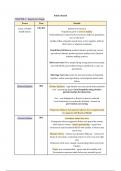
CHAPTER 1 - Impetus for change
Event Year Details
Cause of Public 1781-1871 Industrial revolution
health decline Population grew to over 31 million
Industrialisation created work in factories, mills but population
was on the move
Sudden influx of people caused many to live together without
clean water or adequate sanitation
Death Rate fell due to: medical industry producing vaccine,
agricultural industry producing better quality food, chemical
industry making soap etc
Birth rate rose: fewer people dying young meant more people
survived till 20s, more babies living to adulthood so carry on
generations
Marriage rate rose: easier for men and women to begin life
together, earlier marriages before contraception meant more
babies
Cholera Epidemic 1832 Cholera Epidemic - high fatality rate and caused cholera-phobia
riots - protesting against local hospitals using cholera
patients bodies for dissection
Gov - sent delegation to Russia to observe outbreak
Local Authorities set up boards of health - focused on
prevention not curing
Temporary Cholera Acts passed to allow LAs to compel people
to cooperate with Board of Health
Cure for Cholera 1832 Avoidance rather than cure
Contagonist theory suggested cholera was spread by contact
with cholera victims - meant quarantining - argued not
everyone in same household fell ill with cholera so theory may
not be true
Miasmic theory - cholera was spread by filthy air - removal of
heaps of excrement, connecting sewers to rivers was not right
step
Ointments with wine, vinegar, mustard kept them away from
Cholera
Prayer was recommended - repent and all would be well
Preventative measures taken before any scientific proof
,Report on state of Collecting info about towns
towns Moral and physical condition of working class in Manchester:
board of health was set up with Kay as secretary to coordinate
the work of the city
He had visited each area to investigate conditions there and
formed report - first detailed report on conditions and
demonstrate the connection between dirt and disease
Dirty living led to dirty habits
Report on london 1842 Report on Sanitary condition of Labouring Population
under direction of Carried out under commissions secretary - Chadwick
Chadwick - Report James Graham suggested that the enquiry should be extended to
on Sanitary cover prevalence of disease among labouring classes throughout
condition of country not just London - the commission only focused on
Labouring
London
Population
Finished in 1842 - refused government publication because it
criticised vested interests such as water companies, local
administration - Chadwick published report himself at his own
expense
Chadwicks report was in 3 volumes, last vol was his conclusions
Conclusions:
- Water supplies, drainage, sewerage systems were
inadequate
- Linked public health and poor law
- Blamed vested interests who stood in the way of
improvement
- Connection between disease and environment
Reports of Royal 1844 Generated as a result of Chadwick's report on labouring pop.
Commission into Members of royal commission
Sanitary Condition Questionnaires sent to 50 towns with highest annual death rates
of large towns and and returns studied by commissioners themselves who made
Populous Districts visits to worst areas
When first report published it upheld chadwicks findings
42/50 towns found to have bad drainage and 30 had bad water
supplies
Second report in 1845 contained proposals for future legislation,
included memorandum from Chadwick explaining
recommendations
Recommended that :
- Central govt given powers to inspect and supervise local
sanitary work
- Sanitary districts to be set up with authority over
drainage, sewerage etc
, - Local sanitary districts be given powers to raise money
for sanitary schemes
Report of the 1845 Pressures of industrial revolution, families moved to attics and
Bradford cellars
Woolcombers Live and work in crowded/squalid conditions
Sanitary Committee Created protective society and went fro dwellings to report
observations
Rooms unventilated, overcrowded, filthy, too hot etc
Technology + / 1775 Alexander Cummings - S trap invention
Toilets Technological advances to spot odours coming from the sewer
Gerorge Jennings - built first ever toilet - pan and trap, by 1850s
all houses had to have toilet
1875 Thomas Twyford - wash out toilet, retain a small amount of
water in pan - remained standard design
Sewerage Human and industrial waste piled up on land
Rivers were a cheap and easy solution to the problem of disposal
- rivers moved without expense of installing pumps and emptied
into the sea - self cleansing
Filth accumulated and local authorities reluctant to move away
from this method of disposal
Before sewers: rough walls, inadequate slopes meant solids
accumulated and only heavy storm would flush sewers clean
System
John Roe 1842 Introduced flushing gates that only allowed waste through when
there was enough water to transport it
By 1870s and 80s they were combined with hydraulic pumps to
ensure a constant flow of water through sewers to make them
self flushing
Water Supply / 1802: Cast iron pipes installed by Lambeth Waterworks in
Kennington
1822: Southwark Water Company used steam engines to pump
water from the River Thames to an 18-metre-high tower,
before it was pumped to homes
1829: Chelsea Waterworks Company installed the first sand
filtration system
1838: Grand Junction Waterworks Company built a pumping
station near Kew Bridge taking water from the middle of the
river, pumping it up a 61-metre-high tower and then using
CHAPTER 1 - Impetus for change
Event Year Details
Cause of Public 1781-1871 Industrial revolution
health decline Population grew to over 31 million
Industrialisation created work in factories, mills but population
was on the move
Sudden influx of people caused many to live together without
clean water or adequate sanitation
Death Rate fell due to: medical industry producing vaccine,
agricultural industry producing better quality food, chemical
industry making soap etc
Birth rate rose: fewer people dying young meant more people
survived till 20s, more babies living to adulthood so carry on
generations
Marriage rate rose: easier for men and women to begin life
together, earlier marriages before contraception meant more
babies
Cholera Epidemic 1832 Cholera Epidemic - high fatality rate and caused cholera-phobia
riots - protesting against local hospitals using cholera
patients bodies for dissection
Gov - sent delegation to Russia to observe outbreak
Local Authorities set up boards of health - focused on
prevention not curing
Temporary Cholera Acts passed to allow LAs to compel people
to cooperate with Board of Health
Cure for Cholera 1832 Avoidance rather than cure
Contagonist theory suggested cholera was spread by contact
with cholera victims - meant quarantining - argued not
everyone in same household fell ill with cholera so theory may
not be true
Miasmic theory - cholera was spread by filthy air - removal of
heaps of excrement, connecting sewers to rivers was not right
step
Ointments with wine, vinegar, mustard kept them away from
Cholera
Prayer was recommended - repent and all would be well
Preventative measures taken before any scientific proof
,Report on state of Collecting info about towns
towns Moral and physical condition of working class in Manchester:
board of health was set up with Kay as secretary to coordinate
the work of the city
He had visited each area to investigate conditions there and
formed report - first detailed report on conditions and
demonstrate the connection between dirt and disease
Dirty living led to dirty habits
Report on london 1842 Report on Sanitary condition of Labouring Population
under direction of Carried out under commissions secretary - Chadwick
Chadwick - Report James Graham suggested that the enquiry should be extended to
on Sanitary cover prevalence of disease among labouring classes throughout
condition of country not just London - the commission only focused on
Labouring
London
Population
Finished in 1842 - refused government publication because it
criticised vested interests such as water companies, local
administration - Chadwick published report himself at his own
expense
Chadwicks report was in 3 volumes, last vol was his conclusions
Conclusions:
- Water supplies, drainage, sewerage systems were
inadequate
- Linked public health and poor law
- Blamed vested interests who stood in the way of
improvement
- Connection between disease and environment
Reports of Royal 1844 Generated as a result of Chadwick's report on labouring pop.
Commission into Members of royal commission
Sanitary Condition Questionnaires sent to 50 towns with highest annual death rates
of large towns and and returns studied by commissioners themselves who made
Populous Districts visits to worst areas
When first report published it upheld chadwicks findings
42/50 towns found to have bad drainage and 30 had bad water
supplies
Second report in 1845 contained proposals for future legislation,
included memorandum from Chadwick explaining
recommendations
Recommended that :
- Central govt given powers to inspect and supervise local
sanitary work
- Sanitary districts to be set up with authority over
drainage, sewerage etc
, - Local sanitary districts be given powers to raise money
for sanitary schemes
Report of the 1845 Pressures of industrial revolution, families moved to attics and
Bradford cellars
Woolcombers Live and work in crowded/squalid conditions
Sanitary Committee Created protective society and went fro dwellings to report
observations
Rooms unventilated, overcrowded, filthy, too hot etc
Technology + / 1775 Alexander Cummings - S trap invention
Toilets Technological advances to spot odours coming from the sewer
Gerorge Jennings - built first ever toilet - pan and trap, by 1850s
all houses had to have toilet
1875 Thomas Twyford - wash out toilet, retain a small amount of
water in pan - remained standard design
Sewerage Human and industrial waste piled up on land
Rivers were a cheap and easy solution to the problem of disposal
- rivers moved without expense of installing pumps and emptied
into the sea - self cleansing
Filth accumulated and local authorities reluctant to move away
from this method of disposal
Before sewers: rough walls, inadequate slopes meant solids
accumulated and only heavy storm would flush sewers clean
System
John Roe 1842 Introduced flushing gates that only allowed waste through when
there was enough water to transport it
By 1870s and 80s they were combined with hydraulic pumps to
ensure a constant flow of water through sewers to make them
self flushing
Water Supply / 1802: Cast iron pipes installed by Lambeth Waterworks in
Kennington
1822: Southwark Water Company used steam engines to pump
water from the River Thames to an 18-metre-high tower,
before it was pumped to homes
1829: Chelsea Waterworks Company installed the first sand
filtration system
1838: Grand Junction Waterworks Company built a pumping
station near Kew Bridge taking water from the middle of the
river, pumping it up a 61-metre-high tower and then using