Schizophrenia:
Diagnosis:
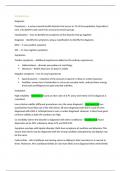
Prevalence – a serious mental health disorder that occurs in 1% of the population. Especially in
men, city dwellers and come from al social economic groups.
Classification – how to identify the symptoms of the disorder that go together
Diagnosis – identify the symptoms using a classification to identify the diagnosis
DSM – 5: one positive symptom
ICD – 11: two negative symptoms
Symptoms:
Positive symptoms – additional experiences added on the ordinary experiences
Hallucinations – disorder perceptions of real things
Delusions – beliefs that have no basis in reality
Negative symptoms – loss of usual experiences
Speech poverty – reduction of the amount of speech or delay in verbal responses
Avolition- severe loss of motivation to carry out everyday tasks, reduced lower energy
levels and unwillingness for goal-oriented activities.
Evaluation:
High reliability – Osorio et al found an inter rater of 0.97 and a test-retest of 0.92 diagnosis is
consistent.
Low criterion validity (different procedures carry the same diagnosis) – cheniaux et al two
psychiatrists found that out of the 100 clients, 68 were diagnosed with ICD-11 and 39 were
diagnosed with DSM-5. Schizophrenia is over or under diagnosed. However, it does have good
criterion validity as both the numbers are high.
Co morbidity (when the disorder is diagnosed with other conditions) – Buckley et al found
depression to be 50%, substance abuse 47% and OCD 23%
Symptom overlaps with bipolar disorder. Both have symptoms of avolition and delusions This
means that clients may be diagnosed with the wrong condition schizophrenia and bipolar may
be the same.
Cultural bias – Afro Caribbean see hearing voices as talking to their ancestors so is normal to
them. Moreover, Afro Caribbean British are 10x more likely to be diagnosed then white British
, men because of the over interpretation of symptoms by UK psychiatrist. Description by the
culturally biased diagnostic system.
Gender bias. Men are more likely to be diagnosed and treated then women in the ratio of 1.4:1.
This is because men are genetically vulnerable whereas women can seek social support.
Genetic explanation:
Family studies- Gottesman found that someone who had an aunt with schizophrenia had 2%
chance, 9% for a sibling and 48% for an identical twin.
Candidate genes of 108 – Ripke et al found from genome wide studies, aestiologically
heterogenous, polygenic.
Mutation of parental DNA. Correlation between parental age and risk of schizophrenia – Brown
et al
Neural correlates explanation:
Role of dopamine – functioning of brain systems
Hyperdompaminerga- high levels of dopamine in sub cortex associated with hallucinations and
speech poverty
Hypodopaminerga- low levels of dopamine in prefrontal cortex associates with negative
symptoms
Evaluation:
Strength- family studies- Gottesman– 33% for MZ and 7% for DZ. Adoption studies show that
those with a biological parent if schizophrenia has a greater risk of developing it even if they are
adopted.
Environmental factors- birth complications and smoking cannabis in teenage years. 57%
reported at least one childhood trauma.
Genetic counselling- find out beforehand is their child would have schizophrenia however it is
not only due to genes.
Amphetamines increase dopamine to minims symptoms. Antipsychotic drugs reduce dopamine
to reduce intensity of symptoms.
McCutcheon et al looked at post midterm studies and found that high levels of flu are in
schizophrenics
Diagnosis:
Prevalence – a serious mental health disorder that occurs in 1% of the population. Especially in
men, city dwellers and come from al social economic groups.
Classification – how to identify the symptoms of the disorder that go together
Diagnosis – identify the symptoms using a classification to identify the diagnosis
DSM – 5: one positive symptom
ICD – 11: two negative symptoms
Symptoms:
Positive symptoms – additional experiences added on the ordinary experiences
Hallucinations – disorder perceptions of real things
Delusions – beliefs that have no basis in reality
Negative symptoms – loss of usual experiences
Speech poverty – reduction of the amount of speech or delay in verbal responses
Avolition- severe loss of motivation to carry out everyday tasks, reduced lower energy
levels and unwillingness for goal-oriented activities.
Evaluation:
High reliability – Osorio et al found an inter rater of 0.97 and a test-retest of 0.92 diagnosis is
consistent.
Low criterion validity (different procedures carry the same diagnosis) – cheniaux et al two
psychiatrists found that out of the 100 clients, 68 were diagnosed with ICD-11 and 39 were
diagnosed with DSM-5. Schizophrenia is over or under diagnosed. However, it does have good
criterion validity as both the numbers are high.
Co morbidity (when the disorder is diagnosed with other conditions) – Buckley et al found
depression to be 50%, substance abuse 47% and OCD 23%
Symptom overlaps with bipolar disorder. Both have symptoms of avolition and delusions This
means that clients may be diagnosed with the wrong condition schizophrenia and bipolar may
be the same.
Cultural bias – Afro Caribbean see hearing voices as talking to their ancestors so is normal to
them. Moreover, Afro Caribbean British are 10x more likely to be diagnosed then white British
, men because of the over interpretation of symptoms by UK psychiatrist. Description by the
culturally biased diagnostic system.
Gender bias. Men are more likely to be diagnosed and treated then women in the ratio of 1.4:1.
This is because men are genetically vulnerable whereas women can seek social support.
Genetic explanation:
Family studies- Gottesman found that someone who had an aunt with schizophrenia had 2%
chance, 9% for a sibling and 48% for an identical twin.
Candidate genes of 108 – Ripke et al found from genome wide studies, aestiologically
heterogenous, polygenic.
Mutation of parental DNA. Correlation between parental age and risk of schizophrenia – Brown
et al
Neural correlates explanation:
Role of dopamine – functioning of brain systems
Hyperdompaminerga- high levels of dopamine in sub cortex associated with hallucinations and
speech poverty
Hypodopaminerga- low levels of dopamine in prefrontal cortex associates with negative
symptoms
Evaluation:
Strength- family studies- Gottesman– 33% for MZ and 7% for DZ. Adoption studies show that
those with a biological parent if schizophrenia has a greater risk of developing it even if they are
adopted.
Environmental factors- birth complications and smoking cannabis in teenage years. 57%
reported at least one childhood trauma.
Genetic counselling- find out beforehand is their child would have schizophrenia however it is
not only due to genes.
Amphetamines increase dopamine to minims symptoms. Antipsychotic drugs reduce dopamine
to reduce intensity of symptoms.
McCutcheon et al looked at post midterm studies and found that high levels of flu are in
schizophrenics