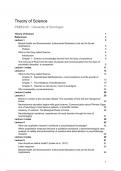
Theory of Science
PSBE2-05 - University of Groningen
Theory of Science 1
References 3
Lecture 1 5
Mental Health and Enhancement: Instrumental Substance Use and Its Social
Implications 5
Preface 5
What is this thing called Science 6
Introduction 6
Chapter 1 - Science as knowledge derived from the facts of experience 6
The removal of Pluto from the class of planets and homosexuality from the class of
psychiatric disorders: a comparison 9
Lecture 1 notes 11
Lecture 2 13
What is this thing called Science 13
Chapter 6 - Sophisticated falsificationism, novel predictions and the growth of
science 13
Chapter 7 - The limitations of falsificationism 15
Chapter 8 - Theories as structures I: Kuhn’s paradigms 17
Why homeopathy is pseudoscience 23
Lecture 2 notes 26
Lecture 3 30
Brains in context in the neurolaw debate: The examples of free will and “dangerous”
brains 30
Neuroscience education begins with good science: Communication about Phineas Gage,
one of neurology’s most-famous patients, in scientific articles 34
Anatomy of violence: The Biological Roots of Crime 36
Neurobiological narratives: experiences of mood disorder through the lens of
neuroimaging 37
Lecture 3 notes 39
Lecture 4 42
What can qualitative research contribute to psychological knowledge? 42
When quantitative measures become a qualitative storybook: a phenomenological case
analysis of validity and performativity of questionnaire administration in psychotherapy
research 46
Lecture 4 notes 49
Lecture 5 51
How should we define health? (Huber et al., 2011) 51
Letter response 53
Mental Health and Enhancement: Instrumental Substance Use and Its Social
Implications 54
1
, Chapter 3 54
Lecture 5 notes 58
Lecture 6 60
Mental Health and Enhancement: Instrumental Substance Use and Its Social
Implications 60
Chapter 2 60
The nature of psychiatric disorders 66
Lecture 6 notes 68
Lecture 7 69
Is Intersexuality a mere difference or disorder 69
Kinds of people: Moving targets 72
Masculinities and suicide 75
Sex redefined 76
The five sexes, revisited 77
Lecture 7 notes 79
2
,References
Lecture 1
● Schleim, S. (2023). Preface. In: Mental Health and Enhancement: Instrumental
Substance Use and Its Social Implications, pp. xv-xvii (three pages). Cham: Palgrave
Macmillan.
● Chalmers, A. F. (2013). Introduction & Science as knowledge derived from the facts
of experience. In: What is this thing called Science? (fourth edition), pp. xix-xxi & pp.
1-17 (Introduction & Chapter 1). Queensland: University of Queensland Press
● Zachar, P. & Kendler, K. S. (2012). The removal of Pluto from the class of planets and
homosexuality from the class of psychiatric disorders: a comparison. Philosophy,
Ethics, and Humanities in Medicine, 7(4), 1-7
Lecture 2
● Chalmers, A. F. (2013). Sophisticated falsificationism…; The limitations of
falsificationism; Kuhn’s paradigms. In: What is this thing called Science? (fourth
edition), pp. 70-120 (chs. 6-8). Berkshire, UK: Open University Press
● Present example: Mukerji, N. & Ernst, E. (2022). Why homoeopathy is
pseudoscience? Synthese, 200, 394
Lecture 3
● Schleim, S. (2012). Brains in context in the neurolaw debate: The examples of free
will and “dangerous” brains. International Journal of Law and Psychiatry, 35, 104- 111
● An update, 10 years later: Schleim, S. (2022). Neuroscience education begins with
good science: Communication about Phineas Gage (1823-1860), one of neurology’s
most-famous patients, in scientific articles. Frontiers in Human Neuroscience, 16,
734174
● Brief excerpt from Adrian Raine’s (2013) book: The Anatomy of Violence: The
Biological Roots of Crime. (Available on Brightspace.)
● Buchman, D. Z., Borgelt, E. L., Whiteley, L. & Illes, J. (2013). Neurobiological
narratives: experiences of mood disorder through the lens of neuroimaging.
Sociology of Health & Illness, 35, 66-81
Lecture 4
● Willig, C. (2019). What can qualitative psychology contribute to psychological
knowledge? Psychological Methods, 24(6), 796-804
● Truijens, F. L., Desmet, M., De Coster, E., Uyttenhove, H., Deeren, B., & Meganck, R.
(2019). When quantitative measures become a qualitative storybook: A
phenomenological case analysis of validity and performativity of questionnaire
administration in psychotherapy research. Qualitative Research in Psychology, 19(1),
1–44
Lecture 5
● Huber, M., Knottnerus, A., Green, L. et al. (2011). How should we define health?
British Medical Journal, 343, d4163
● How should we define health? Letters (PDF) in response to Huber et al. in the British
Medical Journal
3
, ● Schleim, S. (2023). Mental Enhancement (Chapter 3). In: Mental Health and
Enhancement: Instrumental Substance Use and Its Social Implications, pp. 49-85.
Cham: Palgrave Macmillan
Lecture 6
● Zachar, P. & Kendler, K. S. (2012). The removal of Pluto from the class of planets and
homosexuality from the class of psychiatric disorders: a comparison. Philosophy,
Ethics, and Humanities in Medicine, 7(4), 1-7. (The same article from the first
lecture.)
● Schleim, S. (2023). Mental Health (Chapter 2). In: Mental Health and Enhancement:
Instrumental Substance Use and Its Social Implications, pp. 7-42
● Kendler, K. S. (2016). The nature of psychiatric disorders. World Psychiatry, 15, 5-12
Lecture 7
● Fausto-Sterling, A. (2000). The Five Sexes, Revisited. The Sciences, 40, 18-23
● Rehman, R. (2022). Is intersexuality a mere difference or disorder? Bioethics, 36,
673-679
● Ainsworth, C. (2015). Sex redefined. Nature, 518, 288-291
● Swami, V., Stanistreet, D. & Payne, S. (2008). Masculinities and suicide. The
Psychologist, 21, 308-311
● Hacking, I. (2007). Kinds of People: Moving Targets. Proceedings of the British
Academy, 151, 285-318. PDF of the lecture
4
PSBE2-05 - University of Groningen
Theory of Science 1
References 3
Lecture 1 5
Mental Health and Enhancement: Instrumental Substance Use and Its Social
Implications 5
Preface 5
What is this thing called Science 6
Introduction 6
Chapter 1 - Science as knowledge derived from the facts of experience 6
The removal of Pluto from the class of planets and homosexuality from the class of
psychiatric disorders: a comparison 9
Lecture 1 notes 11
Lecture 2 13
What is this thing called Science 13
Chapter 6 - Sophisticated falsificationism, novel predictions and the growth of
science 13
Chapter 7 - The limitations of falsificationism 15
Chapter 8 - Theories as structures I: Kuhn’s paradigms 17
Why homeopathy is pseudoscience 23
Lecture 2 notes 26
Lecture 3 30
Brains in context in the neurolaw debate: The examples of free will and “dangerous”
brains 30
Neuroscience education begins with good science: Communication about Phineas Gage,
one of neurology’s most-famous patients, in scientific articles 34
Anatomy of violence: The Biological Roots of Crime 36
Neurobiological narratives: experiences of mood disorder through the lens of
neuroimaging 37
Lecture 3 notes 39
Lecture 4 42
What can qualitative research contribute to psychological knowledge? 42
When quantitative measures become a qualitative storybook: a phenomenological case
analysis of validity and performativity of questionnaire administration in psychotherapy
research 46
Lecture 4 notes 49
Lecture 5 51
How should we define health? (Huber et al., 2011) 51
Letter response 53
Mental Health and Enhancement: Instrumental Substance Use and Its Social
Implications 54
1
, Chapter 3 54
Lecture 5 notes 58
Lecture 6 60
Mental Health and Enhancement: Instrumental Substance Use and Its Social
Implications 60
Chapter 2 60
The nature of psychiatric disorders 66
Lecture 6 notes 68
Lecture 7 69
Is Intersexuality a mere difference or disorder 69
Kinds of people: Moving targets 72
Masculinities and suicide 75
Sex redefined 76
The five sexes, revisited 77
Lecture 7 notes 79
2
,References
Lecture 1
● Schleim, S. (2023). Preface. In: Mental Health and Enhancement: Instrumental
Substance Use and Its Social Implications, pp. xv-xvii (three pages). Cham: Palgrave
Macmillan.
● Chalmers, A. F. (2013). Introduction & Science as knowledge derived from the facts
of experience. In: What is this thing called Science? (fourth edition), pp. xix-xxi & pp.
1-17 (Introduction & Chapter 1). Queensland: University of Queensland Press
● Zachar, P. & Kendler, K. S. (2012). The removal of Pluto from the class of planets and
homosexuality from the class of psychiatric disorders: a comparison. Philosophy,
Ethics, and Humanities in Medicine, 7(4), 1-7
Lecture 2
● Chalmers, A. F. (2013). Sophisticated falsificationism…; The limitations of
falsificationism; Kuhn’s paradigms. In: What is this thing called Science? (fourth
edition), pp. 70-120 (chs. 6-8). Berkshire, UK: Open University Press
● Present example: Mukerji, N. & Ernst, E. (2022). Why homoeopathy is
pseudoscience? Synthese, 200, 394
Lecture 3
● Schleim, S. (2012). Brains in context in the neurolaw debate: The examples of free
will and “dangerous” brains. International Journal of Law and Psychiatry, 35, 104- 111
● An update, 10 years later: Schleim, S. (2022). Neuroscience education begins with
good science: Communication about Phineas Gage (1823-1860), one of neurology’s
most-famous patients, in scientific articles. Frontiers in Human Neuroscience, 16,
734174
● Brief excerpt from Adrian Raine’s (2013) book: The Anatomy of Violence: The
Biological Roots of Crime. (Available on Brightspace.)
● Buchman, D. Z., Borgelt, E. L., Whiteley, L. & Illes, J. (2013). Neurobiological
narratives: experiences of mood disorder through the lens of neuroimaging.
Sociology of Health & Illness, 35, 66-81
Lecture 4
● Willig, C. (2019). What can qualitative psychology contribute to psychological
knowledge? Psychological Methods, 24(6), 796-804
● Truijens, F. L., Desmet, M., De Coster, E., Uyttenhove, H., Deeren, B., & Meganck, R.
(2019). When quantitative measures become a qualitative storybook: A
phenomenological case analysis of validity and performativity of questionnaire
administration in psychotherapy research. Qualitative Research in Psychology, 19(1),
1–44
Lecture 5
● Huber, M., Knottnerus, A., Green, L. et al. (2011). How should we define health?
British Medical Journal, 343, d4163
● How should we define health? Letters (PDF) in response to Huber et al. in the British
Medical Journal
3
, ● Schleim, S. (2023). Mental Enhancement (Chapter 3). In: Mental Health and
Enhancement: Instrumental Substance Use and Its Social Implications, pp. 49-85.
Cham: Palgrave Macmillan
Lecture 6
● Zachar, P. & Kendler, K. S. (2012). The removal of Pluto from the class of planets and
homosexuality from the class of psychiatric disorders: a comparison. Philosophy,
Ethics, and Humanities in Medicine, 7(4), 1-7. (The same article from the first
lecture.)
● Schleim, S. (2023). Mental Health (Chapter 2). In: Mental Health and Enhancement:
Instrumental Substance Use and Its Social Implications, pp. 7-42
● Kendler, K. S. (2016). The nature of psychiatric disorders. World Psychiatry, 15, 5-12
Lecture 7
● Fausto-Sterling, A. (2000). The Five Sexes, Revisited. The Sciences, 40, 18-23
● Rehman, R. (2022). Is intersexuality a mere difference or disorder? Bioethics, 36,
673-679
● Ainsworth, C. (2015). Sex redefined. Nature, 518, 288-291
● Swami, V., Stanistreet, D. & Payne, S. (2008). Masculinities and suicide. The
Psychologist, 21, 308-311
● Hacking, I. (2007). Kinds of People: Moving Targets. Proceedings of the British
Academy, 151, 285-318. PDF of the lecture
4