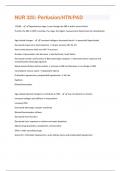
NUR 325: Perfusion/HTN/PAD QUESTIONS & ANSWERS SOLVED 100% CORRECT!!
115/86 - hypertension stage 1 even though the SBP is within normal limits If either the SBP or DBP is outside of a range, the higher measurement determines the classification Age related changes - increased collagen, decreased elastin → myocardial hypertrophy Decreased response to stress/exercise → slower recovery HR, SV, CO Heart valves become thick and stiff → murmurs Number of pacemaker cells decrease → dysrhythmias; heart blocks Decreased number and function of Beta adrenergic receptors → decreased stress response and sensitivity beta-adrenergic agonists Blood vessels thicken and less elastic → increase in SBP and decrease or no change in DBP Incompetent venous valves → dependent edema Orthostatic hypotension, postprandial hypotension → fall risk Kyphosis Blunted baroceptor Age-related physical changes to contribute to HTN - Loss of elasticity in arteries increased collagen and stiffness in myocardium increased PVR decreased adrenergic receptor sensitivity Blunted baroreceptor reflexes Decreased renal function Decreased renin response to sodium and water depletion Altered drug absorption, metabolism, and excretion Often a wide auscultatory gap Assess for: orthostatic hypotension, acute kidney injury, and postprandial hypotensionAHA's Eat better - DASH eating plan (Fruits, vegetables, fat-free or low-fat milk/milk products, whole grains, fish, poultry, beans, seeds, and nuts, K, Mg, Ca) Reduce sodium intake!! Avoid AHA's salty 6: bread/rolls, lunch and cured meats, sandwiches, pizza, soup, poultry Moderate alcohol intake AHA's Get Active - Moderate intensity aerobic activity at least 30 mins at least 5 days a week for the goal of 150 mins/week Muscle strength 2x/week Flexibility and balance 2x/week especially for older adults to decrease falls AHA's lose weight - 1 kg lost = 1 mmHg decrease in SBP AHA's simple 7 - (1) Manage BP, (2) Control cholesterol, (3) Reduce blood sugar (4) Get active (5) Eat better (6) Lose weight (7) Stop smoking AHA's stop smoking - Nicotine causes vasoconstriction and elevated BP Smoking cessation reduces risk factors within 1 year Ambulatory care for PAD - Daily inspection of the feet (checking for bruising, pulses, temperature, color, bleeding) Comfortable shoes with rounded toes and soft insoles; shoes lightly laced Show how to check skin temperature, capillary refill, and palpate pulses Anoxia - lack of oxygenBest treatment (exercise) for claudication - *Walking is the most effective exercise for claudication!!* 30-45 mins daily 3x/week Blood pressure - force exerted by blood against walls of blood vessels CO = SV x HR Cardiac Output - the amount of blood the heart pumps through the circulatory system in a minute (CO)= Stroke volume (amount ejected with each heartbeat) x heart rate Central Perfusion - Force of blood movement by cardiac output Requires adequate cardiac function, blood pressure, and blood volume
Escuela, estudio y materia
- Institución
- NUR 325: Perfusion/HTN/PAD
- Grado
- NUR 325: Perfusion/HTN/PAD
Información del documento
- Subido en
- 10 de junio de 2024
- Número de páginas
- 12
- Escrito en
- 2023/2024
- Tipo
- Examen
- Contiene
- Preguntas y respuestas
Temas
-
nur 325 perfusionhtnpad

Documento también disponible en un lote