// Samuel Merrit University Paediatric Exam
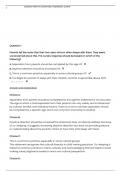
Parents tell the nurse that their two-year-old son often sleeps with them. They seem
unconcerned about this. The nurse's response should be based on which of the
following?
A. Separation from parents should be completed by this age 0%
B. Daytime attention should be increased 0%
C. This is a common practice, especially in some cultural groups 0%
D. It is illegal for parents to sleep with their children, and this is reportable abuse 100%
Most selected
Answer and Explanation
Choice A:
Separation from parents should be completed by this ageThis statement is not accurate.
The age at which a child separates from their parents can vary widely and is influenced
by cultural, familial, and individual factors. There is no strict rule that separation should
be completed by a specific age, and it can vary from one family to another.
Choice B:
Daytime attention should be increasedThis statement does not directly address the issue
of co-sleeping. It suggests increasing daytime attention but does not provide guidance
or understanding about the parents' choice to have their child sleep with them.
Choice C:
This is a common practice, especially in some cultural groups
This statement recognizes the cultural diversity in child-rearing practices. Co-sleeping is
indeed a common practice in many cultures, and acknowledging this fact helps to avoid
making value judgments based on one's own cultural perspective.
Choice D:
,It is illegal for parents to sleep with their children, and this is reportable abuseThis
statement is not accurate. Co-sleeping itself is not illegal, and it is not considered abuse.
The appropriateness of co-sleeping can depend on various factors, but it is not
inherently illegal or abusive.
A six-year-old complains of pain at the surgical site, one hour after the nurse gave IV
morphine, which is ordered every four hours prn pain. What is the nurse's best next step?
A. Ask the patient to wait a little longer for the medicine to work. 0%
B. Review whether the morphine dose is therapeutic for his weight. 100% Most selected
C. Call the physician immediately. 0%
D. Encourage the child to use television as a form of distraction. 0%
Answer and Explanation
Choice A:
Ask the patient to wait a little longer for the medicine to work.This option may not be
appropriate, especially if the child is experiencing significant pain. It's essential to
address the child's pain promptly rather than asking them to wait, as adequate pain
management is crucial for the child's well-being.
Choice B:
Review whether the morphine dose is therapeutic for his weight.While reviewing the dose
for the child's weight is important, it may not be the immediate next step in this situation.
If the child is experiencing pain that persists after one hour, the priority is to address the
immediate pain concern. The nurse can later review the medication orders and dosages
in collaboration with the healthcare provider.
Choice C:
, Call the physician immediately.This is the most appropriate next step in this scenario. If
the child is experiencing pain despite having received morphine one hour ago,
contacting the physician is important to discuss the current situation, assess the need for
additional pain management, and potentially make adjustments to the treatment plan.
Choice D:
Encourage the child to use television as a form of distraction.Distraction can be a helpful
complementary measure for managing pain, but it may not be sufficient in this case if
the pain persists. The primary focus should be on addressing the pain through
appropriate medical interventions, and calling the physician is a more urgent step.
Which assessment indicates to a nurse that a school-age child is in need of pain
medication?
A. The child's current vital signs are consistent with vital signs over the past 4 hours. 0%
B. The child becomes quiet when held and cuddled. 0%
C. The child has a temperature is 38.5°C. 0%
D. The child is lying stiffly in bed, not moving, and refusing to get up. 100% Most selected
Answer and Explanation
Choice A:
The child's current vital signs are consistent with vital signs over the past 4 hours.Vital
signs alone may not be sufficient to assess pain in a child. Children may experience pain
without significant changes in vital signs. Behavioral cues and self-reporting are
important indicators of pain in pediatric patients.
Choice B:
Parents tell the nurse that their two-year-old son often sleeps with them. They seem
unconcerned about this. The nurse's response should be based on which of the
following?
A. Separation from parents should be completed by this age 0%
B. Daytime attention should be increased 0%
C. This is a common practice, especially in some cultural groups 0%
D. It is illegal for parents to sleep with their children, and this is reportable abuse 100%
Most selected
Answer and Explanation
Choice A:
Separation from parents should be completed by this ageThis statement is not accurate.
The age at which a child separates from their parents can vary widely and is influenced
by cultural, familial, and individual factors. There is no strict rule that separation should
be completed by a specific age, and it can vary from one family to another.
Choice B:
Daytime attention should be increasedThis statement does not directly address the issue
of co-sleeping. It suggests increasing daytime attention but does not provide guidance
or understanding about the parents' choice to have their child sleep with them.
Choice C:
This is a common practice, especially in some cultural groups
This statement recognizes the cultural diversity in child-rearing practices. Co-sleeping is
indeed a common practice in many cultures, and acknowledging this fact helps to avoid
making value judgments based on one's own cultural perspective.
Choice D:
,It is illegal for parents to sleep with their children, and this is reportable abuseThis
statement is not accurate. Co-sleeping itself is not illegal, and it is not considered abuse.
The appropriateness of co-sleeping can depend on various factors, but it is not
inherently illegal or abusive.
A six-year-old complains of pain at the surgical site, one hour after the nurse gave IV
morphine, which is ordered every four hours prn pain. What is the nurse's best next step?
A. Ask the patient to wait a little longer for the medicine to work. 0%
B. Review whether the morphine dose is therapeutic for his weight. 100% Most selected
C. Call the physician immediately. 0%
D. Encourage the child to use television as a form of distraction. 0%
Answer and Explanation
Choice A:
Ask the patient to wait a little longer for the medicine to work.This option may not be
appropriate, especially if the child is experiencing significant pain. It's essential to
address the child's pain promptly rather than asking them to wait, as adequate pain
management is crucial for the child's well-being.
Choice B:
Review whether the morphine dose is therapeutic for his weight.While reviewing the dose
for the child's weight is important, it may not be the immediate next step in this situation.
If the child is experiencing pain that persists after one hour, the priority is to address the
immediate pain concern. The nurse can later review the medication orders and dosages
in collaboration with the healthcare provider.
Choice C:
, Call the physician immediately.This is the most appropriate next step in this scenario. If
the child is experiencing pain despite having received morphine one hour ago,
contacting the physician is important to discuss the current situation, assess the need for
additional pain management, and potentially make adjustments to the treatment plan.
Choice D:
Encourage the child to use television as a form of distraction.Distraction can be a helpful
complementary measure for managing pain, but it may not be sufficient in this case if
the pain persists. The primary focus should be on addressing the pain through
appropriate medical interventions, and calling the physician is a more urgent step.
Which assessment indicates to a nurse that a school-age child is in need of pain
medication?
A. The child's current vital signs are consistent with vital signs over the past 4 hours. 0%
B. The child becomes quiet when held and cuddled. 0%
C. The child has a temperature is 38.5°C. 0%
D. The child is lying stiffly in bed, not moving, and refusing to get up. 100% Most selected
Answer and Explanation
Choice A:
The child's current vital signs are consistent with vital signs over the past 4 hours.Vital
signs alone may not be sufficient to assess pain in a child. Children may experience pain
without significant changes in vital signs. Behavioral cues and self-reporting are
important indicators of pain in pediatric patients.
Choice B: